
Mark Rothko
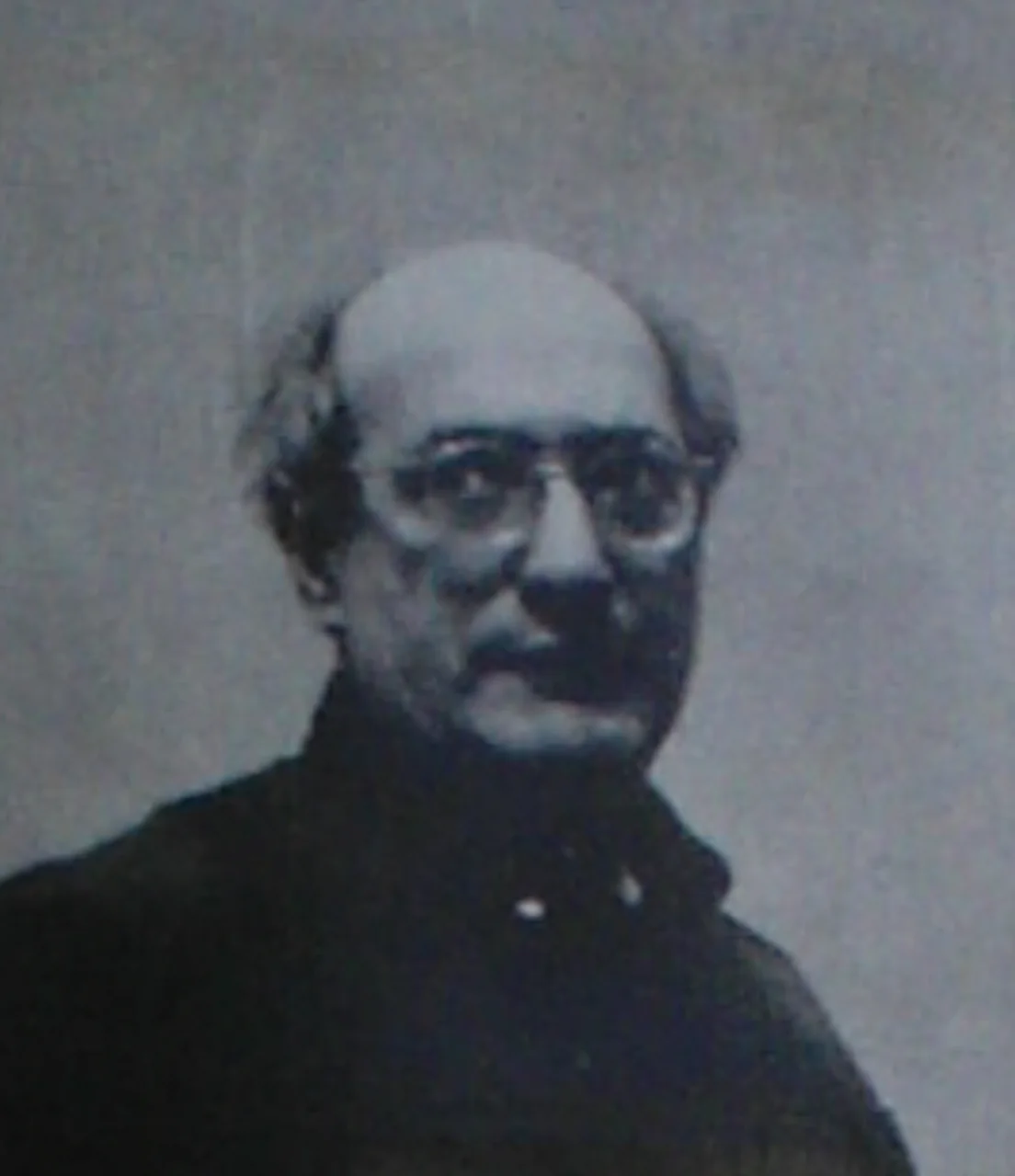
Image from Wikipedia
Image from Wikipedia
Mark Rothko – The Painter of Quiet Disturbance and Luminous Color
A Master of Abstract Expressionism, Whose Works Still Resemble Musical Soundscapes
Mark Rothko is considered one of the most influential artists of the 20th century. Born in 1903 in Dwinsk, present-day Daugavpils in Latvia, he immigrated to the United States with his Jewish family as a child and later became a defining figure of Abstract Expressionism and Color Field painting. His paintings do not speak in motifs or narratives, but rather through surfaces, layers, and tensions that immediately aim at sensation. This is precisely where the rare power of his oeuvre lies: Rothko transforms painting into an existential experience. (en.wikipedia.org)
Early Years: Migration, Identity, and Artistic Self-Discovery
Rothko grew up in an environment shaped by migration, cultural displacement, and social pressure. The family left what was then the Russian Empire and settled in the USA; later, he studied at Yale but dropped out, finding his true path only in New York. There, he educated himself not through an academic school but through observation, reading, and encounters with the avant-garde. The renaming from Marcus Rothkowitz to Mark Rothko marked not only a formal adjustment but a conscious repositioning as an American artist. (yalebooks.yale.edu)
His early career shows an artist who gradually worked his way from the fringes of the art scene to its center. In the 1930s, he taught children art at the Brooklyn Jewish Center and supported himself with part-time jobs. This phase was by no means secondary: it shaped his view on impact, mediation, and the immediate encounter between image and viewer. Early on, Rothko contemplated painting as a soulful resonance space, not as a decorative object. (nga.gov)
The Breakthrough: From Figurative Beginnings to Abstract Visual Language
Rothko's artistic development was by no means linear but occurred in clearly distinguishable phases. In the early 1940s, he still worked with mythological and archaic imagery before gradually moving away from representational forms. His painting became simpler, more open, and emotionally charged, until he found in 1949 the form for which he is still famous today: softly drawn rectangles on monochromatic or tonal backgrounds. The National Gallery of Art describes these works as a central chapter in his development towards a visual language that aims at fundamental human emotions. (nga.gov)
Rothko himself thought in existential categories. He did not merely want to arrange color, but to make visible tragedy, ecstasy, and decline. His paintings thus possess an almost musical structure: no melodic theme, but a slow building of tension, a hovering between closeness and distance, light and shadow. Anyone standing before a Rothko does not experience a motif but a state. This attitude makes him one of the most radical painters of modernity to this day. (nga.gov)
The Mature Phase: Color as Space, Light as Emotion
In his mature phase, Rothko condensed his visual language into monumental fields that function like breathing sound bodies. The National Gallery of Art Archive shows works from 1948 to 1969, including early “multiforms”, more classical Color Field compositions, and late dark works. The color fields are not sharply contoured but softly blended, so that the boundaries between form and ground are nearly dissolved. It is precisely this painterly openness that generates the quiet intensity that makes Rothko unmistakable. (nga.gov)
Particularly formative were the late dark works. The National Gallery of Art describes them as one of the most mysterious groups of works in his career: black or nearly black rectangles that nonetheless contain finely nuanced tonal shifts. Rothko remained a painter of light right up to the end, even in darkness. His visual language thus becomes a paradox: reduced means, maximum effect. This tension makes his art one of the enduring reference points of post-war modernism. (nga.gov)
Commissions, Withdrawal, and the Cult of the Seagram Murals
A key chapter in his career was the commission for the Seagram Murals. Rothko worked for over a year on a series of monumental canvases in dark reds, browns, and blacks, but ultimately returned the commission because he did not want his works to serve as decorative backdrops in a temple of luxury. This decision is as significant art-historically as it is symbolically: it shows an artist who uncompromisingly defended the autonomy of painting. The works later handed over to Tate were installed in specially designed spaces, in line with his ideas. (nga.gov)
The Harvard Murals and the works for the Rothko Chapel in Houston are also highlights of his late work. The National Gallery of Art notes that from the mid-1960s onwards, Rothko repeatedly worked with series and site-related commissions. His interest extended beyond the painting itself to the situation of seeing: light, distance, calm, and architectural surroundings became part of the work. In doing so, Rothko emerged as a pioneer of art that not only describes space but psychologically shapes it. (nga.gov)
Catalog of Works and Reception: Key Stations in His Career
Rothko's most famous groups of work include the figurative early works, the “multiforms” of the late 1940s, the classic Color Field paintings of the 1950s, and the dark series of his late work. Exhibition institutions such as the National Gallery of Art, the Whitney Museum, the Fondation Louis Vuitton, and the Rothko Museum today classify these phases as a continuous artistic development. His works have been reinterpreted repeatedly in significant retrospectives and museum exhibitions, most recently in Paris and at various other European venues. (nga.gov)
The critical reception sees Rothko as a key artist of Abstract Expressionism and Color Field painting. The Whitney Museum emphasizes his role as a leading figure of the New York avant-garde in the 1940s, while the National Gallery of Art describes his visual language as an expression of human experience. The enormous response to later exhibitions also shows how vibrant his legacy remains: the Fondation Louis Vuitton reported a record attendance of over 852,000 people for its Rothko retrospective in 2024. Rothko is thus not only museum-worthy but also remains culturally relevant. (whitney.org)
Cultural Influence: Why Rothko Still Feels Modern Today
Rothko's influence extends far beyond painting. His visual spaces became a reference point for architecture, design, exhibition staging, and even the discourse on contemplative art. The Rothko Museum in Daugavpils describes him as one of the most influential artists of the second half of the 20th century and as a founder of Abstract Expressionism and Colour Field Painting. This categorization is not an exaggeration but a precise description of a work that changed the perception of its time. (rothkomuseum.com)
His art remains compelling because it defies quick interpretations. Rothko demands slowness, attentiveness, and emotional openness. Anyone who looks at his paintings encounters an art that oscillates between silence and disturbance and thus feels timeless. This makes Mark Rothko one of the most fascinating artists of modernity to this day—and an artist whose works should not only be seen but experienced in the best sense. (nga.gov)
Conclusion
Mark Rothko remains intriguing because his art creates maximum emotional depth with minimal means. His career spans from figurative beginnings through grand Color Field compositions to the quiet dark late works—a trajectory that functions like a consistent inner score. Those who experience Rothko live quickly recognize that his paintings are not distant objects but spaces for concentration, tension, and self-encounter. This is where his enduring greatness lies. (nga.gov)
Official Channels of Mark Rothko:
- Instagram: No official profile found
- Facebook: No official profile found
- YouTube: No official profile found
- Spotify: No official profile found
- TikTok: No official profile found
Sources:
- National Gallery of Art – Mark Rothko
- National Gallery of Art – Who Is Mark Rothko? 9 Things to Know
- National Gallery of Art – Investigating Rothko's Technique
- Fondation Louis Vuitton – Mark Rothko Retrospective
- Fondation Louis Vuitton – Mark Rothko exhibition video 360
- Fondation Louis Vuitton – Mark Rothko exhibition trailer
- Rothko Museum – Rothko. From the Family Collection
- Rothko Museum – Mark Rothko Originals
- Oregon Encyclopedia – Mark Rothko (1903–1970)
- Yale University Press – How Marcus Rothkowitz Became Mark Rothko
- Wikipedia: Image and text source – https://de.wikipedia.org/wiki/Mark_Rothko