
Isao Takahata
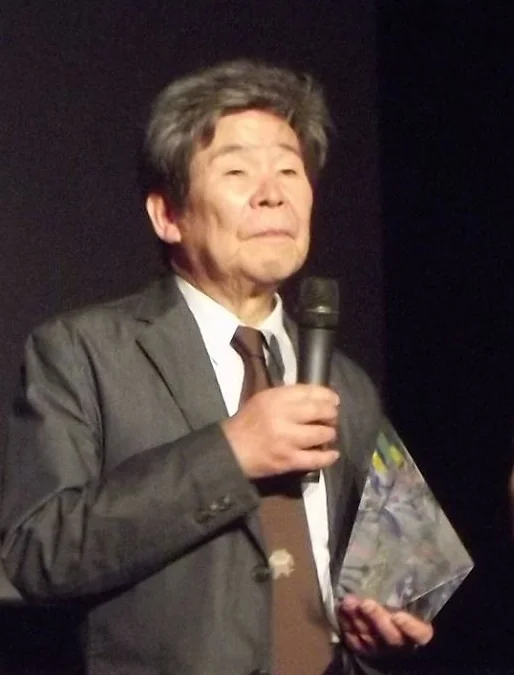
Image from Wikipedia
Image from Wikipedia
Isao Takahata – The Quiet Revolutionary of Anime and Co-Founder of Studio Ghibli
A Master of Animation Who Made History with Precision, Humanity, and Artistic Consistency
Isao Takahata was one of those rare authors whose work redefined an entire medium. The Japanese director, producer, and co-founder of Studio Ghibli shaped animation over decades with a focus on everyday realism, emotional depth, and formal innovation. His films connected cultural observation, historical memory, and a distinctive artistic development into an oeuvre of international impact. ([britannica.com](https://www.britannica.com/biography/Takahata-Isao))
Biography: From the Post-War Era to International Mastery
Isao Takahata was born on October 29, 1935, in Ujiyamada in Mie Prefecture and grew up in Okayama. After graduating from the University of Tokyo with a degree in French, he joined Toei Animation in 1959 and began his career as an animation director. He early on showed an interest in animation that does not merely entertain but makes social reality, psychological tension, and human vulnerability visible. ([ghibli.jp](https://www.ghibli.jp/info/012850/))
His first major feature film as a director was Horus, Prince of the Sun (1968), a work that already hinted at the ambition to consider animated film as a serious dramatic art form. In the 1970s, he created groundbreaking television series like Heidi, Girl of the Alps, Anne of Green Gables, and 3000 Leagues in Search of Mother, with which Takahata sharpened the focus of animation on everyday life, family, work, and social relationships. This phase established his reputation as a director with exceptional dramatic discipline and a sensitive touch for character development. ([ghibli.jp](https://www.ghibli.jp/event/takahata/))
Career Highlight: Studio Ghibli and the Redefinition of Anime
In 1985, Takahata co-founded Studio Ghibli alongside Hayao Miyazaki and Toshio Suzuki. This marked the beginning of one of the most important creative alliances in Japanese film history. While Miyazaki is often associated with fantastic worlds and adventurous visual architecture, Takahata focused more on realism, temporal structure, memory, and finely tuned observation of human behavior. This complementary tension made Ghibli a studio with remarkable aesthetic breadth and international authority. ([britannica.com](https://www.britannica.com/biography/Takahata-Isao))
His Ghibli films became milestones of world cinema: Grave of the Fireflies (1988), Only Yesterday (1991), Pom Poko (1994), My Neighbors the Yamadas (1999), and The Tale of the Princess Kaguya (2013). These works particularly showcase Takahata's ability to master different narrative forms and visual strategies: from war drama to poetic memory narratives to satirical observations of society and radically reduced, watercolor-like imagery. ([britannica.com](https://www.britannica.com/biography/Takahata-Isao))
Filmography: Works That Pushed the Medium to Its Limits
Grave of the Fireflies is considered one of the most harrowing anti-war works in animation history. The film condenses the suffering of two siblings during war into an emotional experience of rare intensity and international recognition. Only Yesterday, on the other hand, works with memory, the present, and inner movement; Pom Poko combines ecological fantasy with Japanese folklore; and My Neighbors the Yamadas showcases Takahata's preference for episodic forms and the humor of everyday life. ([britannica.com](https://www.britannica.com/biography/Takahata-Isao))
His late masterpiece The Tale of the Princess Kaguya marked a formal peak. Studio Ghibli describes the film as an aesthetic reinvention with hand-drawn, watercolor-like imagery that reimagines the fusion of digital technique and illustration. The work received the Grand Prize at several major international awards and was nominated for an Oscar for Best Animated Feature. Through this, Takahata demonstrated until the end that artistic development is not an age phenomenon, but a principle of his entire visual career. ([ghibli.jp](https://www.ghibli.jp/info/012850/))
Style and Signature: Realism, Rhythm, Emotion
Takahata's signature is based on an extraordinary gift of observation. His direction often avoids grandiose effects and instead relies on timing, atmospheric density, and precisely arranged everyday moments. He understood animation as a form of perception: not just as movement, but as a choreography of space, time, gazes, and silence. This is where his work derived its dignity and sustainable influence on subsequent generations of animation artists. ([ghibli.jp](https://www.ghibli.jp/event/takahata/))
Particularly striking is his closeness to cultural memory and historical experience. Grave of the Fireflies processes war not as a heroic narrative but as an intimate tragedy; Only Yesterday makes biographical reflection the motor for adult self-location; Pom Poko reflects the conflict between nature, urban development, and Japanese modernity. In this regard, Takahata emerges as an author who translates social themes with stylistic clarity and emotional precision into a universal cinema. ([ghibli.jp](https://www.ghibli.jp/event/takahata/))
Cultural Influence and Critical Reception
International critics recognized Takahata as a key figure in animated film. Britannica describes him as a highly influential Japanese animation director and highlights the artistic quality and emotional depth of his films, which contributed to the global appreciation of anime. Studio Ghibli itself emphasizes that his works have sustainably shaped Japanese animation and opened new paths for other creatives. ([britannica.com](https://www.britannica.com/biography/Takahata-Isao))
His accolades reflect this impact: he received, among others, the Order of Arts and Letters at the rank of Officer, the Crystal d’honneur from the Annecy International Animation Film Festival, and the Winsor McCay Award. Studio Ghibli also notes his honors from the Locarno Festival, the TAAF Special Award, and the nomination of The Tale of the Princess Kaguya for the Academy Award. Takahata was thus recognized not just as a director, but as a cultural authority in world cinema. ([ghibli.jp](https://www.ghibli.jp/info/012850/))
Current Projects and Releases
Since Isao Takahata passed away on April 5, 2018, there are no current artistic projects in the strict sense. However, his presence remains alive through retrospectives, exhibitions, and ongoing reception. One example is the exhibition 高畑 勲展, accompanied by Studio Ghibli, which was shown in 2023/2024 in Shizuoka and once again highlighted his significance for Japanese animation. His artistic impact continues to be a subject of public memory and cultural reevaluation. ([ghibli.jp](https://www.ghibli.jp/info/012850/))
Conclusion: Why Isao Takahata Remains Indispensable to This Day
Isao Takahata was not a director of quick effects but an architect of precise observation. He created animated films that emotionally expanded the medium, stylistically renewed it, and thematically deepened it. Those who watch his films encounter an artist who worked behind the camera with exceptional stage presence, elevating anime to a form of serious art. Discovering him means re-reading the history of animation. Experiencing him live is no longer possible, but his films remain a must-see for anyone who takes cinema seriously as an art form. ([britannica.com](https://www.britannica.com/biography/Takahata-Isao))
Official Channels of Isao Takahata:
- Instagram: No official profile found
- Facebook: No official profile found
- YouTube: No official profile found
- Spotify: No official profile found
- TikTok: No official profile found
Sources:
Upcoming Events
Anime: The Last Fireflies