
Ernemann Sander
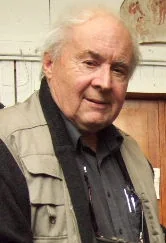
Image from Wikipedia
Image from Wikipedia
Ernemann Sander: A German Sculptor Between Figurative Strength, Public Space, and Quiet Duration
A Life for Sculpture: Ernemann Sander and the Sculpture of the 20th Century
Ernemann Sander, born on April 18, 1925, in Leipzig and died on December 21, 2020, in Bad Godesberg, was one of the German sculptors whose work has left a lasting mark in public space. His artistic career connects training, post-war beginnings, freelance work, and a long presence in Bonn and its surroundings. It is precisely in this combination of craftsmanship and regional visibility that the special impact of his oeuvre lies. ([de.wikipedia.org](https://de.wikipedia.org/wiki/Ernemann_Sander?utm_source=openai))
Biographical Roots Between Leipzig, Weimar, and Bonn
Sander began his training before the end of World War II and studied at the Kunsthochschule in Weimar from 1941 to 1947, interrupted by military service and imprisonment as a prisoner of war. After his release from American captivity in 1947, he resumed his studies and then worked as a freelance artist. This biographical turning point strongly influenced his generation: The path to post-war modernity was not abstract but traversed through real breaks, material shortages, and the rebuilding of an artistic life. ([de.wikipedia.org](https://de.wikipedia.org/wiki/Ernemann_Sander?utm_source=openai))
Even early on, Sander demonstrated organizational and artistic independence. In 1948, he was elected chairman of the group of the Verband Bildender Künstler in Jena, which was then still called "Sparte 17" in the trade union federation. A portfolio published in 1949 by Greifenverlag Rudolstadt, containing ten figure drawings, additionally documents his drawing skills and makes it clear that Sander worked not only as a sculptor but also as a precise observer of the human body. ([de.wikipedia.org](https://de.wikipedia.org/wiki/Ernemann_Sander?utm_source=openai))
The Path to the West and the Shaping of the Bonn Area
After a brief stay in West Berlin, Sander settled in Bonn with his family in 1955; from the early 1960s onward, he lived and worked in Königswinter-Oberdollendorf. This relocation marked the beginning of a long-lasting artistic rooting in the Rhineland, where he became known for public works, reliefs, and sculptures. His creations thus became part of an urban and regional visual language that remains perceptible in everyday spaces today. ([kioer-bonn.de](https://kioer-bonn.de/blog/ausstellung-zu-ernemann-sander-im-siebengebirgsmuseum?utm_source=openai))
Sanders' contribution to art in public spaces in Bonn and its surroundings is especially significant. The sculptor created numerous sculptures for public spaces, and several works are documented in the city and its vicinity. This presence makes him an artist whose work continues to live on not only in museums but also in the urban memory. ([bonn.wiki](https://bonn.wiki/wiki/Ernemann_F._Sander?utm_source=openai))
Awards and Recognition
In 1996, Ernemann Sander was awarded the August-Macke-Medaille. This honor underscores the regional recognition of his work and places him within an art landscape that values figurative quality, design precision, and cultural continuity. His death in 2020 in Bad Godesberg marked the end of a long life, but not the end of the visibility of his works in public space. ([kioer-bonn.de](https://kioer-bonn.de/blog/ausstellung-zu-ernemann-sander-im-siebengebirgsmuseum?utm_source=openai))
Character of Work: Figurative Sculpture, Drawing, and Public Impact
Sander's art is regarded as a mastery of figurative sculpture. An entry from the Siebengebirgsregion explicitly describes him as a "master of figurative sculpture" and "outstanding draftsman," aptly summarizing the dual talent of form sensitivity and drawing discipline. His works combine physicality, clear form, and a sense of plastic presence that is particularly strong in urban spaces. ([siebengebirgsmuseum.de](https://siebengebirgsmuseum.de/veranstaltungen/120-verlinkte-seiten?start=80&utm_source=openai))
The documented works in Bonn illustrate how deeply Sander operated in the tension between relief, sculpture, and memory-culture design. Among his recorded works are reliefs depicting the story of St. Martin at Martinplatz in Bonn city center, as well as further sculptural works in an urban context. These examples also show that Sander's work was not confined to the studio but understood the public space as the stage for his sculpture. ([de.wikipedia.org](https://de.wikipedia.org/wiki/Ernemann_Sander?utm_source=openai))
Style and Artistic Development
Sander's artistic development is closely tied to a classical sculptural tradition that places the human figure at its center. His works represent a plastic conception in which figure, surface, and spatial effect come together. The preserved sources particularly emphasize the figurative orientation and drawing quality, while his life stages in Leipzig, Weimar, Jena, Berlin, and Bonn shape a body of work nourished by various cultural hinterlands. ([siebengebirgsmuseum.de](https://siebengebirgsmuseum.de/veranstaltungen/120-verlinkte-seiten?start=80&utm_source=openai))
This grounding in different German art landscapes gives his work historical depth. Sander belongs to those sculptors who do not draw a loud avant-garde position from the 20th century but rather offer a consistent, craft-based, and publicly impactful form language. His art thrives on the tranquility of composition, the clarity of contours, and the trust in the durability of material and form. ([kioer-bonn.de](https://kioer-bonn.de/blog/ausstellung-zu-ernemann-sander-im-siebengebirgsmuseum?utm_source=openai))
Cultural Influence and Regional Significance
In the Rhineland, Ernemann Sander left traces that extend beyond the art-historical catalog. His sculptures and reliefs are part of a visible urban culture that does not see art as an isolated object but as a component of everyday life. In Bonn and the surrounding areas, his contribution is still perceived today as part of a cultural heritage that navigates between memory, place, and form. ([bonn.wiki](https://bonn.wiki/wiki/Ernemann_F._Sander?utm_source=openai))
The current engagement with his work, such as in exhibitions and regional documentaries, demonstrates Sander's ongoing relevance. The view of his oeuvre points to a sculpture that does not push forward but rather has a lasting impact. This is precisely where his cultural value lies: in the connection of artistic discipline, public visibility, and regional identity. ([kioer-bonn.de](https://kioer-bonn.de/blog/ausstellung-zu-ernemann-sander-im-siebengebirgsmuseum?utm_source=openai))
Discography, Recordings, and Media Presence in a Broader Sense
A classic discography in the musical sense does not exist for Ernemann Sander, as he was a sculptor and draftsman. His work is instead transmitted through portfolios, exhibition documents, collection proofs, and public sculptures. Particularly the portfolio of figure drawings published in 1949 and later art-historical catalogs attest to a continuous presence in the visual cultural space. ([de.wikipedia.org](https://de.wikipedia.org/wiki/Ernemann_Sander?utm_source=openai))
For art lovers and those interested in cultural history, the strength of this oeuvre lies precisely in its materiality and site-specificity. Sander's works cannot be consumed like sound recordings but must be experienced as concrete, spatial, and historical forms. Those who view his sculptures in urban spaces or in documentaries encounter a sculpture that emphasizes permanence over effect. ([bonn.wiki](https://bonn.wiki/wiki/Ernemann_F._Sander?utm_source=openai))
Conclusion: Why Ernemann Sander Remains Fascinating Today
Ernemann Sander represents a sculpture that has developed a clear, human, and lasting formal language from the experience of the 20th century. His biography leads from Leipzig through Weimar and Jena to Bonn, his work from drawing to sculpture, from the studio to public space. It is precisely this combination of artistic consistency, regional anchoring, and quiet presence that makes him noteworthy to this day. Those who wish to experience his works should seek them out where they have the strongest effect: in space, in light, and in the everyday life of the city. ([de.wikipedia.org](https://de.wikipedia.org/wiki/Ernemann_Sander?utm_source=openai))
Official Channels of Ernemann Sander:
- Instagram: no official profile found
- Facebook: no official profile found
- YouTube: no official profile found
- Spotify: no official profile found
- TikTok: no official profile found