
Céline Sciamma
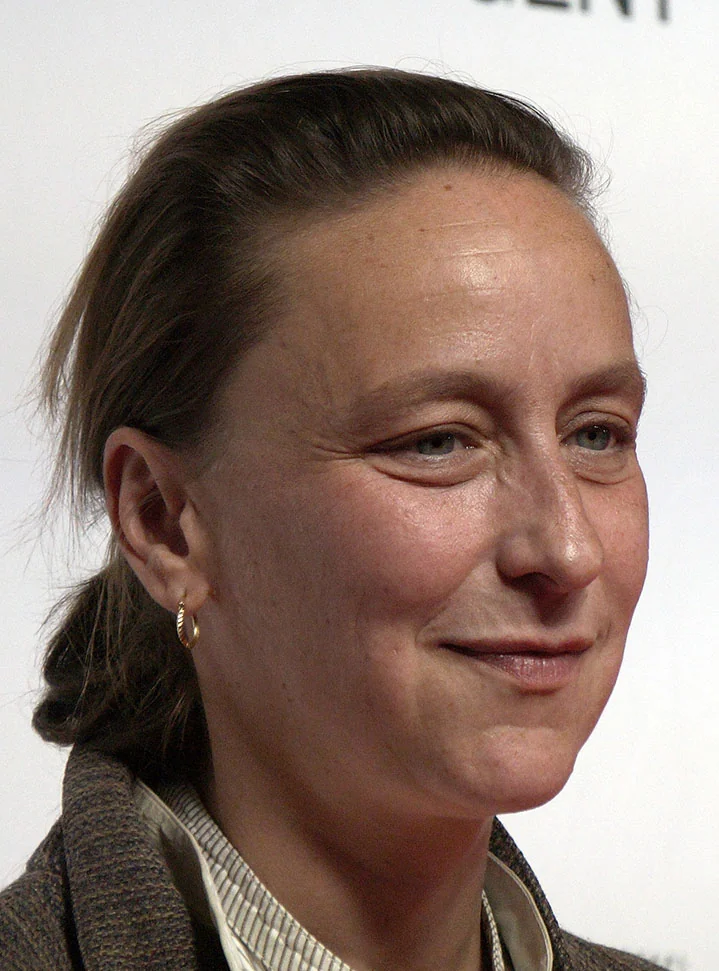
Image from Wikipedia
Image from Wikipedia
Céline Sciamma: The Precise Poet of Contemporary French Cinema
A Director Redefining Intimacy, Identity, and Gaze Regimes
Céline Sciamma, born on November 12, 1978, in Pontoise, is one of the defining voices of contemporary French cinema. As a screenwriter and film director, she has established herself with a clear, reduced, and yet emotionally charged narrative style that explores themes such as desire, gender roles, self-discovery, and social belonging with great precision. Her films combine strict formal control with a sensitive awareness of vulnerable transitional moments in the lives of young people.
Sciamma's artistic development shows a consistent signature: early work in short film, a breakthrough with her feature film debut, followed by a series of works that have been recognized and awarded internationally at festivals. Her cinema thinks from the perspective of the body, perception, and situation. This strength within her filmography lies in her capacity not just to tell stories, but to design experiential spaces.
Biographical Beginnings: Training, Precision, and the Path to Her Own Language
Sciamma studied at La Fémis in the screenwriting department. This training continues to shape her work today, as her films appear not improvised, but carefully thought out down to the dramatic detail. Even in her early short films, an attentiveness to characters, conflicts, and subtle shifts became evident, which would later become her hallmark.
Her first screenplays, including Les Premières Communions and Cache ta joie, mark the transition from emerging works to an independent artistic position. Even before she made her first feature film, she established herself as a writer with a keen eye on youth, families, and social situations. This early phase lays the foundation for a career that continuously revolves around the same core question: How is identity formed, and how is it read from the outside?
The Breakthrough with Naissance des pieuvres
The true breakthrough came in 2007 with Naissance des pieuvres, her first feature film, which was presented in the Un Certain Regard section at Cannes. The film dives into the world of synchronized swimming and tells the story of three teenagers whose desires, insecurities, and fantasies clash in a space of discipline, physicality, and silent competition. Even here, Sciamma demonstrates her ability to draw intimate drama from a precisely observed everyday world.
Naissance des pieuvres made it clear that Sciamma is interested in a cinema of transitions: the awakening of desire, the wavering between childhood and adulthood, the friction between public role and private feeling. The film was perceived as a strong debut and set a tone that would define her further work. The combination of visual clarity, emotional restraint, and psychological accuracy gave her immediate cultural authority.
Career Development: From Youth Film to Formally Sovereign Author Cinema
In the following years, Sciamma deepened her themes and expanded her stylistic means. With Tomboy, she developed another story about identity and social ascriptions in 2011, this time with a particular focus on gender roles and self-representation in childhood. The film sharpened her profile as a director who addresses sensitive themes without a didactic tone, but with great narrative consistency.
In 2014, she followed with Bande de filles, a film set in the Paris suburbs that centers on the rebellion of young women. Here, her work was ultimately recognized as socially relevant author cinema that examines youth, class, and female solidarity with a rare blend of energy and distance. The film garnered her widespread attention and solidified her reputation as a director who does not simply illustrate social reality but shapes it through cinema.
Writing as Directing: Partnerships and Screenwriting Work
Sciamma has developed her distinct style not only as a director but also as a screenwriter. Her work on Quand on a 17 ans and Ma vie de courgette shows that she possesses strong dramatic authority even outside her own directorial projects. Particularly, Ma vie de courgette emphasizes her ability to translate complex emotions into clear, accessible forms.
Her collaboration on Les Olympiades in 2021 further demonstrates her close connection to a younger French author cinema that observes urban contemporary life and interpersonal dynamics with high stylistic attention. Sciamma does not confine herself to a once found style but acts as a central force within a vibrant European film context. Her presence as an author extends well beyond her own direction.
Portrait de la jeune fille en feu: The International Summit
With Portrait de la jeune fille en feu, Sciamma reached an artistic peak in 2019. The film competed at Cannes, where it won the award for Best Screenplay. In its dense, controlled imagery and its consistent focus on the gaze between two women, Sciamma crystallizes many of her central themes into an exceptionally elegant form.
The film has been internationally celebrated as a milestone of queer cinema and as an example of modern author cinema. Its cultural impact arises from the connection between historical narrative, emotional accuracy, and a radically feminine perspective on desire and representation. In it, Sciamma proves that reduction is not a weakness but an aesthetic choice that creates depth.
Petite Maman and the Quiet Radicality of the Everyday
In 2021, Sciamma continued her work on intimate stories with Petite Maman. The film was also presented in competition at Cannes and further sharpened her preference for small spaces, familial relationships, and the poetic shift of reality. It is precisely the restraint of the film that gives it its power: it operates with a quiet intensity that unfolds from glances, places, and encounters.
Petite Maman showcases Sciamma’s ability to translate emotional complexity into seemingly simple narrative movements. The themes of memory, childhood, and loss are not explained but made sensually experienceable. In this way, she remains committed to a form of cinema that prioritizes observation and empathy over any overt staging.
Awards, Festival Presence, and Critical Authority
Sciamma's filmography is closely tied to the major institutions of European cinema. On the Cannes side, Naissance des pieuvres, Portrait de la jeune fille en feu, and Les Olympiades are documented; the Académie des César lists multiple nominations and awards, including a César for Naissance des pieuvres, Bande de filles, Ma vie de courgette, and Les Olympiades. This institutional recognition bears witness to her continued importance in French film.
Particularly noteworthy is the versatility of her honors: Sciamma has been awarded not only as a director but also as a screenwriter and adapter. This reflects an author whose artistic influence extends across multiple levels. She is not only a strong filmmaker but also a central creator of written film.
Style, Themes, and Cultural Influence
The style of Céline Sciamma is characterized by clarity, concentration, and an extraordinary sensitivity to detail. Her films often work with young characters, transitional situations, and spaces that make social rules visible: schoolyards, changing rooms, apartments, suburbs, landscapes. From these places, she develops not mere backgrounds but dramaturgical and emotional fields of tension.
Culturally, Sciamma has profoundly influenced the representation of female and queer experiences in European cinema. Her works impact debates about gaze, subjectivity, and representation and are frequently read in film criticism as a reference for a new, resolutely female-centered author cinema. Her films combine poetic form with political stance without ever becoming overly programmatic.
Current Work and Recent Projects
Even after Petite Maman, Sciamma remains at the center of current film conversations. In 2024, she co-wrote the screenplay for Les Femmes au balcon with Noémie Merlant, which will be shown in the midnight section at Cannes 2024. This collaboration once again showcases her openness to collaborative processes and her ongoing relevance to younger female filmmakers.
A recent interview with the Centre Pompidou from 2025 also indicates that Sciamma is currently working more discreetly and has not announced a classic, industrially embedded feature film. This phase of searching and condensing aligns well with her work, which seeks formal and content maturity over quick effects. Her artistic development thus remains open and engaging.
Conclusion: An Author of Gaze, Silence, and Emotional Precision
Céline Sciamma is compelling because she understands cinema as a precise instrument for perception, identity, and desire. Her films show how much power resides in seemingly small moments when they are staged with accuracy, trust, and formal discipline. Those who follow her work encounter an author who has significantly shaped contemporary French cinema and given it a distinctive language.
It is precisely in her blend of artistic rigor and emotional openness that the special appeal of Sciamma's films lies. They demand attention but reward it with rare intensity. Anyone who has the opportunity to experience her works on the big screen should seize it: Céline Sciamma is among those directors whose cinema fully unfolds its power in space, light, and silence.
Céline Sciamma's Official Channels:
- Instagram: no official profile found
- Facebook: no official profile found
- YouTube: no official profile found
- Spotify: no official profile found
- TikTok: no official profile found
Sources:
Upcoming Events
Summer Cinema - Water Lilies
Summer Cinema - Water Lilies
Summer Cinema - Water Lilies