
Humboldtstraße 1, Braunschweig-Nordstadt
Humboldtstraße 1, 38106 Braunschweig, Germany
Botanical Garden of TU Braunschweig | Opening Hours & Directions
The Botanical Garden of TU Braunschweig is much more than a beautiful green space on the edge of the Oker; it is a scientifically influenced place of plant diversity, a field laboratory for experimental plant research, and at the same time a popular destination for all those seeking tranquility, nature experiences, and botanical curiosities. The official presentation speaks of a place of diversity, research, teaching, species protection, and recreation, and it is exactly this mix that has made the garden special for many decades. On about 3 hectares, around 4,000 plant species from all over the world grow, allowing visitors not only to take a walk but to literally travel through different vegetation zones. The garden is considered one of the oldest institutions of TU Braunschweig and has a history that dates back to the 19th century; at the same time, it is rightly perceived as a green jewel in the city. Those who visit the Botanical Garden discover not an artificial event backdrop but a lively, well-maintained, and scientifically supervised facility where rare and endangered plant species find a protected place and the scientific work of the university becomes visible. For this reason, the garden is equally exciting for families, students, nature enthusiasts, and city guests. The location is also characteristic: Humboldtstraße, Oker, historical structures, old trees, water areas, and a landscaped garden space together form an ensemble that is convincing both professionally and atmospherically. Those looking for a botanical excursion destination that is freely accessible, combines genuine research with public experience spaces, and surprisingly unites many themes in a small area will find one of the most interesting addresses in Braunschweig here. ([tu-braunschweig.de](https://www.tu-braunschweig.de/ifp/garten?utm_source=openai))
Tickets, Admission, and Opening Hours at the Botanical Garden of TU Braunschweig
Those looking for tickets usually do not need a classic admission ticket here, as the official pages describe the Botanical Garden as a freely accessible place, which is actively used by the public. This is crucial for many search queries because it transforms the classic ticket intent into more of an information and visit intent: checking opening hours, knowing the rules, choosing the right time of day, and planning the tour well. The opening hours vary seasonally and should always be briefly checked on the official page before visiting. In the summer, the garden is closed on Mondays and open from Tuesday to Saturday as well as on Sundays and public holidays from 8:00 AM to 6:00 PM; in rainy weather, a shortened opening until 4:00 PM applies. The display greenhouses have their own hours: from Tuesday to Thursday from 11:00 AM to 5:00 PM and on Saturdays, Sundays, and public holidays from 1:00 PM to 5:00 PM. Special hours also apply to the extension area during the summer. In the winter, which is officially indicated from October 26, 2025, the opening hours are significantly shortened; then the garden is open longer in the early afternoon during the week, and the display greenhouses and garden extension close accordingly earlier. An important safety rule is added: the garden extension is closed in case of snow and ice. Therefore, anyone planning a visit in winter should keep an eye not only on the time but also on the weather conditions. The visiting rules are equally important, as the Botanical Garden is a scientific facility and not just any park area. Children under 12 years may only enter when accompanied by adults, animals other than assistance dogs are not allowed, nor are bicycles, rickshaws, sleds, and scooters. Sports activities are prohibited, large bags and noise sources should stay outside, and the removal of plants, seeds, fruits, mushrooms, or cones is also not permitted. These rules are not bothersome but protect the facility, the plants, and the visitors equally. Photography and filming for private, non-commercial purposes are free; however, those wishing to work commercially need permission and must pay a one-time donation fee. This information is particularly important for inquiries about photos, as it directly explains what is allowed and what is not. ([tu-braunschweig.de](https://www.tu-braunschweig.de/ifp/garten/besucherinfo/oeffnungszeiten?utm_source=openai))
Directions by Tram Line 3, on Foot, and by Car
In terms of access, the Botanical Garden is very well connected to public transport, which is why the stop Botanical Garden appears at the top of many search queries. The official travel recommendation is clear: Tram Line 3 stops at the eponymous stop in front of the Botanical Garden. From there, it is just a few minutes' walk to the Bültenweg entrance. Other official TU pages also mention bus lines that stop nearby; depending on the line, the walking distances are short, about 3 to 10 minutes. For guests who prefer to arrive on foot or by car, the official travel page describes the route from the city center via Fallersleber Straße, which transitions into Humboldtstraße after about 300 meters. From there, you drive straight over the Oker bridge, see the main entrance behind the gatehouse of the Botanical Garden on the left side, and reach the new part of the garden behind the gatehouse of the BBK on the right side. This makes orientation in the street space surprisingly easy, even without complicated directions. From an SEO perspective, these details are relevant because they bring together the search intentions of access, stop, car, and parking. Regarding parking, the official visitor information does not mention detailed parking garage or visitor parking solutions; instead, they clearly emphasize arriving by tram and access via Humboldtstraße. This implies that arriving by public transport is the least stressful option, especially for a short visit or if you want to catch the opening hours of the display greenhouses. Additionally, the official page provides the geographical location with latitude and longitude as well as an elevation of 70 to 75 meters, showing that the garden is documented not only touristically but also geographically precisely. So, if you are planning a city tour, a university visit, or a nature walk, you can easily incorporate the Botanical Garden as a stop in a day in Braunschweig. The combination of Line 3, Bültenweg, Humboldtstraße, and Oker bridge makes orientation uncomplicated and reliable. ([tu-braunschweig.de](https://www.tu-braunschweig.de/ifp/garten/besucherinfo/anreise?utm_source=openai))
Tropical House, Desert House, and Plant Diversity on 3 Hectares
The greatest strength of the Botanical Garden lies in its plant diversity and in the way different habitats become tangible in a small space. The official pages emphasize that ecologically different areas coexist here, and many species occur together. This makes the garden an illustrative learning place, but also a place where one can see immediately, without prior knowledge, how great the diversity of plant forms is. Particularly striking are the display greenhouses, which showcase tropical and dry habitats; educational offerings from TU explicitly describe a tropical house and a desert house, where plants from tropical rainforests or desert ecosystems can be observed. The tropical house is now even barrier-free accessible, making the visit noticeably easier for people with mobility impairments. For the practical tour, this means: those who visit the garden can not only experience open-air beds, shrubs, and water areas but also discover entirely different climatic plant worlds. The garden is home to around 4,000 plant species, which according to official classification corresponds to about 1.1 percent of the world flora. This number is not only impressive but also substantively important, as it underscores the role of the garden as a collection, research, and educational place. Rare and endangered plant species find asylum here, as the official language puts it. Additionally, the garden is not solely intended as an ornamental facility but as a demonstration space for phytodiversity and biodiversity. For visitors, this means: one can not only look at plants but also better understand their ecological function, their origin, and their adaptation to different habitats. The mix of open land, greenhouses, water areas, old trees, and various thematic areas ensures that a tour does not become monotonous. The paths are also arranged in such a way that one always takes new perspectives. Particularly interesting is the connection between science and recreation: the area is both a learning place, a refuge, and a destination for walks. This multifunctionality explains why the search terms tropical house Braunschweig, desert house Braunschweig, botanical garden Braunschweig photos, and garden plan often appear together. Anyone who walks through the facility quickly understands that no single attraction is in the foreground here, but rather a consciously designed overall picture of climate, plant form, research, and public accessibility. ([tu-braunschweig.de](https://www.tu-braunschweig.de/ifp/garten?utm_source=openai))
History from the Anatomy Garden to the Green Jewel
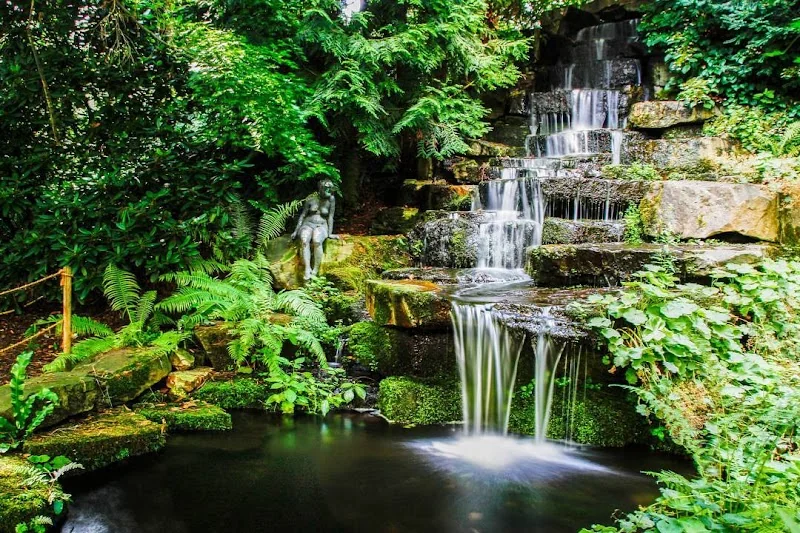
The history of the Botanical Garden is closely linked to the development of the university and the city of Braunschweig. The official chronicle makes clear that the garden was founded in 1828 as an institution of an anatomy school. The first garden was located on the site of today's AOK but soon no longer met the requirements. In 1840, Johann Heinrich Blasius, the then natural scientist and head of the anatomy garden, succeeded with his plan for a real botanical garden. The garden of the Collegium Carolinum, the predecessor institution of today's Technical University of Braunschweig, was established on the former noble wood yard across the Oker. This year 1840 is therefore considered the actual founding year of the Botanical Garden of TU. The early location by the Oker is still noticeable today, as water, slope edges, and old trees shape the character of the facility. The official historical account also mentions a former canal keeper's house from the 17th century, which recalls the founding years, and a later loss of the old part after the closure of the anatomy school in 1868. Between 1875 and 1884, the garden was expanded by purchasing neighboring properties, allowing for the creation of a facility for water and marsh plants as well as an alpine garden. That around 4,000 plant species were already cultivated back then shows the long tradition of collection. The garden suffered severe damage during the world wars; valuable tree stock was lost, and the greenhouses were almost completely destroyed before being rebuilt in 1950. Further significant steps followed in the 1950s and 1980s: in 1959, the alpine garden located on the Oker slope was relocated to the northern part, in 1985 the Baroque farmhouse garden with around 800 square meters was added, and in 1989 the waterfall with stream was created, which is now one of the most popular viewpoints. In 1995, the garden expanded to about 3 hectares through the purchase of a southern adjacent area. This development explains why the facility is both historically grown and modernly used today. The official language rightly calls the garden the Green Jewel of Braunschweig, as it combines monument character, science, landscape architecture, and public accessibility into a very distinctive identity. Therefore, when visiting the garden, one experiences not only a collection of beautiful plants but also a piece of university and urban history that has been continuously developed for almost two centuries. ([tu-braunschweig.de](https://www.tu-braunschweig.de/ifp/garten/geschichte?utm_source=openai))
Guided Tours, Lectures, and Gatehouse Gallery
Another central part of the Botanical Garden is its educational and event offerings, as botanical knowledge is not only collected here but actively conveyed. The official pages describe themed tours and lectures as usually free, although donations to support the association are welcome. For group tours, there is a clear structure: they are possible by appointment, last about 90 minutes, and are usually offered from Tuesday to Thursday between 8:00 AM and 1:00 PM. The maximum group size is 25 people, and due to limited staff, weekends and times outside the mentioned window are usually not possible. This information is relevant for anyone searching for tours Braunschweig Botanical Garden or program 2025, as it shows that the garden does not operate like a classic event business but rather follows fixed personnel and organizational frameworks. At the same time, this makes the offerings authentic: it is about professionally sound communication, not mass programming. Additionally, the gatehouse gallery is described on the official page as an exhibition space for changing exhibitions in the fields of botany, floristry, and art. The restored classical gatehouse from 1990 is therefore not only an architectural accent but also a cultural place where the Botanical Garden interacts with the urban society. So, for those looking for events, exhibitions, or lectures, they will not find a commercial event hall here but a science-related cultural offering with a close connection to the living plant stock. In addition, the Green School plays an important role in environmental education; it uses the garden as a learning place for children and school classes and conveys plant knowledge to young target groups. This fits perfectly with the garden's task of not only showing plants but also making connections understandable. The event area thus has a special character: it is small-scale, professionally precise, and close to nature. For visitors, this means that one can excellently combine a tour with a guided tour, an exhibition, or a lecture. Especially when the weather is changeable or when one wants to plan the visit specifically, the events offer a sensible complement to the free walk through the open land and greenhouses. ([tu-braunschweig.de](https://www.tu-braunschweig.de/ifp/garten/aufgaben?utm_source=openai))
Photos, Accessibility, and Practical Tips for the Visit
For many guests, practical details are at least as important as botanical facts, and here too, the Botanical Garden provides clear rules. Those who want to take photos for private purposes can do so without special permission and free of charge according to the visiting regulations; this is particularly relevant for inquiries about botanical garden Braunschweig photos and TU Brunswick botanical garden photos. However, for commercial photo or film recordings, a photo permit is required, and a one-time donation fee of 200 euros is due for this use; drones are generally not permitted. It is also important that dogs and other animals, except for assistance dogs, are not allowed in the garden, that bicycles, rickshaws, sleds, and scooters must stay outside, and that sports activities are not allowed. These rules protect not only the plants but also the paths, water areas, and the tranquility of the place. Families with children should be particularly attentive, as the official regulations explicitly point out open water areas and banks along the Oker; there are water areas with depths of up to 2 meters in and around the garden. In winter, only the main paths are cleared, and in case of impending dangers such as storm warnings, the garden may be closed. For visit planning, it is also relevant that the Botanical Garden functions as both a scientific and recreational place and therefore expects respectful behavior. At the same time, there is good practical news: the tropical house is barrier-free accessible according to the official homepage, and there are bicycle parking spaces near the entrances. Therefore, those who want to prepare well for the visit should check the current opening hours, plan the arrival by tram line 3, take the rules into account, and allow enough time for the tour. Especially because the garden is larger than many guests expect, it is worth not coming in a hurry. The official communication essentially recommends exactly that: look slowly, discover plants, perceive the different garden spaces, and let the scientific atmosphere take effect. This way, a short stop becomes a real stay. Whether one comes for the photos, the tropical and desert houses, the history, or the quiet location, the Botanical Garden of TU Braunschweig offers a visit that is equally informative, relaxing, and surprisingly diverse. ([tu-braunschweig.de](https://www.tu-braunschweig.de/ifp/garten/besucherinfo/besuchsordnung?utm_source=openai))
Sources:
- Botanical Garden of TU Braunschweig - Official Website ([tu-braunschweig.de](https://www.tu-braunschweig.de/ifp/garten?utm_source=openai))
- Botanical Garden of TU Braunschweig - History ([tu-braunschweig.de](https://www.tu-braunschweig.de/ifp/garten/geschichte?utm_source=openai))
- Botanical Garden of TU Braunschweig - Opening Hours ([tu-braunschweig.de](https://www.tu-braunschweig.de/ifp/garten/besucherinfo/oeffnungszeiten?utm_source=openai))
- Botanical Garden of TU Braunschweig - Directions ([tu-braunschweig.de](https://www.tu-braunschweig.de/ifp/garten/besucherinfo/anreise?utm_source=openai))
- Botanical Garden of TU Braunschweig - Visiting Regulations ([tu-braunschweig.de](https://www.tu-braunschweig.de/ifp/garten/besucherinfo/besuchsordnung?utm_source=openai))
- Botanical Garden of TU Braunschweig - Tasks ([tu-braunschweig.de](https://www.tu-braunschweig.de/ifp/garten/aufgaben?utm_source=openai))
- Botanical Garden of TU Braunschweig - Events ([tu-braunschweig.de](https://www.tu-braunschweig.de/ifp/garten/veranstaltungen?utm_source=openai))
Show moreShow less
Botanical Garden of TU Braunschweig | Opening Hours & Directions
The Botanical Garden of TU Braunschweig is much more than a beautiful green space on the edge of the Oker; it is a scientifically influenced place of plant diversity, a field laboratory for experimental plant research, and at the same time a popular destination for all those seeking tranquility, nature experiences, and botanical curiosities. The official presentation speaks of a place of diversity, research, teaching, species protection, and recreation, and it is exactly this mix that has made the garden special for many decades. On about 3 hectares, around 4,000 plant species from all over the world grow, allowing visitors not only to take a walk but to literally travel through different vegetation zones. The garden is considered one of the oldest institutions of TU Braunschweig and has a history that dates back to the 19th century; at the same time, it is rightly perceived as a green jewel in the city. Those who visit the Botanical Garden discover not an artificial event backdrop but a lively, well-maintained, and scientifically supervised facility where rare and endangered plant species find a protected place and the scientific work of the university becomes visible. For this reason, the garden is equally exciting for families, students, nature enthusiasts, and city guests. The location is also characteristic: Humboldtstraße, Oker, historical structures, old trees, water areas, and a landscaped garden space together form an ensemble that is convincing both professionally and atmospherically. Those looking for a botanical excursion destination that is freely accessible, combines genuine research with public experience spaces, and surprisingly unites many themes in a small area will find one of the most interesting addresses in Braunschweig here. ([tu-braunschweig.de](https://www.tu-braunschweig.de/ifp/garten?utm_source=openai))
Tickets, Admission, and Opening Hours at the Botanical Garden of TU Braunschweig
Those looking for tickets usually do not need a classic admission ticket here, as the official pages describe the Botanical Garden as a freely accessible place, which is actively used by the public. This is crucial for many search queries because it transforms the classic ticket intent into more of an information and visit intent: checking opening hours, knowing the rules, choosing the right time of day, and planning the tour well. The opening hours vary seasonally and should always be briefly checked on the official page before visiting. In the summer, the garden is closed on Mondays and open from Tuesday to Saturday as well as on Sundays and public holidays from 8:00 AM to 6:00 PM; in rainy weather, a shortened opening until 4:00 PM applies. The display greenhouses have their own hours: from Tuesday to Thursday from 11:00 AM to 5:00 PM and on Saturdays, Sundays, and public holidays from 1:00 PM to 5:00 PM. Special hours also apply to the extension area during the summer. In the winter, which is officially indicated from October 26, 2025, the opening hours are significantly shortened; then the garden is open longer in the early afternoon during the week, and the display greenhouses and garden extension close accordingly earlier. An important safety rule is added: the garden extension is closed in case of snow and ice. Therefore, anyone planning a visit in winter should keep an eye not only on the time but also on the weather conditions. The visiting rules are equally important, as the Botanical Garden is a scientific facility and not just any park area. Children under 12 years may only enter when accompanied by adults, animals other than assistance dogs are not allowed, nor are bicycles, rickshaws, sleds, and scooters. Sports activities are prohibited, large bags and noise sources should stay outside, and the removal of plants, seeds, fruits, mushrooms, or cones is also not permitted. These rules are not bothersome but protect the facility, the plants, and the visitors equally. Photography and filming for private, non-commercial purposes are free; however, those wishing to work commercially need permission and must pay a one-time donation fee. This information is particularly important for inquiries about photos, as it directly explains what is allowed and what is not. ([tu-braunschweig.de](https://www.tu-braunschweig.de/ifp/garten/besucherinfo/oeffnungszeiten?utm_source=openai))
Directions by Tram Line 3, on Foot, and by Car
In terms of access, the Botanical Garden is very well connected to public transport, which is why the stop Botanical Garden appears at the top of many search queries. The official travel recommendation is clear: Tram Line 3 stops at the eponymous stop in front of the Botanical Garden. From there, it is just a few minutes' walk to the Bültenweg entrance. Other official TU pages also mention bus lines that stop nearby; depending on the line, the walking distances are short, about 3 to 10 minutes. For guests who prefer to arrive on foot or by car, the official travel page describes the route from the city center via Fallersleber Straße, which transitions into Humboldtstraße after about 300 meters. From there, you drive straight over the Oker bridge, see the main entrance behind the gatehouse of the Botanical Garden on the left side, and reach the new part of the garden behind the gatehouse of the BBK on the right side. This makes orientation in the street space surprisingly easy, even without complicated directions. From an SEO perspective, these details are relevant because they bring together the search intentions of access, stop, car, and parking. Regarding parking, the official visitor information does not mention detailed parking garage or visitor parking solutions; instead, they clearly emphasize arriving by tram and access via Humboldtstraße. This implies that arriving by public transport is the least stressful option, especially for a short visit or if you want to catch the opening hours of the display greenhouses. Additionally, the official page provides the geographical location with latitude and longitude as well as an elevation of 70 to 75 meters, showing that the garden is documented not only touristically but also geographically precisely. So, if you are planning a city tour, a university visit, or a nature walk, you can easily incorporate the Botanical Garden as a stop in a day in Braunschweig. The combination of Line 3, Bültenweg, Humboldtstraße, and Oker bridge makes orientation uncomplicated and reliable. ([tu-braunschweig.de](https://www.tu-braunschweig.de/ifp/garten/besucherinfo/anreise?utm_source=openai))
Tropical House, Desert House, and Plant Diversity on 3 Hectares
The greatest strength of the Botanical Garden lies in its plant diversity and in the way different habitats become tangible in a small space. The official pages emphasize that ecologically different areas coexist here, and many species occur together. This makes the garden an illustrative learning place, but also a place where one can see immediately, without prior knowledge, how great the diversity of plant forms is. Particularly striking are the display greenhouses, which showcase tropical and dry habitats; educational offerings from TU explicitly describe a tropical house and a desert house, where plants from tropical rainforests or desert ecosystems can be observed. The tropical house is now even barrier-free accessible, making the visit noticeably easier for people with mobility impairments. For the practical tour, this means: those who visit the garden can not only experience open-air beds, shrubs, and water areas but also discover entirely different climatic plant worlds. The garden is home to around 4,000 plant species, which according to official classification corresponds to about 1.1 percent of the world flora. This number is not only impressive but also substantively important, as it underscores the role of the garden as a collection, research, and educational place. Rare and endangered plant species find asylum here, as the official language puts it. Additionally, the garden is not solely intended as an ornamental facility but as a demonstration space for phytodiversity and biodiversity. For visitors, this means: one can not only look at plants but also better understand their ecological function, their origin, and their adaptation to different habitats. The mix of open land, greenhouses, water areas, old trees, and various thematic areas ensures that a tour does not become monotonous. The paths are also arranged in such a way that one always takes new perspectives. Particularly interesting is the connection between science and recreation: the area is both a learning place, a refuge, and a destination for walks. This multifunctionality explains why the search terms tropical house Braunschweig, desert house Braunschweig, botanical garden Braunschweig photos, and garden plan often appear together. Anyone who walks through the facility quickly understands that no single attraction is in the foreground here, but rather a consciously designed overall picture of climate, plant form, research, and public accessibility. ([tu-braunschweig.de](https://www.tu-braunschweig.de/ifp/garten?utm_source=openai))
History from the Anatomy Garden to the Green Jewel
The history of the Botanical Garden is closely linked to the development of the university and the city of Braunschweig. The official chronicle makes clear that the garden was founded in 1828 as an institution of an anatomy school. The first garden was located on the site of today's AOK but soon no longer met the requirements. In 1840, Johann Heinrich Blasius, the then natural scientist and head of the anatomy garden, succeeded with his plan for a real botanical garden. The garden of the Collegium Carolinum, the predecessor institution of today's Technical University of Braunschweig, was established on the former noble wood yard across the Oker. This year 1840 is therefore considered the actual founding year of the Botanical Garden of TU. The early location by the Oker is still noticeable today, as water, slope edges, and old trees shape the character of the facility. The official historical account also mentions a former canal keeper's house from the 17th century, which recalls the founding years, and a later loss of the old part after the closure of the anatomy school in 1868. Between 1875 and 1884, the garden was expanded by purchasing neighboring properties, allowing for the creation of a facility for water and marsh plants as well as an alpine garden. That around 4,000 plant species were already cultivated back then shows the long tradition of collection. The garden suffered severe damage during the world wars; valuable tree stock was lost, and the greenhouses were almost completely destroyed before being rebuilt in 1950. Further significant steps followed in the 1950s and 1980s: in 1959, the alpine garden located on the Oker slope was relocated to the northern part, in 1985 the Baroque farmhouse garden with around 800 square meters was added, and in 1989 the waterfall with stream was created, which is now one of the most popular viewpoints. In 1995, the garden expanded to about 3 hectares through the purchase of a southern adjacent area. This development explains why the facility is both historically grown and modernly used today. The official language rightly calls the garden the Green Jewel of Braunschweig, as it combines monument character, science, landscape architecture, and public accessibility into a very distinctive identity. Therefore, when visiting the garden, one experiences not only a collection of beautiful plants but also a piece of university and urban history that has been continuously developed for almost two centuries. ([tu-braunschweig.de](https://www.tu-braunschweig.de/ifp/garten/geschichte?utm_source=openai))
Guided Tours, Lectures, and Gatehouse Gallery
Another central part of the Botanical Garden is its educational and event offerings, as botanical knowledge is not only collected here but actively conveyed. The official pages describe themed tours and lectures as usually free, although donations to support the association are welcome. For group tours, there is a clear structure: they are possible by appointment, last about 90 minutes, and are usually offered from Tuesday to Thursday between 8:00 AM and 1:00 PM. The maximum group size is 25 people, and due to limited staff, weekends and times outside the mentioned window are usually not possible. This information is relevant for anyone searching for tours Braunschweig Botanical Garden or program 2025, as it shows that the garden does not operate like a classic event business but rather follows fixed personnel and organizational frameworks. At the same time, this makes the offerings authentic: it is about professionally sound communication, not mass programming. Additionally, the gatehouse gallery is described on the official page as an exhibition space for changing exhibitions in the fields of botany, floristry, and art. The restored classical gatehouse from 1990 is therefore not only an architectural accent but also a cultural place where the Botanical Garden interacts with the urban society. So, for those looking for events, exhibitions, or lectures, they will not find a commercial event hall here but a science-related cultural offering with a close connection to the living plant stock. In addition, the Green School plays an important role in environmental education; it uses the garden as a learning place for children and school classes and conveys plant knowledge to young target groups. This fits perfectly with the garden's task of not only showing plants but also making connections understandable. The event area thus has a special character: it is small-scale, professionally precise, and close to nature. For visitors, this means that one can excellently combine a tour with a guided tour, an exhibition, or a lecture. Especially when the weather is changeable or when one wants to plan the visit specifically, the events offer a sensible complement to the free walk through the open land and greenhouses. ([tu-braunschweig.de](https://www.tu-braunschweig.de/ifp/garten/aufgaben?utm_source=openai))
Photos, Accessibility, and Practical Tips for the Visit
For many guests, practical details are at least as important as botanical facts, and here too, the Botanical Garden provides clear rules. Those who want to take photos for private purposes can do so without special permission and free of charge according to the visiting regulations; this is particularly relevant for inquiries about botanical garden Braunschweig photos and TU Brunswick botanical garden photos. However, for commercial photo or film recordings, a photo permit is required, and a one-time donation fee of 200 euros is due for this use; drones are generally not permitted. It is also important that dogs and other animals, except for assistance dogs, are not allowed in the garden, that bicycles, rickshaws, sleds, and scooters must stay outside, and that sports activities are not allowed. These rules protect not only the plants but also the paths, water areas, and the tranquility of the place. Families with children should be particularly attentive, as the official regulations explicitly point out open water areas and banks along the Oker; there are water areas with depths of up to 2 meters in and around the garden. In winter, only the main paths are cleared, and in case of impending dangers such as storm warnings, the garden may be closed. For visit planning, it is also relevant that the Botanical Garden functions as both a scientific and recreational place and therefore expects respectful behavior. At the same time, there is good practical news: the tropical house is barrier-free accessible according to the official homepage, and there are bicycle parking spaces near the entrances. Therefore, those who want to prepare well for the visit should check the current opening hours, plan the arrival by tram line 3, take the rules into account, and allow enough time for the tour. Especially because the garden is larger than many guests expect, it is worth not coming in a hurry. The official communication essentially recommends exactly that: look slowly, discover plants, perceive the different garden spaces, and let the scientific atmosphere take effect. This way, a short stop becomes a real stay. Whether one comes for the photos, the tropical and desert houses, the history, or the quiet location, the Botanical Garden of TU Braunschweig offers a visit that is equally informative, relaxing, and surprisingly diverse. ([tu-braunschweig.de](https://www.tu-braunschweig.de/ifp/garten/besucherinfo/besuchsordnung?utm_source=openai))
Sources:
- Botanical Garden of TU Braunschweig - Official Website ([tu-braunschweig.de](https://www.tu-braunschweig.de/ifp/garten?utm_source=openai))
- Botanical Garden of TU Braunschweig - History ([tu-braunschweig.de](https://www.tu-braunschweig.de/ifp/garten/geschichte?utm_source=openai))
- Botanical Garden of TU Braunschweig - Opening Hours ([tu-braunschweig.de](https://www.tu-braunschweig.de/ifp/garten/besucherinfo/oeffnungszeiten?utm_source=openai))
- Botanical Garden of TU Braunschweig - Directions ([tu-braunschweig.de](https://www.tu-braunschweig.de/ifp/garten/besucherinfo/anreise?utm_source=openai))
- Botanical Garden of TU Braunschweig - Visiting Regulations ([tu-braunschweig.de](https://www.tu-braunschweig.de/ifp/garten/besucherinfo/besuchsordnung?utm_source=openai))
- Botanical Garden of TU Braunschweig - Tasks ([tu-braunschweig.de](https://www.tu-braunschweig.de/ifp/garten/aufgaben?utm_source=openai))
- Botanical Garden of TU Braunschweig - Events ([tu-braunschweig.de](https://www.tu-braunschweig.de/ifp/garten/veranstaltungen?utm_source=openai))
Botanical Garden of TU Braunschweig | Opening Hours & Directions
The Botanical Garden of TU Braunschweig is much more than a beautiful green space on the edge of the Oker; it is a scientifically influenced place of plant diversity, a field laboratory for experimental plant research, and at the same time a popular destination for all those seeking tranquility, nature experiences, and botanical curiosities. The official presentation speaks of a place of diversity, research, teaching, species protection, and recreation, and it is exactly this mix that has made the garden special for many decades. On about 3 hectares, around 4,000 plant species from all over the world grow, allowing visitors not only to take a walk but to literally travel through different vegetation zones. The garden is considered one of the oldest institutions of TU Braunschweig and has a history that dates back to the 19th century; at the same time, it is rightly perceived as a green jewel in the city. Those who visit the Botanical Garden discover not an artificial event backdrop but a lively, well-maintained, and scientifically supervised facility where rare and endangered plant species find a protected place and the scientific work of the university becomes visible. For this reason, the garden is equally exciting for families, students, nature enthusiasts, and city guests. The location is also characteristic: Humboldtstraße, Oker, historical structures, old trees, water areas, and a landscaped garden space together form an ensemble that is convincing both professionally and atmospherically. Those looking for a botanical excursion destination that is freely accessible, combines genuine research with public experience spaces, and surprisingly unites many themes in a small area will find one of the most interesting addresses in Braunschweig here. ([tu-braunschweig.de](https://www.tu-braunschweig.de/ifp/garten?utm_source=openai))
Tickets, Admission, and Opening Hours at the Botanical Garden of TU Braunschweig
Those looking for tickets usually do not need a classic admission ticket here, as the official pages describe the Botanical Garden as a freely accessible place, which is actively used by the public. This is crucial for many search queries because it transforms the classic ticket intent into more of an information and visit intent: checking opening hours, knowing the rules, choosing the right time of day, and planning the tour well. The opening hours vary seasonally and should always be briefly checked on the official page before visiting. In the summer, the garden is closed on Mondays and open from Tuesday to Saturday as well as on Sundays and public holidays from 8:00 AM to 6:00 PM; in rainy weather, a shortened opening until 4:00 PM applies. The display greenhouses have their own hours: from Tuesday to Thursday from 11:00 AM to 5:00 PM and on Saturdays, Sundays, and public holidays from 1:00 PM to 5:00 PM. Special hours also apply to the extension area during the summer. In the winter, which is officially indicated from October 26, 2025, the opening hours are significantly shortened; then the garden is open longer in the early afternoon during the week, and the display greenhouses and garden extension close accordingly earlier. An important safety rule is added: the garden extension is closed in case of snow and ice. Therefore, anyone planning a visit in winter should keep an eye not only on the time but also on the weather conditions. The visiting rules are equally important, as the Botanical Garden is a scientific facility and not just any park area. Children under 12 years may only enter when accompanied by adults, animals other than assistance dogs are not allowed, nor are bicycles, rickshaws, sleds, and scooters. Sports activities are prohibited, large bags and noise sources should stay outside, and the removal of plants, seeds, fruits, mushrooms, or cones is also not permitted. These rules are not bothersome but protect the facility, the plants, and the visitors equally. Photography and filming for private, non-commercial purposes are free; however, those wishing to work commercially need permission and must pay a one-time donation fee. This information is particularly important for inquiries about photos, as it directly explains what is allowed and what is not. ([tu-braunschweig.de](https://www.tu-braunschweig.de/ifp/garten/besucherinfo/oeffnungszeiten?utm_source=openai))
Directions by Tram Line 3, on Foot, and by Car
In terms of access, the Botanical Garden is very well connected to public transport, which is why the stop Botanical Garden appears at the top of many search queries. The official travel recommendation is clear: Tram Line 3 stops at the eponymous stop in front of the Botanical Garden. From there, it is just a few minutes' walk to the Bültenweg entrance. Other official TU pages also mention bus lines that stop nearby; depending on the line, the walking distances are short, about 3 to 10 minutes. For guests who prefer to arrive on foot or by car, the official travel page describes the route from the city center via Fallersleber Straße, which transitions into Humboldtstraße after about 300 meters. From there, you drive straight over the Oker bridge, see the main entrance behind the gatehouse of the Botanical Garden on the left side, and reach the new part of the garden behind the gatehouse of the BBK on the right side. This makes orientation in the street space surprisingly easy, even without complicated directions. From an SEO perspective, these details are relevant because they bring together the search intentions of access, stop, car, and parking. Regarding parking, the official visitor information does not mention detailed parking garage or visitor parking solutions; instead, they clearly emphasize arriving by tram and access via Humboldtstraße. This implies that arriving by public transport is the least stressful option, especially for a short visit or if you want to catch the opening hours of the display greenhouses. Additionally, the official page provides the geographical location with latitude and longitude as well as an elevation of 70 to 75 meters, showing that the garden is documented not only touristically but also geographically precisely. So, if you are planning a city tour, a university visit, or a nature walk, you can easily incorporate the Botanical Garden as a stop in a day in Braunschweig. The combination of Line 3, Bültenweg, Humboldtstraße, and Oker bridge makes orientation uncomplicated and reliable. ([tu-braunschweig.de](https://www.tu-braunschweig.de/ifp/garten/besucherinfo/anreise?utm_source=openai))
Tropical House, Desert House, and Plant Diversity on 3 Hectares
The greatest strength of the Botanical Garden lies in its plant diversity and in the way different habitats become tangible in a small space. The official pages emphasize that ecologically different areas coexist here, and many species occur together. This makes the garden an illustrative learning place, but also a place where one can see immediately, without prior knowledge, how great the diversity of plant forms is. Particularly striking are the display greenhouses, which showcase tropical and dry habitats; educational offerings from TU explicitly describe a tropical house and a desert house, where plants from tropical rainforests or desert ecosystems can be observed. The tropical house is now even barrier-free accessible, making the visit noticeably easier for people with mobility impairments. For the practical tour, this means: those who visit the garden can not only experience open-air beds, shrubs, and water areas but also discover entirely different climatic plant worlds. The garden is home to around 4,000 plant species, which according to official classification corresponds to about 1.1 percent of the world flora. This number is not only impressive but also substantively important, as it underscores the role of the garden as a collection, research, and educational place. Rare and endangered plant species find asylum here, as the official language puts it. Additionally, the garden is not solely intended as an ornamental facility but as a demonstration space for phytodiversity and biodiversity. For visitors, this means: one can not only look at plants but also better understand their ecological function, their origin, and their adaptation to different habitats. The mix of open land, greenhouses, water areas, old trees, and various thematic areas ensures that a tour does not become monotonous. The paths are also arranged in such a way that one always takes new perspectives. Particularly interesting is the connection between science and recreation: the area is both a learning place, a refuge, and a destination for walks. This multifunctionality explains why the search terms tropical house Braunschweig, desert house Braunschweig, botanical garden Braunschweig photos, and garden plan often appear together. Anyone who walks through the facility quickly understands that no single attraction is in the foreground here, but rather a consciously designed overall picture of climate, plant form, research, and public accessibility. ([tu-braunschweig.de](https://www.tu-braunschweig.de/ifp/garten?utm_source=openai))
History from the Anatomy Garden to the Green Jewel
The history of the Botanical Garden is closely linked to the development of the university and the city of Braunschweig. The official chronicle makes clear that the garden was founded in 1828 as an institution of an anatomy school. The first garden was located on the site of today's AOK but soon no longer met the requirements. In 1840, Johann Heinrich Blasius, the then natural scientist and head of the anatomy garden, succeeded with his plan for a real botanical garden. The garden of the Collegium Carolinum, the predecessor institution of today's Technical University of Braunschweig, was established on the former noble wood yard across the Oker. This year 1840 is therefore considered the actual founding year of the Botanical Garden of TU. The early location by the Oker is still noticeable today, as water, slope edges, and old trees shape the character of the facility. The official historical account also mentions a former canal keeper's house from the 17th century, which recalls the founding years, and a later loss of the old part after the closure of the anatomy school in 1868. Between 1875 and 1884, the garden was expanded by purchasing neighboring properties, allowing for the creation of a facility for water and marsh plants as well as an alpine garden. That around 4,000 plant species were already cultivated back then shows the long tradition of collection. The garden suffered severe damage during the world wars; valuable tree stock was lost, and the greenhouses were almost completely destroyed before being rebuilt in 1950. Further significant steps followed in the 1950s and 1980s: in 1959, the alpine garden located on the Oker slope was relocated to the northern part, in 1985 the Baroque farmhouse garden with around 800 square meters was added, and in 1989 the waterfall with stream was created, which is now one of the most popular viewpoints. In 1995, the garden expanded to about 3 hectares through the purchase of a southern adjacent area. This development explains why the facility is both historically grown and modernly used today. The official language rightly calls the garden the Green Jewel of Braunschweig, as it combines monument character, science, landscape architecture, and public accessibility into a very distinctive identity. Therefore, when visiting the garden, one experiences not only a collection of beautiful plants but also a piece of university and urban history that has been continuously developed for almost two centuries. ([tu-braunschweig.de](https://www.tu-braunschweig.de/ifp/garten/geschichte?utm_source=openai))
Guided Tours, Lectures, and Gatehouse Gallery
Another central part of the Botanical Garden is its educational and event offerings, as botanical knowledge is not only collected here but actively conveyed. The official pages describe themed tours and lectures as usually free, although donations to support the association are welcome. For group tours, there is a clear structure: they are possible by appointment, last about 90 minutes, and are usually offered from Tuesday to Thursday between 8:00 AM and 1:00 PM. The maximum group size is 25 people, and due to limited staff, weekends and times outside the mentioned window are usually not possible. This information is relevant for anyone searching for tours Braunschweig Botanical Garden or program 2025, as it shows that the garden does not operate like a classic event business but rather follows fixed personnel and organizational frameworks. At the same time, this makes the offerings authentic: it is about professionally sound communication, not mass programming. Additionally, the gatehouse gallery is described on the official page as an exhibition space for changing exhibitions in the fields of botany, floristry, and art. The restored classical gatehouse from 1990 is therefore not only an architectural accent but also a cultural place where the Botanical Garden interacts with the urban society. So, for those looking for events, exhibitions, or lectures, they will not find a commercial event hall here but a science-related cultural offering with a close connection to the living plant stock. In addition, the Green School plays an important role in environmental education; it uses the garden as a learning place for children and school classes and conveys plant knowledge to young target groups. This fits perfectly with the garden's task of not only showing plants but also making connections understandable. The event area thus has a special character: it is small-scale, professionally precise, and close to nature. For visitors, this means that one can excellently combine a tour with a guided tour, an exhibition, or a lecture. Especially when the weather is changeable or when one wants to plan the visit specifically, the events offer a sensible complement to the free walk through the open land and greenhouses. ([tu-braunschweig.de](https://www.tu-braunschweig.de/ifp/garten/aufgaben?utm_source=openai))
Photos, Accessibility, and Practical Tips for the Visit
For many guests, practical details are at least as important as botanical facts, and here too, the Botanical Garden provides clear rules. Those who want to take photos for private purposes can do so without special permission and free of charge according to the visiting regulations; this is particularly relevant for inquiries about botanical garden Braunschweig photos and TU Brunswick botanical garden photos. However, for commercial photo or film recordings, a photo permit is required, and a one-time donation fee of 200 euros is due for this use; drones are generally not permitted. It is also important that dogs and other animals, except for assistance dogs, are not allowed in the garden, that bicycles, rickshaws, sleds, and scooters must stay outside, and that sports activities are not allowed. These rules protect not only the plants but also the paths, water areas, and the tranquility of the place. Families with children should be particularly attentive, as the official regulations explicitly point out open water areas and banks along the Oker; there are water areas with depths of up to 2 meters in and around the garden. In winter, only the main paths are cleared, and in case of impending dangers such as storm warnings, the garden may be closed. For visit planning, it is also relevant that the Botanical Garden functions as both a scientific and recreational place and therefore expects respectful behavior. At the same time, there is good practical news: the tropical house is barrier-free accessible according to the official homepage, and there are bicycle parking spaces near the entrances. Therefore, those who want to prepare well for the visit should check the current opening hours, plan the arrival by tram line 3, take the rules into account, and allow enough time for the tour. Especially because the garden is larger than many guests expect, it is worth not coming in a hurry. The official communication essentially recommends exactly that: look slowly, discover plants, perceive the different garden spaces, and let the scientific atmosphere take effect. This way, a short stop becomes a real stay. Whether one comes for the photos, the tropical and desert houses, the history, or the quiet location, the Botanical Garden of TU Braunschweig offers a visit that is equally informative, relaxing, and surprisingly diverse. ([tu-braunschweig.de](https://www.tu-braunschweig.de/ifp/garten/besucherinfo/besuchsordnung?utm_source=openai))
Sources:
- Botanical Garden of TU Braunschweig - Official Website ([tu-braunschweig.de](https://www.tu-braunschweig.de/ifp/garten?utm_source=openai))
- Botanical Garden of TU Braunschweig - History ([tu-braunschweig.de](https://www.tu-braunschweig.de/ifp/garten/geschichte?utm_source=openai))
- Botanical Garden of TU Braunschweig - Opening Hours ([tu-braunschweig.de](https://www.tu-braunschweig.de/ifp/garten/besucherinfo/oeffnungszeiten?utm_source=openai))
- Botanical Garden of TU Braunschweig - Directions ([tu-braunschweig.de](https://www.tu-braunschweig.de/ifp/garten/besucherinfo/anreise?utm_source=openai))
- Botanical Garden of TU Braunschweig - Visiting Regulations ([tu-braunschweig.de](https://www.tu-braunschweig.de/ifp/garten/besucherinfo/besuchsordnung?utm_source=openai))
- Botanical Garden of TU Braunschweig - Tasks ([tu-braunschweig.de](https://www.tu-braunschweig.de/ifp/garten/aufgaben?utm_source=openai))
- Botanical Garden of TU Braunschweig - Events ([tu-braunschweig.de](https://www.tu-braunschweig.de/ifp/garten/veranstaltungen?utm_source=openai))
Upcoming Events
No events found
Frequently Asked Questions
Reviews
JAINIK PATEL
21. April 2025
What a lovely garden it was. Spring would be the best time to visit. I did not expect it to be quite big. Nearly took us 2 hours to roam around. There was even a tropical and dessert area. A small waterfall and benches are located everywhere to sit and chill. Entry is free and is open until 5 pm. Washroom available. Can also buy some pots of flowers and herbs. There were so many varieties of plants, trees and flowers from all over the world. Well maintained and clean place. Highly recommended when in Braunschweig.
Kaviraju Durairaju
13. May 2024
Beautiful place and must try. It is free and people are friendly in here. Find your peace in here. For Kids it is really useful and plant loves (I am Sure you will Fall in love in this place). Place is very clean and tidy. You can sit and relax too! Highly recommended and must watch spot in Braunschweig.
Sara daydream
30. September 2025
Gorgeous place, so organized and relaxing! Best time to visit is in spring.
Anna Nikiforova
17. November 2019
Unfortunately, I visited this place in November, so, many of the plants were not in a good state (look at the pictures), because of the bad weather and cold, but I enjoyed this place. 1. It is not that far from the historical center of Braunschweig. You can easily reach it by foot, as we did. 2. It is free of charge to visit this place. 3. There are an open air space and the greenhouses with tropical plants. They were nice and beautiful. I would definitely go there again in the summer.
Konamaneti Sreenivasa Reddy.
7. October 2025
This is a small garden with good number of plant species. Located in a bit residential area. Easily reachable by tram no 3 at Botanical garden stage. A small entrance gate will lead into the garden. Admission is free and Monday is holiday.