
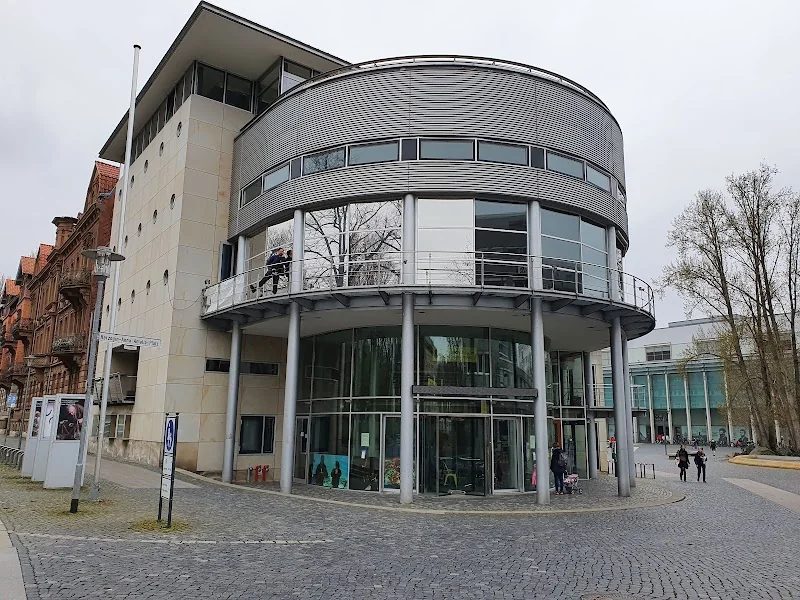
Magnitorwall 18, Braunschweig
Magnitorwall 18, 38100 Braunschweig, Germany
State Theatre Braunschweig, Small House | Program & Tickets
The Small House of the State Theatre Braunschweig is one of the most exciting venues in the city because it combines intimacy, overview, and artistic diversity. Those searching for the State Theatre Braunschweig, Small House are usually interested not just in an address but in a concrete cultural experience: the current program, the right seating plan, directions to Magnitorwall, and the question of which productions work best here. This venue was built exactly for that purpose. The house is located at Magnitorwall 18 in Braunschweig and offers 250 seats, distributed across the stalls and the 1st and 2nd tiers. The building also features the aquarium at the 2nd tier level and the theatre bar 5 kW on the 5th floor, making a visit to a performance quickly turn into a whole theatre evening. The official site shows several images, a linked seating plan, and clear information on accessibility and services. Thus, the Small House is not only a place for drama and dance but also a very well-structured venue for guests who want to quickly find the most important information. ([staatstheater-braunschweig.de](https://staatstheater-braunschweig.de/ueber-uns/ueber-das-theater/kleines-haus))
Program, Schedule, and Current Performances at the Small House
The program of the Small House is strongly characterized by drama and dance theatre, supplemented by literary evenings, special formats, and festival dates. The official schedule of the State Theatre links each performance directly to the ticket shop, making it easy to go from searching to booking. In the current schedule, the Small House features productions such as Styx, Antigone, Storm, and Yesterday; in addition, the schedule page also shows revivals, premieres, introductory dates, and notes on remaining tickets or sold-out performances. For the search queries related to the house, this mix is important: many visitors want not only to find the title of a production but also to understand on which evening it runs, whether an introduction is offered, and whether it is worth checking the calendar at all. The Small House meets this expectation particularly well because the schedule is clear and sorted by dates. Additionally, the house frequently appears in the latest and current repertoire pages as a venue for significant productions. Thus, the Small House becomes a place where contemporary dance, current themes, and classical works converge with a clear schedule logic. Therefore, those searching for the Small House, program, or tickets find here not just a stage but a very vibrant repertoire center with a short distance between information and booking. ([staatstheater-braunschweig.de](https://staatstheater-braunschweig.de/programm/spielplan?cHash=986c024d898782d529abe6066986b73a&tx_theatrefrontend_eventlist%5Baction%5D=showEvents&tx_theatrefrontend_eventlist%5Bcontroller%5D=Event&tx_theatrefrontend_eventlist%5Bmonth%5D=1746050400))
From an SEO perspective, terms like program, schedule, tickets, and tickets today are the most important entry points because they directly indicate a visitor's intent. Analyzing search terms reveals that users almost always search for either a specific title, the next date, or practical assistance. Therefore, the Small House is particularly strong in search queries like Small House program, schedule Small House, or tickets Small House. The official structure supports this use: on the schedule page, the dates are presented in a well-readable order, and next to each performance, there are notes on introductions, discussions, or remaining tickets. Especially for productions like Antigone or Styx, the range of the house is evident: Antigone combines drama and YOUNG! with a citizens' choir from Braunschweig, while Styx employs a contemporary choreographic language and a clear aesthetic signature. For visitors, this means that the schedule is not just a calendar but a curated overview of the artistic character of the house. Therefore, those visiting the Small House should always first look at the schedule, then at the respective production, and finally at ticket availability. These three steps reflect the most common search patterns very accurately. ([staatstheater-braunschweig.de](https://staatstheater-braunschweig.de/produktion/antigone-7554?utm_source=openai))
Seating Plan, Seats, and Capacity of 250 Seats
The seating plan of the Small House is a central theme because almost all practical questions can be derived from it: Which seats are in the stalls, which in the 1st tier, and which in the 2nd tier? Where is the best seat for drama, dance, or a quieter, more intimate view of the stage? And how large is the house anyway? The official description states 250 seats and characterizes the building as a compact solution with an almost square auditorium and two tight galleries. This compactness is an advantage: the audience experiences the stage very closely without the house feeling small in the sense of insignificant. On the contrary: the clear geometry and the manageable number of seats often create exactly that density that can carry modern theatre evenings. The published seating plan shows stalls, 1st tier, and 2nd tier along with side areas and also marks seats for wheelchair users. The accessible page adds the information that the box office in the foyer has an A3 seating plan available and that the ticket and visitor service team can assist in reserving seats for wheelchair users if needed. For SEO searches, the mix of seating plan, seat layout, and capacity is therefore important: those searching for these terms usually do not want abstract theatre information but a decision-making aid for the actual visit. The Small House offers a clear advantage here because the setup is transparent, and the stage remains very readable from almost all seats. ([staatstheater-braunschweig.de](https://staatstheater-braunschweig.de/ueber-uns/ueber-das-theater/kleines-haus))
The visual language of the seating plan is also relevant for searchers. The official venue page includes several images, allowing visitors to get a first impression of the stage, space, and audience arrangement. This is particularly helpful when someone is looking for photos of the Small House or an impression of the seating plan. Those wishing to check their seat choice before a performance benefit from the clear visibility of the tier structure and the stage as a compact focal area. Unlike in large opera or multipurpose halls, the distance to the stage is small here, which creates an intense viewing experience, especially in drama and dance. The fact that the house has 250 seats is not just a number but part of its identity: enough audience for a lively atmosphere, but small enough for an immediate perception of facial expressions, movement, and language. Especially in productions like Antigone, Nosferatu, or Novecento, which rely on text, presence, and density, this spatial effect becomes an artistic factor. Therefore, when searching for Small House seating plan, it is worth paying attention not only to the order of the seats but also to the type of production. Those who want to sit close to the stage will find the most direct perspective in the stalls; those who want to read the space as a whole will use the tiers. This versatility makes the seating plan of the Small House so relevant for online searches. ([staatstheater-braunschweig.de](https://staatstheater-braunschweig.de/fileadmin/Theater/Allgemeine_Bilder_Spielstaetten/Kleines_Haus/Saalplan_KH.jpg))
Directions, Parking, and Accessible Access at Magnitorwall
Directions are a particularly important search term for the Small House because the venue is centrally located in Braunschweig, and many guests plan their visit using public transport or by car. The official accessibility page states that the nearest bus stop is Staatstheater, as well as the tram stops Rathaus and Museumsstraße; for the Small House and the aquarium, there are also specific directions from the Staatstheater stop towards Kasernenstraße or Rathaus available as a PDF and audio guide. For the exact location of the Small House, the address at Magnitorwall 18 is also important. For drivers, the practical note is crucial that there is a disabled parking space in front of the stage entrance of the Small House on Magnitorwall street. At the same time, one should be aware of the city center rules of Braunschweig, as parking there is often organized through parking tickets, short-term regulations, and resident parking zones. Therefore, those searching for Small House Braunschweig parking are actually looking for a reliable combination of location, availability, and regulations. The official city page on parking management explains the basic logic of the signs and short-term regulations, which is valuable for a theatre visit in the city center. The Small House is well prepared for guests with special needs: there is a tactile guidance system in the foyer, step-free access via elevator to the tiers, to the aquarium, and to 5 kW, as well as bookable wheelchair spaces through the visitor service. Those arriving with assistance find not just an address but a functioning visitor concept. ([staatstheater-braunschweig.de](https://staatstheater-braunschweig.de/ihr-besuch/barrierefreiheit))
It is particularly noteworthy that the Small House is described very specifically on the accessibility page. The foyer is accessible at ground level or only interrupted by small thresholds, the doors are wide, the box office is located to the left near the entrance doors, and the auditorium is accessible via two entrances on the left and right. For people in wheelchairs, it is also important that the elevator is step-free accessible and that access to the wheelchair spaces is organized through the visitor service. Additionally, there are seating and standing options in the foyer, as well as beverage service before the performance and during the intermission. For blind and visually impaired individuals, the visit is facilitated by the provided PDF and audio guide descriptions. These details are not just service information but important SEO signals because they show that a theatre visit at the Small House is planable and inclusive. Those searching today for directions, parking, or accessibility want to make a quick decision and avoid long detours. The Small House fulfills this through clear, official, and up-to-date information. The central location remains an advantage as long as one considers the city parking rules and plans a little time for arrival, cloakroom, and orientation for the visit. ([staatstheater-braunschweig.de](https://staatstheater-braunschweig.de/ihr-besuch/barrierefreiheit))
History, Architecture, and Special Atmosphere
The history of the Small House does not begin only with the new building of 1996 but with a longer theatre tradition in Braunschweig. The official theatre history recalls that the Braunschweig stage already received a chamber theatre in the castle as a second, smaller venue in 1920. This tradition was revived in December 1949 with a studio stage in the attic of the former air fleet command in Grünewaldstraße and remained in operation there until 1996. The new building opposite the Large House emerged from a nationwide ideas competition in 1986 and was realized as a compact solution with an almost square auditorium and two tight galleries. This architectural idea is crucial for the perception of the house: the Small House is deliberately not a monumental building but a precisely proportioned theatre space where intimacy, visibility, and concentration on the performance are at the center. Additionally, the integration of a Gründerzeit residential building, where Max Beckmann spent some of his youth in Braunschweig, creates an ensemble that connects urban density, theatre history, and cultural memory. For visitors, this mixture creates the atmosphere: one does not enter just any venue but a place with a developed identity where the past and present stand visibly side by side. ([staatstheater-braunschweig.de](https://staatstheater-braunschweig.de/ueber-uns/ueber-das-theater/kleines-haus))
The special quality of the house also lies in the connection between a compact interior and an urban environment. The Small House stands at Magnitorwall and thus in an area where culture, city center, and everyday paths intersect. Those coming from or going to the theatre move not only between the entrance and auditorium but between urban space and concentrated stage world. This often makes the house feel very personal: the paths are short, the foyer is manageable, and orientation is easy. At the same time, the auditorium is large enough to create a genuine premiere or repertoire feeling. The official description emphasizes the tightly cut galleries and the glass foyer spaces as part of the urban solution. This makes the venue architecturally interesting for searchers who value the place itself alongside the program. When Google users search for photos, atmosphere, or special features of the Small House, it often concerns this experience: what does the space look like, how close is the stage, how does the house appear as part of the city? The answer is that the Small House is deliberately built small, clear, and dense to promote artistic presence. Therefore, it fits so well with dramas, dance evenings, and literary formats where the space itself becomes part of the effect. ([staatstheater-braunschweig.de](https://staatstheater-braunschweig.de/ueber-uns/ueber-das-theater/kleines-haus))
Which Productions Particularly Shape the Small House?
The Small House is particularly convincing when the production thrives on intimacy, physicality, or language. That is why productions that utilize the intimate spatial format repeatedly appear in the repertoire and schedule: Styx works with a contemporary choreographic language, an original score, and a production that explores the transition between life and death, body and spirit, as well as past and future. Antigone combines drama and YOUNG! with a modern adaptation by Roland Schimmelpfennig and a citizens' choir from Braunschweig. Nosferatu represents a theatrical film adaptation with many effects and a quirky horror aesthetic, while Novecento functions as a monologue in which actor Götz van Ooyen resurrects the sea voyage of an entire life before the audience. These productions show that the Small House is not just any multipurpose space but a stage where density and presence work particularly well. For search queries related to Nosferatu, Yesterday, Styx, Antigone, and Novecento, this means: users are not only searching for individual titles but want to understand the context of a specific venue. This is where the Small House is strong because the space supports the dramaturgy of the pieces, and the official website transparently presents the connections. Therefore, those searching for special evenings at the Small House find a mix of dance theatre, drama, literary scenes, and participatory elements. ([staatstheater-braunschweig.de](https://staatstheater-braunschweig.de/produktion/styx))
The current schedule pattern also confirms this impression. Regularly, introductions in the foyer, sometimes discussions, premiere notes, and revivals appear in the dates of the Small House. This not only creates orientation but also additional access to the piece. Thus, the visit is not reduced to the mere start of the performance but understood as a cultural experience with context. The examples from the schedule also show that the Small House is a place for very different audience interests: those wanting to see dance find Styx or Yesterday; those looking for social issues on stage land at Antigone; those who enjoy literary monologues encounter Novecento; and those who respond to atmospheric, visually strong theatre forms find a fitting production with Nosferatu. For SEO consideration, this diversity is valuable because it brings together the most common search motives: program, tickets, photos, seating plan, directions, and individual titles. Thus, the Small House is not only an address but a cluster of recurring productions, clear architecture, and easily findable service information. Those looking at Braunschweig's theatre landscape quickly notice that the Small House has its own signature: close, concentrated, versatile, and with 250 seats, large enough for the public but small enough for intensity. This balance makes the venue a very strong search and visit destination. ([staatstheater-braunschweig.de](https://staatstheater-braunschweig.de/programm/spielplan?cHash=986c024d898782d529abe6066986b73a&tx_theatrefrontend_eventlist%5Baction%5D=showEvents&tx_theatrefrontend_eventlist%5Bcontroller%5D=Event&tx_theatrefrontend_eventlist%5Bmonth%5D=1746050400))
Sources:
- State Theatre Braunschweig - Small House
- State Theatre Braunschweig - Accessibility
- State Theatre Braunschweig - Directions
- State Theatre Braunschweig - History of the Small House
- State Theatre Braunschweig - Schedule
- State Theatre Braunschweig - Styx
- State Theatre Braunschweig - Antigone
- State Theatre Braunschweig - Nosferatu
- State Theatre Braunschweig - Novecento
Show moreShow less
State Theatre Braunschweig, Small House | Program & Tickets
The Small House of the State Theatre Braunschweig is one of the most exciting venues in the city because it combines intimacy, overview, and artistic diversity. Those searching for the State Theatre Braunschweig, Small House are usually interested not just in an address but in a concrete cultural experience: the current program, the right seating plan, directions to Magnitorwall, and the question of which productions work best here. This venue was built exactly for that purpose. The house is located at Magnitorwall 18 in Braunschweig and offers 250 seats, distributed across the stalls and the 1st and 2nd tiers. The building also features the aquarium at the 2nd tier level and the theatre bar 5 kW on the 5th floor, making a visit to a performance quickly turn into a whole theatre evening. The official site shows several images, a linked seating plan, and clear information on accessibility and services. Thus, the Small House is not only a place for drama and dance but also a very well-structured venue for guests who want to quickly find the most important information. ([staatstheater-braunschweig.de](https://staatstheater-braunschweig.de/ueber-uns/ueber-das-theater/kleines-haus))
Program, Schedule, and Current Performances at the Small House
The program of the Small House is strongly characterized by drama and dance theatre, supplemented by literary evenings, special formats, and festival dates. The official schedule of the State Theatre links each performance directly to the ticket shop, making it easy to go from searching to booking. In the current schedule, the Small House features productions such as Styx, Antigone, Storm, and Yesterday; in addition, the schedule page also shows revivals, premieres, introductory dates, and notes on remaining tickets or sold-out performances. For the search queries related to the house, this mix is important: many visitors want not only to find the title of a production but also to understand on which evening it runs, whether an introduction is offered, and whether it is worth checking the calendar at all. The Small House meets this expectation particularly well because the schedule is clear and sorted by dates. Additionally, the house frequently appears in the latest and current repertoire pages as a venue for significant productions. Thus, the Small House becomes a place where contemporary dance, current themes, and classical works converge with a clear schedule logic. Therefore, those searching for the Small House, program, or tickets find here not just a stage but a very vibrant repertoire center with a short distance between information and booking. ([staatstheater-braunschweig.de](https://staatstheater-braunschweig.de/programm/spielplan?cHash=986c024d898782d529abe6066986b73a&tx_theatrefrontend_eventlist%5Baction%5D=showEvents&tx_theatrefrontend_eventlist%5Bcontroller%5D=Event&tx_theatrefrontend_eventlist%5Bmonth%5D=1746050400))
From an SEO perspective, terms like program, schedule, tickets, and tickets today are the most important entry points because they directly indicate a visitor's intent. Analyzing search terms reveals that users almost always search for either a specific title, the next date, or practical assistance. Therefore, the Small House is particularly strong in search queries like Small House program, schedule Small House, or tickets Small House. The official structure supports this use: on the schedule page, the dates are presented in a well-readable order, and next to each performance, there are notes on introductions, discussions, or remaining tickets. Especially for productions like Antigone or Styx, the range of the house is evident: Antigone combines drama and YOUNG! with a citizens' choir from Braunschweig, while Styx employs a contemporary choreographic language and a clear aesthetic signature. For visitors, this means that the schedule is not just a calendar but a curated overview of the artistic character of the house. Therefore, those visiting the Small House should always first look at the schedule, then at the respective production, and finally at ticket availability. These three steps reflect the most common search patterns very accurately. ([staatstheater-braunschweig.de](https://staatstheater-braunschweig.de/produktion/antigone-7554?utm_source=openai))
Seating Plan, Seats, and Capacity of 250 Seats
The seating plan of the Small House is a central theme because almost all practical questions can be derived from it: Which seats are in the stalls, which in the 1st tier, and which in the 2nd tier? Where is the best seat for drama, dance, or a quieter, more intimate view of the stage? And how large is the house anyway? The official description states 250 seats and characterizes the building as a compact solution with an almost square auditorium and two tight galleries. This compactness is an advantage: the audience experiences the stage very closely without the house feeling small in the sense of insignificant. On the contrary: the clear geometry and the manageable number of seats often create exactly that density that can carry modern theatre evenings. The published seating plan shows stalls, 1st tier, and 2nd tier along with side areas and also marks seats for wheelchair users. The accessible page adds the information that the box office in the foyer has an A3 seating plan available and that the ticket and visitor service team can assist in reserving seats for wheelchair users if needed. For SEO searches, the mix of seating plan, seat layout, and capacity is therefore important: those searching for these terms usually do not want abstract theatre information but a decision-making aid for the actual visit. The Small House offers a clear advantage here because the setup is transparent, and the stage remains very readable from almost all seats. ([staatstheater-braunschweig.de](https://staatstheater-braunschweig.de/ueber-uns/ueber-das-theater/kleines-haus))
The visual language of the seating plan is also relevant for searchers. The official venue page includes several images, allowing visitors to get a first impression of the stage, space, and audience arrangement. This is particularly helpful when someone is looking for photos of the Small House or an impression of the seating plan. Those wishing to check their seat choice before a performance benefit from the clear visibility of the tier structure and the stage as a compact focal area. Unlike in large opera or multipurpose halls, the distance to the stage is small here, which creates an intense viewing experience, especially in drama and dance. The fact that the house has 250 seats is not just a number but part of its identity: enough audience for a lively atmosphere, but small enough for an immediate perception of facial expressions, movement, and language. Especially in productions like Antigone, Nosferatu, or Novecento, which rely on text, presence, and density, this spatial effect becomes an artistic factor. Therefore, when searching for Small House seating plan, it is worth paying attention not only to the order of the seats but also to the type of production. Those who want to sit close to the stage will find the most direct perspective in the stalls; those who want to read the space as a whole will use the tiers. This versatility makes the seating plan of the Small House so relevant for online searches. ([staatstheater-braunschweig.de](https://staatstheater-braunschweig.de/fileadmin/Theater/Allgemeine_Bilder_Spielstaetten/Kleines_Haus/Saalplan_KH.jpg))
Directions, Parking, and Accessible Access at Magnitorwall
Directions are a particularly important search term for the Small House because the venue is centrally located in Braunschweig, and many guests plan their visit using public transport or by car. The official accessibility page states that the nearest bus stop is Staatstheater, as well as the tram stops Rathaus and Museumsstraße; for the Small House and the aquarium, there are also specific directions from the Staatstheater stop towards Kasernenstraße or Rathaus available as a PDF and audio guide. For the exact location of the Small House, the address at Magnitorwall 18 is also important. For drivers, the practical note is crucial that there is a disabled parking space in front of the stage entrance of the Small House on Magnitorwall street. At the same time, one should be aware of the city center rules of Braunschweig, as parking there is often organized through parking tickets, short-term regulations, and resident parking zones. Therefore, those searching for Small House Braunschweig parking are actually looking for a reliable combination of location, availability, and regulations. The official city page on parking management explains the basic logic of the signs and short-term regulations, which is valuable for a theatre visit in the city center. The Small House is well prepared for guests with special needs: there is a tactile guidance system in the foyer, step-free access via elevator to the tiers, to the aquarium, and to 5 kW, as well as bookable wheelchair spaces through the visitor service. Those arriving with assistance find not just an address but a functioning visitor concept. ([staatstheater-braunschweig.de](https://staatstheater-braunschweig.de/ihr-besuch/barrierefreiheit))
It is particularly noteworthy that the Small House is described very specifically on the accessibility page. The foyer is accessible at ground level or only interrupted by small thresholds, the doors are wide, the box office is located to the left near the entrance doors, and the auditorium is accessible via two entrances on the left and right. For people in wheelchairs, it is also important that the elevator is step-free accessible and that access to the wheelchair spaces is organized through the visitor service. Additionally, there are seating and standing options in the foyer, as well as beverage service before the performance and during the intermission. For blind and visually impaired individuals, the visit is facilitated by the provided PDF and audio guide descriptions. These details are not just service information but important SEO signals because they show that a theatre visit at the Small House is planable and inclusive. Those searching today for directions, parking, or accessibility want to make a quick decision and avoid long detours. The Small House fulfills this through clear, official, and up-to-date information. The central location remains an advantage as long as one considers the city parking rules and plans a little time for arrival, cloakroom, and orientation for the visit. ([staatstheater-braunschweig.de](https://staatstheater-braunschweig.de/ihr-besuch/barrierefreiheit))
History, Architecture, and Special Atmosphere
The history of the Small House does not begin only with the new building of 1996 but with a longer theatre tradition in Braunschweig. The official theatre history recalls that the Braunschweig stage already received a chamber theatre in the castle as a second, smaller venue in 1920. This tradition was revived in December 1949 with a studio stage in the attic of the former air fleet command in Grünewaldstraße and remained in operation there until 1996. The new building opposite the Large House emerged from a nationwide ideas competition in 1986 and was realized as a compact solution with an almost square auditorium and two tight galleries. This architectural idea is crucial for the perception of the house: the Small House is deliberately not a monumental building but a precisely proportioned theatre space where intimacy, visibility, and concentration on the performance are at the center. Additionally, the integration of a Gründerzeit residential building, where Max Beckmann spent some of his youth in Braunschweig, creates an ensemble that connects urban density, theatre history, and cultural memory. For visitors, this mixture creates the atmosphere: one does not enter just any venue but a place with a developed identity where the past and present stand visibly side by side. ([staatstheater-braunschweig.de](https://staatstheater-braunschweig.de/ueber-uns/ueber-das-theater/kleines-haus))
The special quality of the house also lies in the connection between a compact interior and an urban environment. The Small House stands at Magnitorwall and thus in an area where culture, city center, and everyday paths intersect. Those coming from or going to the theatre move not only between the entrance and auditorium but between urban space and concentrated stage world. This often makes the house feel very personal: the paths are short, the foyer is manageable, and orientation is easy. At the same time, the auditorium is large enough to create a genuine premiere or repertoire feeling. The official description emphasizes the tightly cut galleries and the glass foyer spaces as part of the urban solution. This makes the venue architecturally interesting for searchers who value the place itself alongside the program. When Google users search for photos, atmosphere, or special features of the Small House, it often concerns this experience: what does the space look like, how close is the stage, how does the house appear as part of the city? The answer is that the Small House is deliberately built small, clear, and dense to promote artistic presence. Therefore, it fits so well with dramas, dance evenings, and literary formats where the space itself becomes part of the effect. ([staatstheater-braunschweig.de](https://staatstheater-braunschweig.de/ueber-uns/ueber-das-theater/kleines-haus))
Which Productions Particularly Shape the Small House?
The Small House is particularly convincing when the production thrives on intimacy, physicality, or language. That is why productions that utilize the intimate spatial format repeatedly appear in the repertoire and schedule: Styx works with a contemporary choreographic language, an original score, and a production that explores the transition between life and death, body and spirit, as well as past and future. Antigone combines drama and YOUNG! with a modern adaptation by Roland Schimmelpfennig and a citizens' choir from Braunschweig. Nosferatu represents a theatrical film adaptation with many effects and a quirky horror aesthetic, while Novecento functions as a monologue in which actor Götz van Ooyen resurrects the sea voyage of an entire life before the audience. These productions show that the Small House is not just any multipurpose space but a stage where density and presence work particularly well. For search queries related to Nosferatu, Yesterday, Styx, Antigone, and Novecento, this means: users are not only searching for individual titles but want to understand the context of a specific venue. This is where the Small House is strong because the space supports the dramaturgy of the pieces, and the official website transparently presents the connections. Therefore, those searching for special evenings at the Small House find a mix of dance theatre, drama, literary scenes, and participatory elements. ([staatstheater-braunschweig.de](https://staatstheater-braunschweig.de/produktion/styx))
The current schedule pattern also confirms this impression. Regularly, introductions in the foyer, sometimes discussions, premiere notes, and revivals appear in the dates of the Small House. This not only creates orientation but also additional access to the piece. Thus, the visit is not reduced to the mere start of the performance but understood as a cultural experience with context. The examples from the schedule also show that the Small House is a place for very different audience interests: those wanting to see dance find Styx or Yesterday; those looking for social issues on stage land at Antigone; those who enjoy literary monologues encounter Novecento; and those who respond to atmospheric, visually strong theatre forms find a fitting production with Nosferatu. For SEO consideration, this diversity is valuable because it brings together the most common search motives: program, tickets, photos, seating plan, directions, and individual titles. Thus, the Small House is not only an address but a cluster of recurring productions, clear architecture, and easily findable service information. Those looking at Braunschweig's theatre landscape quickly notice that the Small House has its own signature: close, concentrated, versatile, and with 250 seats, large enough for the public but small enough for intensity. This balance makes the venue a very strong search and visit destination. ([staatstheater-braunschweig.de](https://staatstheater-braunschweig.de/programm/spielplan?cHash=986c024d898782d529abe6066986b73a&tx_theatrefrontend_eventlist%5Baction%5D=showEvents&tx_theatrefrontend_eventlist%5Bcontroller%5D=Event&tx_theatrefrontend_eventlist%5Bmonth%5D=1746050400))
Sources:
- State Theatre Braunschweig - Small House
- State Theatre Braunschweig - Accessibility
- State Theatre Braunschweig - Directions
- State Theatre Braunschweig - History of the Small House
- State Theatre Braunschweig - Schedule
- State Theatre Braunschweig - Styx
- State Theatre Braunschweig - Antigone
- State Theatre Braunschweig - Nosferatu
- State Theatre Braunschweig - Novecento
State Theatre Braunschweig, Small House | Program & Tickets
The Small House of the State Theatre Braunschweig is one of the most exciting venues in the city because it combines intimacy, overview, and artistic diversity. Those searching for the State Theatre Braunschweig, Small House are usually interested not just in an address but in a concrete cultural experience: the current program, the right seating plan, directions to Magnitorwall, and the question of which productions work best here. This venue was built exactly for that purpose. The house is located at Magnitorwall 18 in Braunschweig and offers 250 seats, distributed across the stalls and the 1st and 2nd tiers. The building also features the aquarium at the 2nd tier level and the theatre bar 5 kW on the 5th floor, making a visit to a performance quickly turn into a whole theatre evening. The official site shows several images, a linked seating plan, and clear information on accessibility and services. Thus, the Small House is not only a place for drama and dance but also a very well-structured venue for guests who want to quickly find the most important information. ([staatstheater-braunschweig.de](https://staatstheater-braunschweig.de/ueber-uns/ueber-das-theater/kleines-haus))
Program, Schedule, and Current Performances at the Small House
The program of the Small House is strongly characterized by drama and dance theatre, supplemented by literary evenings, special formats, and festival dates. The official schedule of the State Theatre links each performance directly to the ticket shop, making it easy to go from searching to booking. In the current schedule, the Small House features productions such as Styx, Antigone, Storm, and Yesterday; in addition, the schedule page also shows revivals, premieres, introductory dates, and notes on remaining tickets or sold-out performances. For the search queries related to the house, this mix is important: many visitors want not only to find the title of a production but also to understand on which evening it runs, whether an introduction is offered, and whether it is worth checking the calendar at all. The Small House meets this expectation particularly well because the schedule is clear and sorted by dates. Additionally, the house frequently appears in the latest and current repertoire pages as a venue for significant productions. Thus, the Small House becomes a place where contemporary dance, current themes, and classical works converge with a clear schedule logic. Therefore, those searching for the Small House, program, or tickets find here not just a stage but a very vibrant repertoire center with a short distance between information and booking. ([staatstheater-braunschweig.de](https://staatstheater-braunschweig.de/programm/spielplan?cHash=986c024d898782d529abe6066986b73a&tx_theatrefrontend_eventlist%5Baction%5D=showEvents&tx_theatrefrontend_eventlist%5Bcontroller%5D=Event&tx_theatrefrontend_eventlist%5Bmonth%5D=1746050400))
From an SEO perspective, terms like program, schedule, tickets, and tickets today are the most important entry points because they directly indicate a visitor's intent. Analyzing search terms reveals that users almost always search for either a specific title, the next date, or practical assistance. Therefore, the Small House is particularly strong in search queries like Small House program, schedule Small House, or tickets Small House. The official structure supports this use: on the schedule page, the dates are presented in a well-readable order, and next to each performance, there are notes on introductions, discussions, or remaining tickets. Especially for productions like Antigone or Styx, the range of the house is evident: Antigone combines drama and YOUNG! with a citizens' choir from Braunschweig, while Styx employs a contemporary choreographic language and a clear aesthetic signature. For visitors, this means that the schedule is not just a calendar but a curated overview of the artistic character of the house. Therefore, those visiting the Small House should always first look at the schedule, then at the respective production, and finally at ticket availability. These three steps reflect the most common search patterns very accurately. ([staatstheater-braunschweig.de](https://staatstheater-braunschweig.de/produktion/antigone-7554?utm_source=openai))
Seating Plan, Seats, and Capacity of 250 Seats
The seating plan of the Small House is a central theme because almost all practical questions can be derived from it: Which seats are in the stalls, which in the 1st tier, and which in the 2nd tier? Where is the best seat for drama, dance, or a quieter, more intimate view of the stage? And how large is the house anyway? The official description states 250 seats and characterizes the building as a compact solution with an almost square auditorium and two tight galleries. This compactness is an advantage: the audience experiences the stage very closely without the house feeling small in the sense of insignificant. On the contrary: the clear geometry and the manageable number of seats often create exactly that density that can carry modern theatre evenings. The published seating plan shows stalls, 1st tier, and 2nd tier along with side areas and also marks seats for wheelchair users. The accessible page adds the information that the box office in the foyer has an A3 seating plan available and that the ticket and visitor service team can assist in reserving seats for wheelchair users if needed. For SEO searches, the mix of seating plan, seat layout, and capacity is therefore important: those searching for these terms usually do not want abstract theatre information but a decision-making aid for the actual visit. The Small House offers a clear advantage here because the setup is transparent, and the stage remains very readable from almost all seats. ([staatstheater-braunschweig.de](https://staatstheater-braunschweig.de/ueber-uns/ueber-das-theater/kleines-haus))
The visual language of the seating plan is also relevant for searchers. The official venue page includes several images, allowing visitors to get a first impression of the stage, space, and audience arrangement. This is particularly helpful when someone is looking for photos of the Small House or an impression of the seating plan. Those wishing to check their seat choice before a performance benefit from the clear visibility of the tier structure and the stage as a compact focal area. Unlike in large opera or multipurpose halls, the distance to the stage is small here, which creates an intense viewing experience, especially in drama and dance. The fact that the house has 250 seats is not just a number but part of its identity: enough audience for a lively atmosphere, but small enough for an immediate perception of facial expressions, movement, and language. Especially in productions like Antigone, Nosferatu, or Novecento, which rely on text, presence, and density, this spatial effect becomes an artistic factor. Therefore, when searching for Small House seating plan, it is worth paying attention not only to the order of the seats but also to the type of production. Those who want to sit close to the stage will find the most direct perspective in the stalls; those who want to read the space as a whole will use the tiers. This versatility makes the seating plan of the Small House so relevant for online searches. ([staatstheater-braunschweig.de](https://staatstheater-braunschweig.de/fileadmin/Theater/Allgemeine_Bilder_Spielstaetten/Kleines_Haus/Saalplan_KH.jpg))
Directions, Parking, and Accessible Access at Magnitorwall
Directions are a particularly important search term for the Small House because the venue is centrally located in Braunschweig, and many guests plan their visit using public transport or by car. The official accessibility page states that the nearest bus stop is Staatstheater, as well as the tram stops Rathaus and Museumsstraße; for the Small House and the aquarium, there are also specific directions from the Staatstheater stop towards Kasernenstraße or Rathaus available as a PDF and audio guide. For the exact location of the Small House, the address at Magnitorwall 18 is also important. For drivers, the practical note is crucial that there is a disabled parking space in front of the stage entrance of the Small House on Magnitorwall street. At the same time, one should be aware of the city center rules of Braunschweig, as parking there is often organized through parking tickets, short-term regulations, and resident parking zones. Therefore, those searching for Small House Braunschweig parking are actually looking for a reliable combination of location, availability, and regulations. The official city page on parking management explains the basic logic of the signs and short-term regulations, which is valuable for a theatre visit in the city center. The Small House is well prepared for guests with special needs: there is a tactile guidance system in the foyer, step-free access via elevator to the tiers, to the aquarium, and to 5 kW, as well as bookable wheelchair spaces through the visitor service. Those arriving with assistance find not just an address but a functioning visitor concept. ([staatstheater-braunschweig.de](https://staatstheater-braunschweig.de/ihr-besuch/barrierefreiheit))
It is particularly noteworthy that the Small House is described very specifically on the accessibility page. The foyer is accessible at ground level or only interrupted by small thresholds, the doors are wide, the box office is located to the left near the entrance doors, and the auditorium is accessible via two entrances on the left and right. For people in wheelchairs, it is also important that the elevator is step-free accessible and that access to the wheelchair spaces is organized through the visitor service. Additionally, there are seating and standing options in the foyer, as well as beverage service before the performance and during the intermission. For blind and visually impaired individuals, the visit is facilitated by the provided PDF and audio guide descriptions. These details are not just service information but important SEO signals because they show that a theatre visit at the Small House is planable and inclusive. Those searching today for directions, parking, or accessibility want to make a quick decision and avoid long detours. The Small House fulfills this through clear, official, and up-to-date information. The central location remains an advantage as long as one considers the city parking rules and plans a little time for arrival, cloakroom, and orientation for the visit. ([staatstheater-braunschweig.de](https://staatstheater-braunschweig.de/ihr-besuch/barrierefreiheit))
History, Architecture, and Special Atmosphere
The history of the Small House does not begin only with the new building of 1996 but with a longer theatre tradition in Braunschweig. The official theatre history recalls that the Braunschweig stage already received a chamber theatre in the castle as a second, smaller venue in 1920. This tradition was revived in December 1949 with a studio stage in the attic of the former air fleet command in Grünewaldstraße and remained in operation there until 1996. The new building opposite the Large House emerged from a nationwide ideas competition in 1986 and was realized as a compact solution with an almost square auditorium and two tight galleries. This architectural idea is crucial for the perception of the house: the Small House is deliberately not a monumental building but a precisely proportioned theatre space where intimacy, visibility, and concentration on the performance are at the center. Additionally, the integration of a Gründerzeit residential building, where Max Beckmann spent some of his youth in Braunschweig, creates an ensemble that connects urban density, theatre history, and cultural memory. For visitors, this mixture creates the atmosphere: one does not enter just any venue but a place with a developed identity where the past and present stand visibly side by side. ([staatstheater-braunschweig.de](https://staatstheater-braunschweig.de/ueber-uns/ueber-das-theater/kleines-haus))
The special quality of the house also lies in the connection between a compact interior and an urban environment. The Small House stands at Magnitorwall and thus in an area where culture, city center, and everyday paths intersect. Those coming from or going to the theatre move not only between the entrance and auditorium but between urban space and concentrated stage world. This often makes the house feel very personal: the paths are short, the foyer is manageable, and orientation is easy. At the same time, the auditorium is large enough to create a genuine premiere or repertoire feeling. The official description emphasizes the tightly cut galleries and the glass foyer spaces as part of the urban solution. This makes the venue architecturally interesting for searchers who value the place itself alongside the program. When Google users search for photos, atmosphere, or special features of the Small House, it often concerns this experience: what does the space look like, how close is the stage, how does the house appear as part of the city? The answer is that the Small House is deliberately built small, clear, and dense to promote artistic presence. Therefore, it fits so well with dramas, dance evenings, and literary formats where the space itself becomes part of the effect. ([staatstheater-braunschweig.de](https://staatstheater-braunschweig.de/ueber-uns/ueber-das-theater/kleines-haus))
Which Productions Particularly Shape the Small House?
The Small House is particularly convincing when the production thrives on intimacy, physicality, or language. That is why productions that utilize the intimate spatial format repeatedly appear in the repertoire and schedule: Styx works with a contemporary choreographic language, an original score, and a production that explores the transition between life and death, body and spirit, as well as past and future. Antigone combines drama and YOUNG! with a modern adaptation by Roland Schimmelpfennig and a citizens' choir from Braunschweig. Nosferatu represents a theatrical film adaptation with many effects and a quirky horror aesthetic, while Novecento functions as a monologue in which actor Götz van Ooyen resurrects the sea voyage of an entire life before the audience. These productions show that the Small House is not just any multipurpose space but a stage where density and presence work particularly well. For search queries related to Nosferatu, Yesterday, Styx, Antigone, and Novecento, this means: users are not only searching for individual titles but want to understand the context of a specific venue. This is where the Small House is strong because the space supports the dramaturgy of the pieces, and the official website transparently presents the connections. Therefore, those searching for special evenings at the Small House find a mix of dance theatre, drama, literary scenes, and participatory elements. ([staatstheater-braunschweig.de](https://staatstheater-braunschweig.de/produktion/styx))
The current schedule pattern also confirms this impression. Regularly, introductions in the foyer, sometimes discussions, premiere notes, and revivals appear in the dates of the Small House. This not only creates orientation but also additional access to the piece. Thus, the visit is not reduced to the mere start of the performance but understood as a cultural experience with context. The examples from the schedule also show that the Small House is a place for very different audience interests: those wanting to see dance find Styx or Yesterday; those looking for social issues on stage land at Antigone; those who enjoy literary monologues encounter Novecento; and those who respond to atmospheric, visually strong theatre forms find a fitting production with Nosferatu. For SEO consideration, this diversity is valuable because it brings together the most common search motives: program, tickets, photos, seating plan, directions, and individual titles. Thus, the Small House is not only an address but a cluster of recurring productions, clear architecture, and easily findable service information. Those looking at Braunschweig's theatre landscape quickly notice that the Small House has its own signature: close, concentrated, versatile, and with 250 seats, large enough for the public but small enough for intensity. This balance makes the venue a very strong search and visit destination. ([staatstheater-braunschweig.de](https://staatstheater-braunschweig.de/programm/spielplan?cHash=986c024d898782d529abe6066986b73a&tx_theatrefrontend_eventlist%5Baction%5D=showEvents&tx_theatrefrontend_eventlist%5Bcontroller%5D=Event&tx_theatrefrontend_eventlist%5Bmonth%5D=1746050400))
Sources:
- State Theatre Braunschweig - Small House
- State Theatre Braunschweig - Accessibility
- State Theatre Braunschweig - Directions
- State Theatre Braunschweig - History of the Small House
- State Theatre Braunschweig - Schedule
- State Theatre Braunschweig - Styx
- State Theatre Braunschweig - Antigone
- State Theatre Braunschweig - Nosferatu
- State Theatre Braunschweig - Novecento
Upcoming Events
No events found
Frequently Asked Questions
Reviews
Olga Ditibane
14. January 2020
I absolutely loved it, the staff members are very friendly and helpful.
Ken Wood
7. November 2023
Modern location, friendly staff. We visited a play for toddlers, great initiative and fun to watch!
Zeeshan Asghar
10. November 2025
Nice
zee упiтiс
19. June 2022
Modern theatre with great programme and staff.
Jasper
26. October 2017
nice place to go