
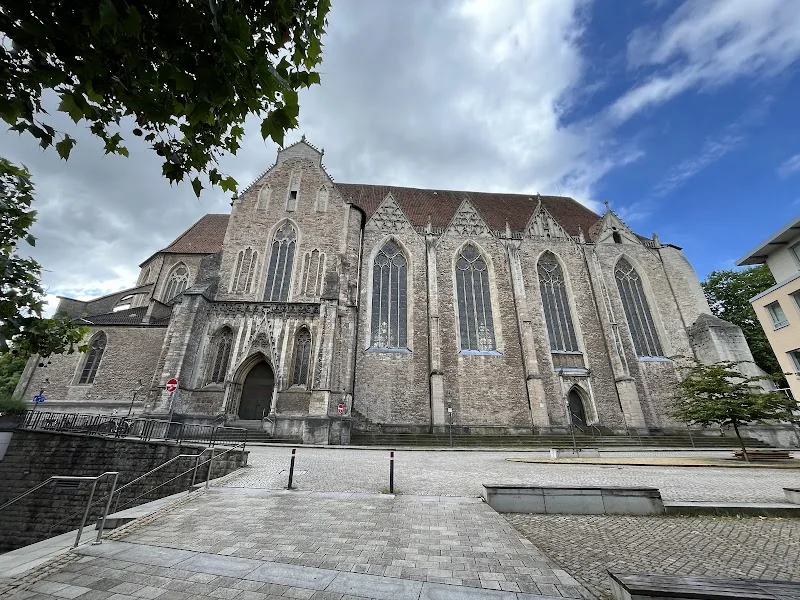
Spohrpl. 9, Braunschweig
Spohrpl. 9, 38100 Braunschweig, Germany
St Giles Braunschweig | History & Church Music
St Giles Braunschweig is intended as an SEO working title for the Catholic main church St. Aegidien in Braunschweig, a place that is equally visible in the city's history and cultural everyday life. The address of the parish community is Spohrplatz 9; the church ensemble around St. Aegidien is located in the historic Aegidienviertel, whose development is closely linked to the medieval monastery, the Aegidienmarkt, and the neighboring houses. Those searching for St. Giles, St. Aegidien, or Liebfrauenmünster will find here not an interchangeable church space, but a place with a long, eventful history, a pronounced music tradition, and a strong role as a spiritual center in the Braunschweig city center. The name St. Gilles or St. Aegidius refers to the historical root of the place and explains why the search queries for St Giles are so well connected to this location. ([sanktaegidien.de](https://www.sanktaegidien.de/))
St. Aegidien between medieval monastery freedom and modern city history
The history of St. Aegidien begins in 1115 when Margravine Gertrud of Saxony founded the Benedictine monastery. At that time, the facility still belonged to an area outside the early settlement zones, but developed with the city and was later incorporated into the fortification of the entire area. After the Romanesque monastery church was destroyed by a city fire in 1278, the Gothic reconstruction began in 1282. The choir and transept were completed around 1300, the nave was further built as a three-aisled hall church in the 14th and 15th centuries, and in 1478 the church nave was consecrated. The city of Braunschweig describes St. Aegidien as the only example of early cathedral Gothic style in the city, which makes the building particularly significant from an architectural historical perspective. After the Reformation, the use changed several times: the monastery became a Protestant parish church, later a garrison church, then from 1811 a profaned hall, and finally a museum site, before the sacred building has been a Catholic parish church again since 1945. These transitions explain why St. Aegidien is still perceived today not only as a church but also as an urban memorial site. ([braunschweig.de](https://www.braunschweig.de/tourismus/ihr-besuch-in-braunschweig/sehenswuerdigkeiten/eintraege-sehenswuerdigkeiten/_st_aegidien.php))
Church music, choirs, and the large Klais organ
Those interested in church music will find in St. Aegidien one of the most important musical places in Braunschweig. The community itself emphasizes that church music is a focus here. According to the official representation, there are 23 choir groups with a total of around 450 singers, including a singing school with more than 300 children and adolescents. The repertoire ranges from Gregorian chant to modern works, and the groups consciously move between beginner formats, worship choirs, and the concert choir with high performance expectations. The Münsterchor St. Aegidien is considered by the city of Braunschweig to be the most significant and largest choir for Catholic church music in the city; it performs oratorios, choral concerts, and orchestral masses and also goes on concert tours both domestically and abroad. Particularly defining is the large Klais organ: it was built in 1965 by Johannes Klais in Bonn as Opus 1303, has three manuals and 45 stops, and is regarded in the community's documentation as one of the most beautiful-sounding organs in Braunschweig. A look into music history shows that organs at this location have been documented much earlier; records mention an instrument for the first time in 1397, followed by other large organs, including in the 17th century. The current sound space is therefore not a coincidence but the result of an organ and choir tradition that has grown over centuries. ([sanktaegidien.de](https://www.sanktaegidien.de/gemeinde/kirchenmusik/?utm_source=openai))
Concerts, services, and lived community in the center of Braunschweig
St. Aegidien is not only a historical monument but also a place with current community life. The official church music page refers to concerts and services as fixed pillars of the offerings; there are regularly announcements of musical events, choir rehearsals, and liturgical formats. The community also publishes a confession opportunity on Saturdays from 4:30 PM to 5:30 PM, which shows that St. Aegidien is used not only for special occasions but also as a reliable pastoral care location. The parish office at Spohrplatz 9 is reachable Monday to Friday from 8:00 AM to 12:00 PM. Furthermore, the community supports musical talent and regular participation in the liturgy with various choirs, a Young Münster Music for children and adolescents, and project-related ensembles. This connection of public culture and concrete community makes the location attractive for different target groups: people specifically searching for concert venues, organs, choirs, or services find here the same place with various approaches. For an SEO page, this is particularly valuable because search intentions such as program, tickets, concert, service, organ concert, and church music converge at a single, authentic location. ([sanktaegidien.de](https://www.sanktaegidien.de/1/suche/adresse/pfarrbuero-st-aegidien/?utm_source=openai))
Access, parking, and orientation in the Aegidienviertel
The Aegidienviertel is centrally located in the Braunschweig city center and is therefore easily accessible, but not designed for large parking spaces directly at the door. For the Museum Hinter Aegidien, which is part of the St. Aegidien complex, the official visitor information explicitly points out that there are no private parking spaces. Instead, several paid parking options are available nearby, including the CONTIPARK parking garage Wallstraße and the Magni parking garage. For public transport access, the same source mentions the stop John-F.-Kennedy-Platz; bus lines 420, 426, 431, and 730 as well as tram lines 1, 2, and 10 stop there. This is practical for visitors as they can arrive relatively easily from both the center and the main train station. Additionally, the city description of the Aegidienviertel aids in orientation: the quarter includes St. Aegidien, the cloister and convent rooms, the Paulinerchor, Spohrplatz, the Leisewitzhaus, and other historic buildings. Therefore, those traveling for a concert, service, or visit should expect less of a classic forecourt and more of an urban old town environment where parking garages, footpaths, and public transport work together sensibly. This mix of central location and limited parking availability is an important, honest indication for search queries related to access and parking. ([3landesmuseen-braunschweig.de](https://3landesmuseen-braunschweig.de/en/braunschweigisches-landesmuseum/visit/information))
Architecture, furnishing details, and the special museum and church complex
St. Aegidien is architecturally multifaceted. The city of Braunschweig describes the monastery church as a building that was rebuilt in the style of French cathedral Gothic after the destruction of the Romanesque predecessor. The choir with ambulatory and chapels, the open flying buttresses, the high central choir nave, and the mighty church nave shape the impression to this day. The ensemble also includes the still preserved rooms of the former Benedictine monastery with a Romanesque east wing, cloister, sacristy, chapter house, parlatorium, and refectory. The Braunschweigisches Landesmuseum adds to this perspective by noting that Hinter Aegidien is an unusual building complex where the preserved rooms of the monastery, the Gothic choir of the former Pauliner church, and other structures come together. Particularly noteworthy is the Judaica collection of the museum with more than 1,000 objects, which is among the historically most important of its kind in Germany. In this context, it becomes clear that St. Aegidien is not only a sacred space but also a place of historical multiple use: monastery, parish church, museum, cultural event venue, and city monument. This layering makes the location equally exciting for visitors, music lovers, and those interested in cultural history. Those searching for St Giles church, St Giles cathedral, or an extraordinary church in Braunschweig will therefore find here much more than just a beautiful facade. ([braunschweig.de](https://www.braunschweig.de/tourismus/ihr-besuch-in-braunschweig/sehenswuerdigkeiten/eintraege-sehenswuerdigkeiten/_st_aegidien.php))
Why St Giles Braunschweig convinces seekers of church, culture, and tranquility
St Giles Braunschweig is ultimately a strong meeting point for several search intentions at once. People looking for a Catholic main church find St. Aegidien with its long history and spiritual profile. People seeking culture and music find concerts, choir work, and a traditional organ. People interested in Braunschweig's city history encounter a place where medieval monastery freedom, Reformation, museum history, and the present overlap. And people simply looking for a quiet, special place in the center experience a quarter that has surprisingly preserved a lot of atmosphere despite its inner-city location. The combination of historical depth, active community, strong music tradition, and good accessibility makes St. Aegidien a location that works both in everyday life and for special occasions. That is exactly why the location is so interesting for SEO: it covers content related to history, organ, choirs, services, access, and parking in a clear, credible profile and thus fits many of the most common search patterns around St. Giles, St. Aegidien, and Braunschweig. ([sanktaegidien.de](https://www.sanktaegidien.de/gemeinde/kirchenmusik/?utm_source=openai))
Sources:
- St. Aegidien Braunschweig - Official Website
- City of Braunschweig - St. Aegidien
- Church Music St. Aegidien Braunschweig - Official Church Music Page
- Church Music St. Aegidien Braunschweig - History of the Organ
- Church Music St. Aegidien Braunschweig - Klais Organ
- 3Landesmuseen - The former monastery of St. Aegidien
- 3Landesmuseen - Visitor info and parking
Show moreShow less
St Giles Braunschweig | History & Church Music
St Giles Braunschweig is intended as an SEO working title for the Catholic main church St. Aegidien in Braunschweig, a place that is equally visible in the city's history and cultural everyday life. The address of the parish community is Spohrplatz 9; the church ensemble around St. Aegidien is located in the historic Aegidienviertel, whose development is closely linked to the medieval monastery, the Aegidienmarkt, and the neighboring houses. Those searching for St. Giles, St. Aegidien, or Liebfrauenmünster will find here not an interchangeable church space, but a place with a long, eventful history, a pronounced music tradition, and a strong role as a spiritual center in the Braunschweig city center. The name St. Gilles or St. Aegidius refers to the historical root of the place and explains why the search queries for St Giles are so well connected to this location. ([sanktaegidien.de](https://www.sanktaegidien.de/))
St. Aegidien between medieval monastery freedom and modern city history
The history of St. Aegidien begins in 1115 when Margravine Gertrud of Saxony founded the Benedictine monastery. At that time, the facility still belonged to an area outside the early settlement zones, but developed with the city and was later incorporated into the fortification of the entire area. After the Romanesque monastery church was destroyed by a city fire in 1278, the Gothic reconstruction began in 1282. The choir and transept were completed around 1300, the nave was further built as a three-aisled hall church in the 14th and 15th centuries, and in 1478 the church nave was consecrated. The city of Braunschweig describes St. Aegidien as the only example of early cathedral Gothic style in the city, which makes the building particularly significant from an architectural historical perspective. After the Reformation, the use changed several times: the monastery became a Protestant parish church, later a garrison church, then from 1811 a profaned hall, and finally a museum site, before the sacred building has been a Catholic parish church again since 1945. These transitions explain why St. Aegidien is still perceived today not only as a church but also as an urban memorial site. ([braunschweig.de](https://www.braunschweig.de/tourismus/ihr-besuch-in-braunschweig/sehenswuerdigkeiten/eintraege-sehenswuerdigkeiten/_st_aegidien.php))
Church music, choirs, and the large Klais organ
Those interested in church music will find in St. Aegidien one of the most important musical places in Braunschweig. The community itself emphasizes that church music is a focus here. According to the official representation, there are 23 choir groups with a total of around 450 singers, including a singing school with more than 300 children and adolescents. The repertoire ranges from Gregorian chant to modern works, and the groups consciously move between beginner formats, worship choirs, and the concert choir with high performance expectations. The Münsterchor St. Aegidien is considered by the city of Braunschweig to be the most significant and largest choir for Catholic church music in the city; it performs oratorios, choral concerts, and orchestral masses and also goes on concert tours both domestically and abroad. Particularly defining is the large Klais organ: it was built in 1965 by Johannes Klais in Bonn as Opus 1303, has three manuals and 45 stops, and is regarded in the community's documentation as one of the most beautiful-sounding organs in Braunschweig. A look into music history shows that organs at this location have been documented much earlier; records mention an instrument for the first time in 1397, followed by other large organs, including in the 17th century. The current sound space is therefore not a coincidence but the result of an organ and choir tradition that has grown over centuries. ([sanktaegidien.de](https://www.sanktaegidien.de/gemeinde/kirchenmusik/?utm_source=openai))
Concerts, services, and lived community in the center of Braunschweig
St. Aegidien is not only a historical monument but also a place with current community life. The official church music page refers to concerts and services as fixed pillars of the offerings; there are regularly announcements of musical events, choir rehearsals, and liturgical formats. The community also publishes a confession opportunity on Saturdays from 4:30 PM to 5:30 PM, which shows that St. Aegidien is used not only for special occasions but also as a reliable pastoral care location. The parish office at Spohrplatz 9 is reachable Monday to Friday from 8:00 AM to 12:00 PM. Furthermore, the community supports musical talent and regular participation in the liturgy with various choirs, a Young Münster Music for children and adolescents, and project-related ensembles. This connection of public culture and concrete community makes the location attractive for different target groups: people specifically searching for concert venues, organs, choirs, or services find here the same place with various approaches. For an SEO page, this is particularly valuable because search intentions such as program, tickets, concert, service, organ concert, and church music converge at a single, authentic location. ([sanktaegidien.de](https://www.sanktaegidien.de/1/suche/adresse/pfarrbuero-st-aegidien/?utm_source=openai))
Access, parking, and orientation in the Aegidienviertel
The Aegidienviertel is centrally located in the Braunschweig city center and is therefore easily accessible, but not designed for large parking spaces directly at the door. For the Museum Hinter Aegidien, which is part of the St. Aegidien complex, the official visitor information explicitly points out that there are no private parking spaces. Instead, several paid parking options are available nearby, including the CONTIPARK parking garage Wallstraße and the Magni parking garage. For public transport access, the same source mentions the stop John-F.-Kennedy-Platz; bus lines 420, 426, 431, and 730 as well as tram lines 1, 2, and 10 stop there. This is practical for visitors as they can arrive relatively easily from both the center and the main train station. Additionally, the city description of the Aegidienviertel aids in orientation: the quarter includes St. Aegidien, the cloister and convent rooms, the Paulinerchor, Spohrplatz, the Leisewitzhaus, and other historic buildings. Therefore, those traveling for a concert, service, or visit should expect less of a classic forecourt and more of an urban old town environment where parking garages, footpaths, and public transport work together sensibly. This mix of central location and limited parking availability is an important, honest indication for search queries related to access and parking. ([3landesmuseen-braunschweig.de](https://3landesmuseen-braunschweig.de/en/braunschweigisches-landesmuseum/visit/information))
Architecture, furnishing details, and the special museum and church complex
St. Aegidien is architecturally multifaceted. The city of Braunschweig describes the monastery church as a building that was rebuilt in the style of French cathedral Gothic after the destruction of the Romanesque predecessor. The choir with ambulatory and chapels, the open flying buttresses, the high central choir nave, and the mighty church nave shape the impression to this day. The ensemble also includes the still preserved rooms of the former Benedictine monastery with a Romanesque east wing, cloister, sacristy, chapter house, parlatorium, and refectory. The Braunschweigisches Landesmuseum adds to this perspective by noting that Hinter Aegidien is an unusual building complex where the preserved rooms of the monastery, the Gothic choir of the former Pauliner church, and other structures come together. Particularly noteworthy is the Judaica collection of the museum with more than 1,000 objects, which is among the historically most important of its kind in Germany. In this context, it becomes clear that St. Aegidien is not only a sacred space but also a place of historical multiple use: monastery, parish church, museum, cultural event venue, and city monument. This layering makes the location equally exciting for visitors, music lovers, and those interested in cultural history. Those searching for St Giles church, St Giles cathedral, or an extraordinary church in Braunschweig will therefore find here much more than just a beautiful facade. ([braunschweig.de](https://www.braunschweig.de/tourismus/ihr-besuch-in-braunschweig/sehenswuerdigkeiten/eintraege-sehenswuerdigkeiten/_st_aegidien.php))
Why St Giles Braunschweig convinces seekers of church, culture, and tranquility
St Giles Braunschweig is ultimately a strong meeting point for several search intentions at once. People looking for a Catholic main church find St. Aegidien with its long history and spiritual profile. People seeking culture and music find concerts, choir work, and a traditional organ. People interested in Braunschweig's city history encounter a place where medieval monastery freedom, Reformation, museum history, and the present overlap. And people simply looking for a quiet, special place in the center experience a quarter that has surprisingly preserved a lot of atmosphere despite its inner-city location. The combination of historical depth, active community, strong music tradition, and good accessibility makes St. Aegidien a location that works both in everyday life and for special occasions. That is exactly why the location is so interesting for SEO: it covers content related to history, organ, choirs, services, access, and parking in a clear, credible profile and thus fits many of the most common search patterns around St. Giles, St. Aegidien, and Braunschweig. ([sanktaegidien.de](https://www.sanktaegidien.de/gemeinde/kirchenmusik/?utm_source=openai))
Sources:
- St. Aegidien Braunschweig - Official Website
- City of Braunschweig - St. Aegidien
- Church Music St. Aegidien Braunschweig - Official Church Music Page
- Church Music St. Aegidien Braunschweig - History of the Organ
- Church Music St. Aegidien Braunschweig - Klais Organ
- 3Landesmuseen - The former monastery of St. Aegidien
- 3Landesmuseen - Visitor info and parking
St Giles Braunschweig | History & Church Music
St Giles Braunschweig is intended as an SEO working title for the Catholic main church St. Aegidien in Braunschweig, a place that is equally visible in the city's history and cultural everyday life. The address of the parish community is Spohrplatz 9; the church ensemble around St. Aegidien is located in the historic Aegidienviertel, whose development is closely linked to the medieval monastery, the Aegidienmarkt, and the neighboring houses. Those searching for St. Giles, St. Aegidien, or Liebfrauenmünster will find here not an interchangeable church space, but a place with a long, eventful history, a pronounced music tradition, and a strong role as a spiritual center in the Braunschweig city center. The name St. Gilles or St. Aegidius refers to the historical root of the place and explains why the search queries for St Giles are so well connected to this location. ([sanktaegidien.de](https://www.sanktaegidien.de/))
St. Aegidien between medieval monastery freedom and modern city history
The history of St. Aegidien begins in 1115 when Margravine Gertrud of Saxony founded the Benedictine monastery. At that time, the facility still belonged to an area outside the early settlement zones, but developed with the city and was later incorporated into the fortification of the entire area. After the Romanesque monastery church was destroyed by a city fire in 1278, the Gothic reconstruction began in 1282. The choir and transept were completed around 1300, the nave was further built as a three-aisled hall church in the 14th and 15th centuries, and in 1478 the church nave was consecrated. The city of Braunschweig describes St. Aegidien as the only example of early cathedral Gothic style in the city, which makes the building particularly significant from an architectural historical perspective. After the Reformation, the use changed several times: the monastery became a Protestant parish church, later a garrison church, then from 1811 a profaned hall, and finally a museum site, before the sacred building has been a Catholic parish church again since 1945. These transitions explain why St. Aegidien is still perceived today not only as a church but also as an urban memorial site. ([braunschweig.de](https://www.braunschweig.de/tourismus/ihr-besuch-in-braunschweig/sehenswuerdigkeiten/eintraege-sehenswuerdigkeiten/_st_aegidien.php))
Church music, choirs, and the large Klais organ
Those interested in church music will find in St. Aegidien one of the most important musical places in Braunschweig. The community itself emphasizes that church music is a focus here. According to the official representation, there are 23 choir groups with a total of around 450 singers, including a singing school with more than 300 children and adolescents. The repertoire ranges from Gregorian chant to modern works, and the groups consciously move between beginner formats, worship choirs, and the concert choir with high performance expectations. The Münsterchor St. Aegidien is considered by the city of Braunschweig to be the most significant and largest choir for Catholic church music in the city; it performs oratorios, choral concerts, and orchestral masses and also goes on concert tours both domestically and abroad. Particularly defining is the large Klais organ: it was built in 1965 by Johannes Klais in Bonn as Opus 1303, has three manuals and 45 stops, and is regarded in the community's documentation as one of the most beautiful-sounding organs in Braunschweig. A look into music history shows that organs at this location have been documented much earlier; records mention an instrument for the first time in 1397, followed by other large organs, including in the 17th century. The current sound space is therefore not a coincidence but the result of an organ and choir tradition that has grown over centuries. ([sanktaegidien.de](https://www.sanktaegidien.de/gemeinde/kirchenmusik/?utm_source=openai))
Concerts, services, and lived community in the center of Braunschweig
St. Aegidien is not only a historical monument but also a place with current community life. The official church music page refers to concerts and services as fixed pillars of the offerings; there are regularly announcements of musical events, choir rehearsals, and liturgical formats. The community also publishes a confession opportunity on Saturdays from 4:30 PM to 5:30 PM, which shows that St. Aegidien is used not only for special occasions but also as a reliable pastoral care location. The parish office at Spohrplatz 9 is reachable Monday to Friday from 8:00 AM to 12:00 PM. Furthermore, the community supports musical talent and regular participation in the liturgy with various choirs, a Young Münster Music for children and adolescents, and project-related ensembles. This connection of public culture and concrete community makes the location attractive for different target groups: people specifically searching for concert venues, organs, choirs, or services find here the same place with various approaches. For an SEO page, this is particularly valuable because search intentions such as program, tickets, concert, service, organ concert, and church music converge at a single, authentic location. ([sanktaegidien.de](https://www.sanktaegidien.de/1/suche/adresse/pfarrbuero-st-aegidien/?utm_source=openai))
Access, parking, and orientation in the Aegidienviertel
The Aegidienviertel is centrally located in the Braunschweig city center and is therefore easily accessible, but not designed for large parking spaces directly at the door. For the Museum Hinter Aegidien, which is part of the St. Aegidien complex, the official visitor information explicitly points out that there are no private parking spaces. Instead, several paid parking options are available nearby, including the CONTIPARK parking garage Wallstraße and the Magni parking garage. For public transport access, the same source mentions the stop John-F.-Kennedy-Platz; bus lines 420, 426, 431, and 730 as well as tram lines 1, 2, and 10 stop there. This is practical for visitors as they can arrive relatively easily from both the center and the main train station. Additionally, the city description of the Aegidienviertel aids in orientation: the quarter includes St. Aegidien, the cloister and convent rooms, the Paulinerchor, Spohrplatz, the Leisewitzhaus, and other historic buildings. Therefore, those traveling for a concert, service, or visit should expect less of a classic forecourt and more of an urban old town environment where parking garages, footpaths, and public transport work together sensibly. This mix of central location and limited parking availability is an important, honest indication for search queries related to access and parking. ([3landesmuseen-braunschweig.de](https://3landesmuseen-braunschweig.de/en/braunschweigisches-landesmuseum/visit/information))
Architecture, furnishing details, and the special museum and church complex
St. Aegidien is architecturally multifaceted. The city of Braunschweig describes the monastery church as a building that was rebuilt in the style of French cathedral Gothic after the destruction of the Romanesque predecessor. The choir with ambulatory and chapels, the open flying buttresses, the high central choir nave, and the mighty church nave shape the impression to this day. The ensemble also includes the still preserved rooms of the former Benedictine monastery with a Romanesque east wing, cloister, sacristy, chapter house, parlatorium, and refectory. The Braunschweigisches Landesmuseum adds to this perspective by noting that Hinter Aegidien is an unusual building complex where the preserved rooms of the monastery, the Gothic choir of the former Pauliner church, and other structures come together. Particularly noteworthy is the Judaica collection of the museum with more than 1,000 objects, which is among the historically most important of its kind in Germany. In this context, it becomes clear that St. Aegidien is not only a sacred space but also a place of historical multiple use: monastery, parish church, museum, cultural event venue, and city monument. This layering makes the location equally exciting for visitors, music lovers, and those interested in cultural history. Those searching for St Giles church, St Giles cathedral, or an extraordinary church in Braunschweig will therefore find here much more than just a beautiful facade. ([braunschweig.de](https://www.braunschweig.de/tourismus/ihr-besuch-in-braunschweig/sehenswuerdigkeiten/eintraege-sehenswuerdigkeiten/_st_aegidien.php))
Why St Giles Braunschweig convinces seekers of church, culture, and tranquility
St Giles Braunschweig is ultimately a strong meeting point for several search intentions at once. People looking for a Catholic main church find St. Aegidien with its long history and spiritual profile. People seeking culture and music find concerts, choir work, and a traditional organ. People interested in Braunschweig's city history encounter a place where medieval monastery freedom, Reformation, museum history, and the present overlap. And people simply looking for a quiet, special place in the center experience a quarter that has surprisingly preserved a lot of atmosphere despite its inner-city location. The combination of historical depth, active community, strong music tradition, and good accessibility makes St. Aegidien a location that works both in everyday life and for special occasions. That is exactly why the location is so interesting for SEO: it covers content related to history, organ, choirs, services, access, and parking in a clear, credible profile and thus fits many of the most common search patterns around St. Giles, St. Aegidien, and Braunschweig. ([sanktaegidien.de](https://www.sanktaegidien.de/gemeinde/kirchenmusik/?utm_source=openai))
Sources:
- St. Aegidien Braunschweig - Official Website
- City of Braunschweig - St. Aegidien
- Church Music St. Aegidien Braunschweig - Official Church Music Page
- Church Music St. Aegidien Braunschweig - History of the Organ
- Church Music St. Aegidien Braunschweig - Klais Organ
- 3Landesmuseen - The former monastery of St. Aegidien
- 3Landesmuseen - Visitor info and parking
Upcoming Events
No events found
Frequently Asked Questions
Reviews
Diana
1. January 2025
Wonderful place with high tech cheer sheets for newbies. Just look up the numbers next to the altar to know which page of the book to choir to. Perfect. Very impressed.
Okpalaeke Francis
13. October 2025
Love the church.
Jose A. Cabrera M.
11. March 2019
Very nice place to reflex and meditate in the presence of the Lord.
Delight Kurian Chandy
30. December 2023
One of the beautiful churches in Braunschweig.
Rose Taylor
1. August 2024
Fantastic acoustics!