
Schwartzkopffstraße 3, Braunschweig
Schwartzkopffstraße 3, 38126 Braunschweig, Germany
Lokpark Open Airs | Program & Events 2026
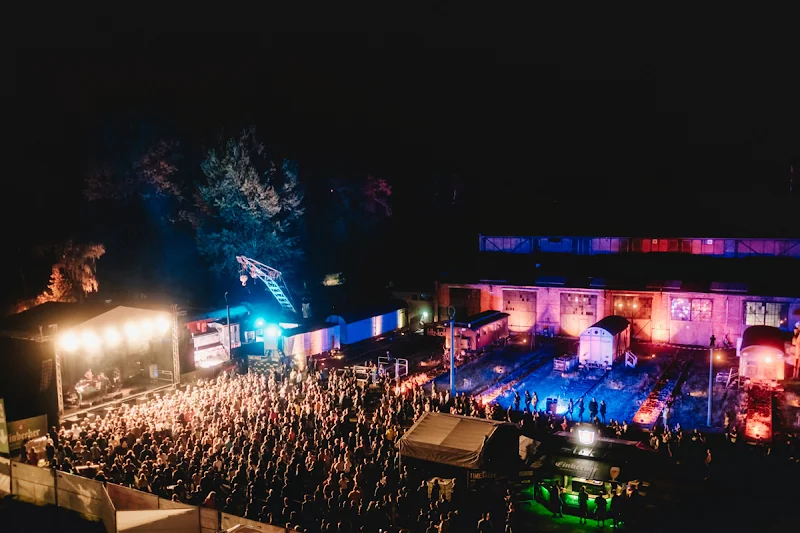
The Lokpark Open Airs in Braunschweig combine a rare mix of industrial culture, railway history, and event atmosphere. The Lokpark sees itself as a living exhibition where historical vehicles are maintained, serviced, and restored. At the same time, the site is a special event location with summer dates, concerts, and special formats. The area is located south of the Braunschweig marshalling yard, covers 27,500 square meters, and utilizes the former heating shed West along with the sliding stage and outdoor area. It is precisely this combination of history, space, and openness that makes the Open Airs so exciting for visitors and organizers, as not only a stage is set up here, but a place with real identity is brought to life. ([lokpark-braunschweig.de](https://www.lokpark-braunschweig.de/lokpark?utm_source=openai))
Program, Dates, and Tickets for the Lokpark Open Airs 2026
Those searching for Lokpark Open Airs 2026 are primarily looking for reliable dates. The official calendar is the most important source for this: Currently, the website lists events such as Andampfen on April 19, 2026, Zum Apfelfest on April 26, 2026, the Ascension Day excursion on May 14, 2026, as well as concert dates for Sportfreunde Stiller on May 29, Royal Republic on May 30, Nena on June 4, and Madsen on June 6, 2026. Especially for a location with changing event formats, this calendar is crucial, as it brings together visitor days, special trips, and major shows. For visitors, this means: The actual program is not static but arises from the interplay of season, occasion, and type of event, which is why it is worthwhile to regularly check the official dates. ([lokpark-braunschweig.de](https://www.lokpark-braunschweig.de/?utm_source=openai))
For practical planning, it is important to note that the Lokpark is not publicly accessible outside the dates mentioned in the calendar. The website refers directly to the calendar for visitor days and admission prices; group tours are available upon request and last about 1.5 hours at 6 euros per person, according to official information. This is a clear indication that the Lokpark is not a classic permanent operation but an experiential location with fixed opening points, special event days, and a very seasonal dramaturgy. Therefore, anyone planning an open air, a tour, or a special visit should not only search for the event title but also always check the specific calendar entry, the respective date, and the notes provided there. ([lokpark-braunschweig.de](https://www.lokpark-braunschweig.de/lokpark/gelaendeuebersicht/preise-oeffnungszeiten?utm_source=openai))
Directions and Parking for the Lokpark Open Airs in Braunschweig
The official directions are relatively precise. By car, the best way to reach the Lokpark is via Salzdahlumer Straße; south of the three railway bridges, turn into Borsigstraße, follow it almost to the end, and then turn right through a gate onto the premises. The navigation address given is Borsigstraße 3 in Braunschweig. For guests arriving by bike or on foot, the website lists routes from Helmstedter Straße via Lindenbergallee as well as from the south via the Klinikum Salzdahlumer Straße and Schwartzkopffstraße. This makes the location well-planned for various arrival situations, as it not only relies on the classic arrival by car but also considers short routes for pedestrians and cyclists. ([lokpark-braunschweig.de](https://www.lokpark-braunschweig.de/lokpark/anfahrt?utm_source=openai))
Public transport is also taken into account: The nearest bus stop is called Bebelhof and is located about 800 meters or roughly a ten-minute walk away. According to the official site, it is 1.8 kilometers or about 25 minutes on foot from Braunschweig main station. A separate visitor parking page is not highlighted on the directions page; therefore, anyone attending a large concert or open air should also keep an eye on the current information from the organizer and the local parking situation. Especially for dates with high visitor numbers, it is advisable to arrive early and check the route on the map beforehand so that the actual evening can begin without haste. ([lokpark-braunschweig.de](https://www.lokpark-braunschweig.de/lokpark/anfahrt?utm_source=openai))
Capacity, Grounds, and Locomotive Hall: What Visitors Can Expect
As an event location, the Lokpark is surprisingly versatile. The operator officially describes large events with up to 900 participants; at the same time, smaller barbecues, tours, and private celebrations are mentioned. The page on events and festivities also speaks of a variable capacity in the locomotive hall. For search queries like Lokpark Open Airs or Lokschuppen Open Air, this is precisely important: It is not about a sterile multifunctional hall, but about a site that can be used very differently depending on the format. This flexibility makes the location interesting for both large summer evenings and significantly more intimate formats, as the framework can range from open grounds to hall usage depending on the occasion. ([lokpark-braunschweig.de](https://www.lokpark-braunschweig.de/lokpark?utm_source=openai))
The ensemble includes the locomotive hall, the historical locomotive stock, two restored bar cars, a barbecue area with a grill hut, a large meadow with a usable sliding stage from 1927, an intact workshop atmosphere, and modern event equipment. There is even a café car with a kitchen, cooling counter, seating area for about 20 people, and a large paved terrace included in the grounds. This mix explains why the Lokpark is not only exciting for railway enthusiasts but also for concerts, summer evenings, and formats that consciously focus on character rather than interchangeability. Those looking for an event location with real substance will find here not just infrastructure, but a historical overall picture with visible traces of past work, technology, and railway culture. ([lokpark-braunschweig.de](https://www.lokpark-braunschweig.de/lokpark/events-festivitaeten?utm_source=openai))
History of the Lokpark and the Special Charm of the Locomotive Shed
The historical core of the Lokpark dates back a long way. The steam locomotive repair shop Braunschweig was put into operation in 1927 and held a special position in German railway history: It was not only large and modern but also the last steam locomotive repair shop of the federal railway at the end of the steam locomotive era. After its closure by the Deutsche Bundesbahn, many facilities were able to be preserved; today, large parts of the workshop can still be experienced. For visitors, this creates not just a backdrop but an authentic place where railway history becomes spatially tangible. One does not just see a building but a grown technical landscape where the past and present stand in direct contrast. ([lokpark-braunschweig.de](https://www.lokpark-braunschweig.de/lokpark/gelaendeuebersicht?utm_source=openai))
The VBV has been using the former heating shed West with sliding stage and outdoor area since 1978. The current locomotive hall was formerly exactly this heating shed and has largely remained in its original condition according to the website. Additionally, the association operates historical rail transport, special trips, and museum operations; during the warm season, there are regular visitor days with programs around the historical railway. This historical foundation is the actual reason why the Lokpark Open Airs do not appear like an interchangeable open-air space but like an event in the midst of a living technical monument. For many guests, this is precisely the attraction: One does not just attend a concert but simultaneously visits a place where the industrial history of the city remains visible and tangible. ([lokpark-braunschweig.de](https://www.lokpark-braunschweig.de/lokpark/gelaendeuebersicht/lokhalle?utm_source=openai))
Why the Lokpark Open Airs Are So Special
What makes the Lokpark special is also the atmosphere. On the 27,500 square meter site, there are historical machine tools, restored wagons, disassembled steam boilers, diesel engines, and huge locomotive axles. The operator explicitly describes the location as a backdrop that gives events both under the roof and in the open air a distinctive charm. Especially at open-air events, this creates an effect that many classic venues cannot offer: The concert or event is not isolated in space but is directly connected to materiality, history, and spatial depth. Visitors thus experience an evening that not only works acoustically and organizationally but also develops its own narrative visually and emotionally. ([lokpark-braunschweig.de](https://www.lokpark-braunschweig.de/lokpark/events-festivitaeten?utm_source=openai))
Moreover, the Lokpark is not only a museum but also a mobile starting and destination point for special train rides. The historical rail transport includes, among other things, the Asse-Bummler, charter trains, and other special trips; thus, an event in the Lokpark can even be combined with a train ride. This connection of arrival, experience, and place is valuable for the Lokpark Open Airs brand because it offers more than just stage and audience: It tells a story that one feels before, during, and after the event. Upon entering the site, one quickly realizes that a special mix of nostalgia, technology, craftsmanship, and summery openness is created here. This is a strong competitive advantage over neutral event spaces, as the atmosphere does not have to be artificially created but is already present through the place itself. ([lokpark-braunschweig.de](https://www.lokpark-braunschweig.de/historischer-schienenverkehr/asse-bummler?utm_source=openai))
Opening Hours, Tours, and Important Visitor Tips
Anyone wishing to visit the Lokpark Open Airs should correctly assess the character of the place: The grounds are not an always-open amusement park but an event site and museum location with clear opening dates. The official note states that the Lokpark is not publicly accessible outside the dates mentioned in the calendar. At the same time, there are usually monthly visitor days for everyone during the warm season, offering a lively program around the historical railway. This is important for planning because a spontaneous visit outside the dates does not work. Therefore, anyone wanting to coordinate arrival, program, and time window cleanly should check the calendar early and not organize the event day on the same day. ([lokpark-braunschweig.de](https://www.lokpark-braunschweig.de/lokpark/gelaendeuebersicht/preise-oeffnungszeiten?utm_source=openai))
For groups, the Lokpark offers tours of about 1.5 hours for 6 euros per person upon request; the visit can be combined with barbecues or other festivities if desired. Additionally, the association refers to its contact options via email and notes that telephone availability may be limited due to volunteer commitments. These are practical details that are particularly important for open-air events, as planning, time windows, and processes carry more weight than at a standard location with a classic ticket purchase. Therefore, those wishing to experience the place more intensively should not only look at the concert date but also consider whether a tour, a visitor day, or a combination with a special trip makes sense. This way, an evening in the Lokpark becomes a complete experience with context, history, and real recognition value. ([lokpark-braunschweig.de](https://www.lokpark-braunschweig.de/lokpark/gelaendeuebersicht/preise-oeffnungszeiten?utm_source=openai))
Sources:
Show moreShow less
Lokpark Open Airs | Program & Events 2026
The Lokpark Open Airs in Braunschweig combine a rare mix of industrial culture, railway history, and event atmosphere. The Lokpark sees itself as a living exhibition where historical vehicles are maintained, serviced, and restored. At the same time, the site is a special event location with summer dates, concerts, and special formats. The area is located south of the Braunschweig marshalling yard, covers 27,500 square meters, and utilizes the former heating shed West along with the sliding stage and outdoor area. It is precisely this combination of history, space, and openness that makes the Open Airs so exciting for visitors and organizers, as not only a stage is set up here, but a place with real identity is brought to life. ([lokpark-braunschweig.de](https://www.lokpark-braunschweig.de/lokpark?utm_source=openai))
Program, Dates, and Tickets for the Lokpark Open Airs 2026
Those searching for Lokpark Open Airs 2026 are primarily looking for reliable dates. The official calendar is the most important source for this: Currently, the website lists events such as Andampfen on April 19, 2026, Zum Apfelfest on April 26, 2026, the Ascension Day excursion on May 14, 2026, as well as concert dates for Sportfreunde Stiller on May 29, Royal Republic on May 30, Nena on June 4, and Madsen on June 6, 2026. Especially for a location with changing event formats, this calendar is crucial, as it brings together visitor days, special trips, and major shows. For visitors, this means: The actual program is not static but arises from the interplay of season, occasion, and type of event, which is why it is worthwhile to regularly check the official dates. ([lokpark-braunschweig.de](https://www.lokpark-braunschweig.de/?utm_source=openai))
For practical planning, it is important to note that the Lokpark is not publicly accessible outside the dates mentioned in the calendar. The website refers directly to the calendar for visitor days and admission prices; group tours are available upon request and last about 1.5 hours at 6 euros per person, according to official information. This is a clear indication that the Lokpark is not a classic permanent operation but an experiential location with fixed opening points, special event days, and a very seasonal dramaturgy. Therefore, anyone planning an open air, a tour, or a special visit should not only search for the event title but also always check the specific calendar entry, the respective date, and the notes provided there. ([lokpark-braunschweig.de](https://www.lokpark-braunschweig.de/lokpark/gelaendeuebersicht/preise-oeffnungszeiten?utm_source=openai))
Directions and Parking for the Lokpark Open Airs in Braunschweig
The official directions are relatively precise. By car, the best way to reach the Lokpark is via Salzdahlumer Straße; south of the three railway bridges, turn into Borsigstraße, follow it almost to the end, and then turn right through a gate onto the premises. The navigation address given is Borsigstraße 3 in Braunschweig. For guests arriving by bike or on foot, the website lists routes from Helmstedter Straße via Lindenbergallee as well as from the south via the Klinikum Salzdahlumer Straße and Schwartzkopffstraße. This makes the location well-planned for various arrival situations, as it not only relies on the classic arrival by car but also considers short routes for pedestrians and cyclists. ([lokpark-braunschweig.de](https://www.lokpark-braunschweig.de/lokpark/anfahrt?utm_source=openai))
Public transport is also taken into account: The nearest bus stop is called Bebelhof and is located about 800 meters or roughly a ten-minute walk away. According to the official site, it is 1.8 kilometers or about 25 minutes on foot from Braunschweig main station. A separate visitor parking page is not highlighted on the directions page; therefore, anyone attending a large concert or open air should also keep an eye on the current information from the organizer and the local parking situation. Especially for dates with high visitor numbers, it is advisable to arrive early and check the route on the map beforehand so that the actual evening can begin without haste. ([lokpark-braunschweig.de](https://www.lokpark-braunschweig.de/lokpark/anfahrt?utm_source=openai))
Capacity, Grounds, and Locomotive Hall: What Visitors Can Expect
As an event location, the Lokpark is surprisingly versatile. The operator officially describes large events with up to 900 participants; at the same time, smaller barbecues, tours, and private celebrations are mentioned. The page on events and festivities also speaks of a variable capacity in the locomotive hall. For search queries like Lokpark Open Airs or Lokschuppen Open Air, this is precisely important: It is not about a sterile multifunctional hall, but about a site that can be used very differently depending on the format. This flexibility makes the location interesting for both large summer evenings and significantly more intimate formats, as the framework can range from open grounds to hall usage depending on the occasion. ([lokpark-braunschweig.de](https://www.lokpark-braunschweig.de/lokpark?utm_source=openai))
The ensemble includes the locomotive hall, the historical locomotive stock, two restored bar cars, a barbecue area with a grill hut, a large meadow with a usable sliding stage from 1927, an intact workshop atmosphere, and modern event equipment. There is even a café car with a kitchen, cooling counter, seating area for about 20 people, and a large paved terrace included in the grounds. This mix explains why the Lokpark is not only exciting for railway enthusiasts but also for concerts, summer evenings, and formats that consciously focus on character rather than interchangeability. Those looking for an event location with real substance will find here not just infrastructure, but a historical overall picture with visible traces of past work, technology, and railway culture. ([lokpark-braunschweig.de](https://www.lokpark-braunschweig.de/lokpark/events-festivitaeten?utm_source=openai))
History of the Lokpark and the Special Charm of the Locomotive Shed
The historical core of the Lokpark dates back a long way. The steam locomotive repair shop Braunschweig was put into operation in 1927 and held a special position in German railway history: It was not only large and modern but also the last steam locomotive repair shop of the federal railway at the end of the steam locomotive era. After its closure by the Deutsche Bundesbahn, many facilities were able to be preserved; today, large parts of the workshop can still be experienced. For visitors, this creates not just a backdrop but an authentic place where railway history becomes spatially tangible. One does not just see a building but a grown technical landscape where the past and present stand in direct contrast. ([lokpark-braunschweig.de](https://www.lokpark-braunschweig.de/lokpark/gelaendeuebersicht?utm_source=openai))
The VBV has been using the former heating shed West with sliding stage and outdoor area since 1978. The current locomotive hall was formerly exactly this heating shed and has largely remained in its original condition according to the website. Additionally, the association operates historical rail transport, special trips, and museum operations; during the warm season, there are regular visitor days with programs around the historical railway. This historical foundation is the actual reason why the Lokpark Open Airs do not appear like an interchangeable open-air space but like an event in the midst of a living technical monument. For many guests, this is precisely the attraction: One does not just attend a concert but simultaneously visits a place where the industrial history of the city remains visible and tangible. ([lokpark-braunschweig.de](https://www.lokpark-braunschweig.de/lokpark/gelaendeuebersicht/lokhalle?utm_source=openai))
Why the Lokpark Open Airs Are So Special
What makes the Lokpark special is also the atmosphere. On the 27,500 square meter site, there are historical machine tools, restored wagons, disassembled steam boilers, diesel engines, and huge locomotive axles. The operator explicitly describes the location as a backdrop that gives events both under the roof and in the open air a distinctive charm. Especially at open-air events, this creates an effect that many classic venues cannot offer: The concert or event is not isolated in space but is directly connected to materiality, history, and spatial depth. Visitors thus experience an evening that not only works acoustically and organizationally but also develops its own narrative visually and emotionally. ([lokpark-braunschweig.de](https://www.lokpark-braunschweig.de/lokpark/events-festivitaeten?utm_source=openai))
Moreover, the Lokpark is not only a museum but also a mobile starting and destination point for special train rides. The historical rail transport includes, among other things, the Asse-Bummler, charter trains, and other special trips; thus, an event in the Lokpark can even be combined with a train ride. This connection of arrival, experience, and place is valuable for the Lokpark Open Airs brand because it offers more than just stage and audience: It tells a story that one feels before, during, and after the event. Upon entering the site, one quickly realizes that a special mix of nostalgia, technology, craftsmanship, and summery openness is created here. This is a strong competitive advantage over neutral event spaces, as the atmosphere does not have to be artificially created but is already present through the place itself. ([lokpark-braunschweig.de](https://www.lokpark-braunschweig.de/historischer-schienenverkehr/asse-bummler?utm_source=openai))
Opening Hours, Tours, and Important Visitor Tips
Anyone wishing to visit the Lokpark Open Airs should correctly assess the character of the place: The grounds are not an always-open amusement park but an event site and museum location with clear opening dates. The official note states that the Lokpark is not publicly accessible outside the dates mentioned in the calendar. At the same time, there are usually monthly visitor days for everyone during the warm season, offering a lively program around the historical railway. This is important for planning because a spontaneous visit outside the dates does not work. Therefore, anyone wanting to coordinate arrival, program, and time window cleanly should check the calendar early and not organize the event day on the same day. ([lokpark-braunschweig.de](https://www.lokpark-braunschweig.de/lokpark/gelaendeuebersicht/preise-oeffnungszeiten?utm_source=openai))
For groups, the Lokpark offers tours of about 1.5 hours for 6 euros per person upon request; the visit can be combined with barbecues or other festivities if desired. Additionally, the association refers to its contact options via email and notes that telephone availability may be limited due to volunteer commitments. These are practical details that are particularly important for open-air events, as planning, time windows, and processes carry more weight than at a standard location with a classic ticket purchase. Therefore, those wishing to experience the place more intensively should not only look at the concert date but also consider whether a tour, a visitor day, or a combination with a special trip makes sense. This way, an evening in the Lokpark becomes a complete experience with context, history, and real recognition value. ([lokpark-braunschweig.de](https://www.lokpark-braunschweig.de/lokpark/gelaendeuebersicht/preise-oeffnungszeiten?utm_source=openai))
Sources:
Lokpark Open Airs | Program & Events 2026
The Lokpark Open Airs in Braunschweig combine a rare mix of industrial culture, railway history, and event atmosphere. The Lokpark sees itself as a living exhibition where historical vehicles are maintained, serviced, and restored. At the same time, the site is a special event location with summer dates, concerts, and special formats. The area is located south of the Braunschweig marshalling yard, covers 27,500 square meters, and utilizes the former heating shed West along with the sliding stage and outdoor area. It is precisely this combination of history, space, and openness that makes the Open Airs so exciting for visitors and organizers, as not only a stage is set up here, but a place with real identity is brought to life. ([lokpark-braunschweig.de](https://www.lokpark-braunschweig.de/lokpark?utm_source=openai))
Program, Dates, and Tickets for the Lokpark Open Airs 2026
Those searching for Lokpark Open Airs 2026 are primarily looking for reliable dates. The official calendar is the most important source for this: Currently, the website lists events such as Andampfen on April 19, 2026, Zum Apfelfest on April 26, 2026, the Ascension Day excursion on May 14, 2026, as well as concert dates for Sportfreunde Stiller on May 29, Royal Republic on May 30, Nena on June 4, and Madsen on June 6, 2026. Especially for a location with changing event formats, this calendar is crucial, as it brings together visitor days, special trips, and major shows. For visitors, this means: The actual program is not static but arises from the interplay of season, occasion, and type of event, which is why it is worthwhile to regularly check the official dates. ([lokpark-braunschweig.de](https://www.lokpark-braunschweig.de/?utm_source=openai))
For practical planning, it is important to note that the Lokpark is not publicly accessible outside the dates mentioned in the calendar. The website refers directly to the calendar for visitor days and admission prices; group tours are available upon request and last about 1.5 hours at 6 euros per person, according to official information. This is a clear indication that the Lokpark is not a classic permanent operation but an experiential location with fixed opening points, special event days, and a very seasonal dramaturgy. Therefore, anyone planning an open air, a tour, or a special visit should not only search for the event title but also always check the specific calendar entry, the respective date, and the notes provided there. ([lokpark-braunschweig.de](https://www.lokpark-braunschweig.de/lokpark/gelaendeuebersicht/preise-oeffnungszeiten?utm_source=openai))
Directions and Parking for the Lokpark Open Airs in Braunschweig
The official directions are relatively precise. By car, the best way to reach the Lokpark is via Salzdahlumer Straße; south of the three railway bridges, turn into Borsigstraße, follow it almost to the end, and then turn right through a gate onto the premises. The navigation address given is Borsigstraße 3 in Braunschweig. For guests arriving by bike or on foot, the website lists routes from Helmstedter Straße via Lindenbergallee as well as from the south via the Klinikum Salzdahlumer Straße and Schwartzkopffstraße. This makes the location well-planned for various arrival situations, as it not only relies on the classic arrival by car but also considers short routes for pedestrians and cyclists. ([lokpark-braunschweig.de](https://www.lokpark-braunschweig.de/lokpark/anfahrt?utm_source=openai))
Public transport is also taken into account: The nearest bus stop is called Bebelhof and is located about 800 meters or roughly a ten-minute walk away. According to the official site, it is 1.8 kilometers or about 25 minutes on foot from Braunschweig main station. A separate visitor parking page is not highlighted on the directions page; therefore, anyone attending a large concert or open air should also keep an eye on the current information from the organizer and the local parking situation. Especially for dates with high visitor numbers, it is advisable to arrive early and check the route on the map beforehand so that the actual evening can begin without haste. ([lokpark-braunschweig.de](https://www.lokpark-braunschweig.de/lokpark/anfahrt?utm_source=openai))
Capacity, Grounds, and Locomotive Hall: What Visitors Can Expect
As an event location, the Lokpark is surprisingly versatile. The operator officially describes large events with up to 900 participants; at the same time, smaller barbecues, tours, and private celebrations are mentioned. The page on events and festivities also speaks of a variable capacity in the locomotive hall. For search queries like Lokpark Open Airs or Lokschuppen Open Air, this is precisely important: It is not about a sterile multifunctional hall, but about a site that can be used very differently depending on the format. This flexibility makes the location interesting for both large summer evenings and significantly more intimate formats, as the framework can range from open grounds to hall usage depending on the occasion. ([lokpark-braunschweig.de](https://www.lokpark-braunschweig.de/lokpark?utm_source=openai))
The ensemble includes the locomotive hall, the historical locomotive stock, two restored bar cars, a barbecue area with a grill hut, a large meadow with a usable sliding stage from 1927, an intact workshop atmosphere, and modern event equipment. There is even a café car with a kitchen, cooling counter, seating area for about 20 people, and a large paved terrace included in the grounds. This mix explains why the Lokpark is not only exciting for railway enthusiasts but also for concerts, summer evenings, and formats that consciously focus on character rather than interchangeability. Those looking for an event location with real substance will find here not just infrastructure, but a historical overall picture with visible traces of past work, technology, and railway culture. ([lokpark-braunschweig.de](https://www.lokpark-braunschweig.de/lokpark/events-festivitaeten?utm_source=openai))
History of the Lokpark and the Special Charm of the Locomotive Shed
The historical core of the Lokpark dates back a long way. The steam locomotive repair shop Braunschweig was put into operation in 1927 and held a special position in German railway history: It was not only large and modern but also the last steam locomotive repair shop of the federal railway at the end of the steam locomotive era. After its closure by the Deutsche Bundesbahn, many facilities were able to be preserved; today, large parts of the workshop can still be experienced. For visitors, this creates not just a backdrop but an authentic place where railway history becomes spatially tangible. One does not just see a building but a grown technical landscape where the past and present stand in direct contrast. ([lokpark-braunschweig.de](https://www.lokpark-braunschweig.de/lokpark/gelaendeuebersicht?utm_source=openai))
The VBV has been using the former heating shed West with sliding stage and outdoor area since 1978. The current locomotive hall was formerly exactly this heating shed and has largely remained in its original condition according to the website. Additionally, the association operates historical rail transport, special trips, and museum operations; during the warm season, there are regular visitor days with programs around the historical railway. This historical foundation is the actual reason why the Lokpark Open Airs do not appear like an interchangeable open-air space but like an event in the midst of a living technical monument. For many guests, this is precisely the attraction: One does not just attend a concert but simultaneously visits a place where the industrial history of the city remains visible and tangible. ([lokpark-braunschweig.de](https://www.lokpark-braunschweig.de/lokpark/gelaendeuebersicht/lokhalle?utm_source=openai))
Why the Lokpark Open Airs Are So Special
What makes the Lokpark special is also the atmosphere. On the 27,500 square meter site, there are historical machine tools, restored wagons, disassembled steam boilers, diesel engines, and huge locomotive axles. The operator explicitly describes the location as a backdrop that gives events both under the roof and in the open air a distinctive charm. Especially at open-air events, this creates an effect that many classic venues cannot offer: The concert or event is not isolated in space but is directly connected to materiality, history, and spatial depth. Visitors thus experience an evening that not only works acoustically and organizationally but also develops its own narrative visually and emotionally. ([lokpark-braunschweig.de](https://www.lokpark-braunschweig.de/lokpark/events-festivitaeten?utm_source=openai))
Moreover, the Lokpark is not only a museum but also a mobile starting and destination point for special train rides. The historical rail transport includes, among other things, the Asse-Bummler, charter trains, and other special trips; thus, an event in the Lokpark can even be combined with a train ride. This connection of arrival, experience, and place is valuable for the Lokpark Open Airs brand because it offers more than just stage and audience: It tells a story that one feels before, during, and after the event. Upon entering the site, one quickly realizes that a special mix of nostalgia, technology, craftsmanship, and summery openness is created here. This is a strong competitive advantage over neutral event spaces, as the atmosphere does not have to be artificially created but is already present through the place itself. ([lokpark-braunschweig.de](https://www.lokpark-braunschweig.de/historischer-schienenverkehr/asse-bummler?utm_source=openai))
Opening Hours, Tours, and Important Visitor Tips
Anyone wishing to visit the Lokpark Open Airs should correctly assess the character of the place: The grounds are not an always-open amusement park but an event site and museum location with clear opening dates. The official note states that the Lokpark is not publicly accessible outside the dates mentioned in the calendar. At the same time, there are usually monthly visitor days for everyone during the warm season, offering a lively program around the historical railway. This is important for planning because a spontaneous visit outside the dates does not work. Therefore, anyone wanting to coordinate arrival, program, and time window cleanly should check the calendar early and not organize the event day on the same day. ([lokpark-braunschweig.de](https://www.lokpark-braunschweig.de/lokpark/gelaendeuebersicht/preise-oeffnungszeiten?utm_source=openai))
For groups, the Lokpark offers tours of about 1.5 hours for 6 euros per person upon request; the visit can be combined with barbecues or other festivities if desired. Additionally, the association refers to its contact options via email and notes that telephone availability may be limited due to volunteer commitments. These are practical details that are particularly important for open-air events, as planning, time windows, and processes carry more weight than at a standard location with a classic ticket purchase. Therefore, those wishing to experience the place more intensively should not only look at the concert date but also consider whether a tour, a visitor day, or a combination with a special trip makes sense. This way, an evening in the Lokpark becomes a complete experience with context, history, and real recognition value. ([lokpark-braunschweig.de](https://www.lokpark-braunschweig.de/lokpark/gelaendeuebersicht/preise-oeffnungszeiten?utm_source=openai))
Sources:
Upcoming Events
No events found
Frequently Asked Questions
Reviews
Michael Topp
22. June 2025
Great atmosphere at the Beatsteaks Open Air. The only downside was the supply of drinks. It felt like the people who waited in line missed a third of the evening.
Sven S.
22. June 2025
An extraordinary location, right in the middle of the old carriages and locomotives. Something different, something special. More of this, please.
Philipp Engel
22. June 2025
Five stars for organization, sound, and atmosphere. It was a truly fantastic Element of Crime concert. Shuttle buses, security, entry – everything was really excellent. Deductions for the drinks. No card payments, €5 per drink, a €2 deposit on those cheap plastic cups, and while you can accept drinks that are flat, that's just too much. That was really unacceptable.
Dirk Bergmann (VinylJunkie64)
25. June 2025
Great sound, plenty of restrooms, relaxed and positive atmosphere (including among the staff). Plenty of food options and simply a lovely location. It's fantastic that Braunschweig has something like this!
Matthias Kühlmann
22. June 2025
Open Air ELEMENT OF CRIME was great, thanks in part to the fantastic location and especially to the commitment of the city of Braunschweig; these free shuttle buses deserve a round of applause!