Broitzemer Str. 35A, Braunschweig-Westliches Ringgebiet
Broitzemer Str. 35A, 38118 Braunschweig, Germany
Kontorhaus am Jödebrunnen | Directions & Photos
The Kontorhaus am Jödebrunnen is much more than a small historical building in the west of Braunschweig. It connects the memory of the industrial development of the Westbahnhof with a contemporary place for encounters, culture, and local history. Those looking for photos, directions, history, or usage options will quickly come across a building that is deliberately not treated as an arbitrary event space, but as part of a grown historical environment. Located directly next to the Jödebrunnen, it is a house that makes the past visible while simultaneously enabling new uses. This blend of monument, neighborhood connection, and public engagement shapes the special charm of the place. For visitors who want to experience Braunschweig beyond the well-known city center, the Kontorhaus offers a quiet, authentic, and easily understandable view of the western ring area, the Jödebrunnen, and the development around the Ringgleis. ([braunschweig.de](https://www.braunschweig.de/leben/im_gruenen/ringgleis/industrieforum/industriestandorte-westbahnhof/kontorhaus.php))
History of the Kontorhaus am Jödebrunnen
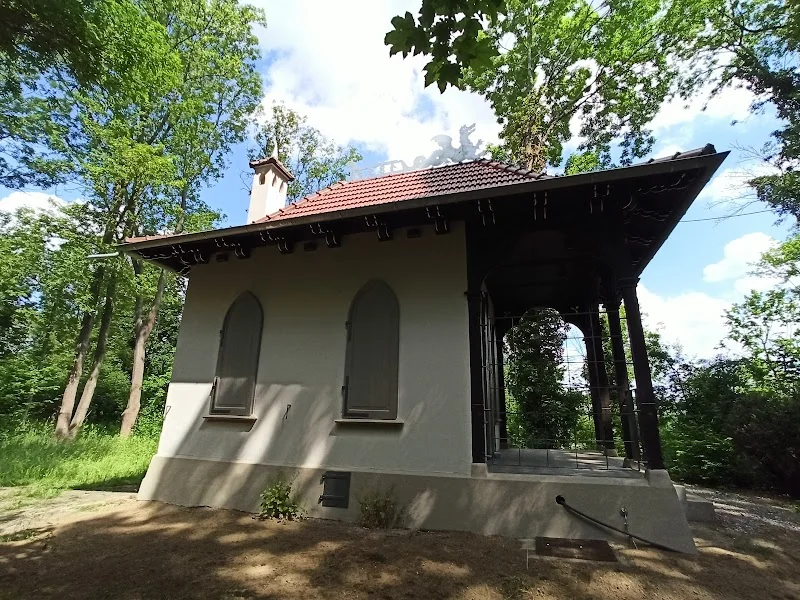
The Kontorhaus was built in 1899 for the company Fr. Brachvogel and was originally an office and administrative building for a timber trading company that managed a large area at the Westbahnhof. The city of Braunschweig describes the site as having an area of about 40,000 square meters and emphasizes that the company specialized in timber import and logistics. The small building with the wooden veranda in front was therefore not placed here by chance, but was part of a functioning industrial site. Karl Brachvogel himself also regularly worked in the Kontorhaus and managed his company from here. Today, anyone standing in front of the house sees not only a charming old building but also a piece of economic history that explains the character of the site to this day. It is precisely this connection of architecture, use, and location that makes the Kontorhaus an important testimony to urban development in western Braunschweig. ([braunschweig.de](https://www.braunschweig.de/leben/im_gruenen/ringgleis/industrieforum/industriestandorte-westbahnhof/kontorhaus.php))
The later development shows how strongly the building has become embedded in community work. Since about 2013, a working group from the city of Braunschweig has been committed to preserving and sensibly using the building, and from a meeting in October 2015, the Kontorhaus am Jödebrunnen e.V. was founded in 2016. The association aims to historically preserve the house and prepare it as an information center that informs about technology, science, and history. Particularly important is the connection with the surrounding area of Jödebrunnen, Westbahnhof, and Ringgleis. The house is to be not only preserved but actively used so that local history is not abstract but can be experienced on-site. This civic development is a crucial part of the current identity of the Kontorhaus and explains why it receives so much attention during events, tours, and open dates. ([kontorhaus-joedebrunnen.de](https://kontorhaus-joedebrunnen.de/))
Jödebrunnen and Ringgleis: Braunschweig's Water and Industrial History
The historical context of the Kontorhaus can hardly be understood without the Jödebrunnen. The city of Braunschweig describes the fountain as a source that has been used for the city's water supply since the mid-14th century. Through wooden pipes, known as pipen, the water flowed into the city following the gradient and fed public fountains in central squares. The Jödebrunnen in front of the Hohen Tore is also the only historical water source in the city that is still preserved today. Thus, the entire environment is not only a beautiful place but also a significant site of water and urban history. The name Jödebrunnen refers to the idea of a youth or young fountain, that is, fresh spring water. Therefore, those visiting the Kontorhaus stand at a place where industrial history and early infrastructure overlap in a special way. ([braunschweig.de](https://www.braunschweig.de/leben/im_gruenen/ringgleis/industrieforum/industriestandorte-westbahnhof/joedebrunnen.php))
The current green connection also makes this historical context visible. The city of Braunschweig describes that the green connection leads past the historical Kontorhaus and allows access to the Jödebrunnen. In this environment, there are other historical elements such as the so-called Bananenkeller, an underground cooling cellar from 1899, which is considered one of the few remaining examples of a Braunschweig engineering construction. The facility was later even adapted as a winter quarters for bats. This makes it clear that the area around the Jödebrunnen consists not only of a single building but of an ensemble of historical layers. The Kontorhaus stands in direct proximity to this history and, together with the fountain, pathways, and green spaces, forms a vibrant open space that can be particularly well appreciated on a walk or during a themed tour. ([braunschweig.de](https://www.braunschweig.de/leben/stadtplanung_bauen/stadterneuerung/efre/gruenverbindung_joedebrunnen.php))
Directions to Kontorhausweg and the Best Orientation on Site
For directions, Kontorhausweg is the most important point of orientation. The official website of the association explicitly recommends searching for the term Kontorhausweg in the city map of Braunschweig. Additionally, it explains that the house is located in close proximity and is accessible via various routes. From the Westbahnhof or KufA Haus, one can reach the Kontorhaus via Pipenweg, and from Büchnerstraße via Kontorhausweg. This route is important because the Kontorhaus is somewhat off the main roads and is therefore not immediately visible to first-time visitors. This makes the place pleasant for many: those who arrive there do not end up on a noisy thoroughfare but in a quiet, historically shaped neighborhood with good pedestrian access. ([kontorhaus-joedebrunnen.de](https://kontorhaus-joedebrunnen.de/kontorhaus/anfahrt/))
Public transport is also well integrated. According to the association's website, tram lines 3 towards Weststadt and 5 towards Broitzem stop in the immediate vicinity of the Kontorhaus. The location in the western ring area and the connection to the Westbahnhof are also central anchor points for orientation. Those coming from the city center or other districts can reach the area relatively easily. The city pages and the association pages make it clear that the location is deliberately linked with the paths of the green connection, the Ringgleis, and the neighborhood. This makes the Kontorhaus suitable not only for targeted visits but also as a destination for a walk or a bike tour. Therefore, those searching for directions, Kontorhausweg, or Kontorhaus am Jödebrunnen Braunschweig are actually looking for a place that consciously mediates between historical location and current accessibility. ([kontorhaus-joedebrunnen.de](https://kontorhaus-joedebrunnen.de/kontorhaus/anfahrt/))
Events, Rental, and Open Door at the Kontorhaus
The Kontorhaus is not only a historical object but also an actively usable place. On the association's website, it is explicitly described as a space for events, group meetings, family celebrations, lectures, and presentations. A relaxed conclusion after a bike tour is also explicitly planned, as the location near the Ringgleis invites exactly that. The association wants to make the house accessible to third parties and enliven the area in the spirit of the neighborhood. This means: the use is not limited to exhibitions but aims at a wide range of small, neighborhood-oriented formats. For people seeking a personal environment rather than an anonymous large venue, this is a significant advantage. The Kontorhaus thus acts like a meeting point where history is not only observed but is further written in current social and cultural situations. ([kontorhaus-joedebrunnen.de](https://kontorhaus-joedebrunnen.de/kontorhaus/das-haus-anmieten/))
Additionally, regular offerings keep the place open. The association's website mentions an open Thursday from 3 to 5 PM, when interested parties can simply drop by. Furthermore, members meet every third Wednesday of the month, and thematic events have already shaped the place. The publications surrounding the Kontorhaus mention exhibitions, readings, image tours, book presentations, and small concerts, among other things. The newly designed outdoor area, completed in 2024, significantly expands the possibilities: in front of the entrance, a paved plateau has been created that can serve as a stage for events, while the adjacent area can be used as an audience space. This creates an event location that, while small, appears surprisingly versatile due to the connection of indoor space, garden, and historical surroundings. ([kontorhaus-joedebrunnen.de](https://kontorhaus-joedebrunnen.de/))
Photos, Architecture, and the New Kontorhaus Garden
Those looking for photos of the Kontorhaus are usually first interested in its architecture. The city of Braunschweig describes the small Kontorhaus as an elaborately designed building with a steep hipped roof, carved rafter heads, and historical doors and windows, some with colored glazing. Inside, there are also richly decorated wooden works. These details make the character of the house immediately visible in pictures and explain why it is so attractive for architectural, neighborhood, and historical photography. The historical veranda at the front also gives the building a clear, recognizable silhouette. It is a house that quickly stands out in photo excerpts because it does not appear arbitrary but possesses genuine craftsmanship and design uniqueness. Therefore, not only the facade but also the interplay of pathways, fountain, greenery, and sightlines is suitable for image series. ([braunschweig.de](https://www.braunschweig.de/leben/stadtplanung_bauen/stadterneuerung/efre/gruenverbindung_joedebrunnen.php))
The new Kontorhaus garden further enhances this impression. The neighborhood newspaper describes that the outdoor area of the Kontorhaus was completed in 2024. In front of the entrance, a paved plateau was created that can serve as a stage for events; seating walls made of sandstone blocks invite people to linger. The embankment area has been cleared, allowing a view of the Jödebrunnen, and a historically styled lamp has been newly placed next to the building. A low evergreen hedge also frames the area. For photos, quality of stay, and small formats, this is a significant gain because the house is now perceived not just as a single building but as part of a carefully designed open space. Especially for users seeking photos, atmosphere, and special features, this outdoor area is a central part of the current identity of the site. ([braunschweig.de](https://www.braunschweig.de/leben/stadtplanung_bauen/stadterneuerung/soziale-stadt-westl-ringgebiet/Neue-Westpost_2024-10.pdf))
Capacity, Equipment, and Barrier-Free Planning
The Kontorhaus is deliberately kept small and is therefore very suitable for certain formats. The room on the ground floor is about 20 square meters and can accommodate up to 20 people depending on the seating arrangement. Four robust folding tables are available, which can be arranged flexibly or set up as a seminar round. Additionally, there is an autonomous 64-inch touch display with Wi-Fi and Bluetooth, through which content from a PC, smartphone, or USB stick can be displayed. This equipment shows that the house is not only romantic and historical but also functionally designed. It is suitable for meetings, lectures, small workshops, or presentations where a personal setting is more important than large hall architecture. Therefore, those looking for seating, room size, or technical basic equipment will find reliable and rather rare details for a historical place here. ([kontorhaus-joedebrunnen.de](https://kontorhaus-joedebrunnen.de/kontorhaus/das-haus-anmieten/))
The practical infrastructure is also clearly described. In the basement, there is a complete kitchenette with a microwave, dishwasher, and large refrigerator. There are also a unisex toilet and storage rooms; dishes and glasses are available for 30 people. At the same time, the association openly points out that the house is not barrier-free. For visitors with mobility impairments, it is important to note that a wheelchair-accessible toilet is located in the KufA Haus, about 250 meters away. This honesty is part of the serious usage profile of the place. The Kontorhaus is not a completely standardized event building but a historical space with clear boundaries and strengths. This makes planning straightforward: those who book here know that they are getting a charismatic, compact, and well-equipped place that works very well for small groups. ([kontorhaus-joedebrunnen.de](https://kontorhaus-joedebrunnen.de/kontorhaus/das-haus-anmieten/))
Why a Visit to Braunschweig is Worthwhile
The Kontorhaus am Jödebrunnen is particularly valuable for Braunschweig because it connects several levels: it preserves industrial history, tells the story of water supply, strengthens the western ring area, and simultaneously offers a space for contemporary use. The association emphasizes that the work is aimed at both the general public and children and young people as well as professionals. Thus, the house is not only a monument but also a place of learning. Especially in a city where many historical traces are easily overlooked in everyday life, the Kontorhaus creates a place of concentration on the local. Those who come here do not experience a grand stage but a precisely set piece of urban history that tells a lot in small ways. It is precisely this mix of preservation, mediation, and neighborhood connection that gives the place sustainable significance. ([kontorhaus-joedebrunnen.de](https://kontorhaus-joedebrunnen.de/))
For search queries such as photos, Kontorhausweg, directions, events, or Kontorhaus am Jödebrunnen Braunschweig, the place therefore provides a rare added value: it is historically interesting, atmospherically strong, and at the same time practically usable. The proximity to the Ringgleis, the paths to the Westbahnhof, the view of the Jödebrunnen, and the small but well-described equipment make it attractive for walks, small celebrations, team meetings, or cultural encounters. Those who want to get to know Braunschweig away from the well-known standard routes will find here a place that does not loudly advertise but convinces through substance. This is precisely what makes the charm: the Kontorhaus is not an interchangeable event space but a local original with history, present, and a clear vision for the future. ([braunschweig.de](https://www.braunschweig.de/leben/im_gruenen/ringgleis/industrieforum/industriestandorte-westbahnhof/kontorhaus.php))
Sources:
Show moreShow less
Kontorhaus am Jödebrunnen | Directions & Photos
The Kontorhaus am Jödebrunnen is much more than a small historical building in the west of Braunschweig. It connects the memory of the industrial development of the Westbahnhof with a contemporary place for encounters, culture, and local history. Those looking for photos, directions, history, or usage options will quickly come across a building that is deliberately not treated as an arbitrary event space, but as part of a grown historical environment. Located directly next to the Jödebrunnen, it is a house that makes the past visible while simultaneously enabling new uses. This blend of monument, neighborhood connection, and public engagement shapes the special charm of the place. For visitors who want to experience Braunschweig beyond the well-known city center, the Kontorhaus offers a quiet, authentic, and easily understandable view of the western ring area, the Jödebrunnen, and the development around the Ringgleis. ([braunschweig.de](https://www.braunschweig.de/leben/im_gruenen/ringgleis/industrieforum/industriestandorte-westbahnhof/kontorhaus.php))
History of the Kontorhaus am Jödebrunnen
The Kontorhaus was built in 1899 for the company Fr. Brachvogel and was originally an office and administrative building for a timber trading company that managed a large area at the Westbahnhof. The city of Braunschweig describes the site as having an area of about 40,000 square meters and emphasizes that the company specialized in timber import and logistics. The small building with the wooden veranda in front was therefore not placed here by chance, but was part of a functioning industrial site. Karl Brachvogel himself also regularly worked in the Kontorhaus and managed his company from here. Today, anyone standing in front of the house sees not only a charming old building but also a piece of economic history that explains the character of the site to this day. It is precisely this connection of architecture, use, and location that makes the Kontorhaus an important testimony to urban development in western Braunschweig. ([braunschweig.de](https://www.braunschweig.de/leben/im_gruenen/ringgleis/industrieforum/industriestandorte-westbahnhof/kontorhaus.php))
The later development shows how strongly the building has become embedded in community work. Since about 2013, a working group from the city of Braunschweig has been committed to preserving and sensibly using the building, and from a meeting in October 2015, the Kontorhaus am Jödebrunnen e.V. was founded in 2016. The association aims to historically preserve the house and prepare it as an information center that informs about technology, science, and history. Particularly important is the connection with the surrounding area of Jödebrunnen, Westbahnhof, and Ringgleis. The house is to be not only preserved but actively used so that local history is not abstract but can be experienced on-site. This civic development is a crucial part of the current identity of the Kontorhaus and explains why it receives so much attention during events, tours, and open dates. ([kontorhaus-joedebrunnen.de](https://kontorhaus-joedebrunnen.de/))
Jödebrunnen and Ringgleis: Braunschweig's Water and Industrial History
The historical context of the Kontorhaus can hardly be understood without the Jödebrunnen. The city of Braunschweig describes the fountain as a source that has been used for the city's water supply since the mid-14th century. Through wooden pipes, known as pipen, the water flowed into the city following the gradient and fed public fountains in central squares. The Jödebrunnen in front of the Hohen Tore is also the only historical water source in the city that is still preserved today. Thus, the entire environment is not only a beautiful place but also a significant site of water and urban history. The name Jödebrunnen refers to the idea of a youth or young fountain, that is, fresh spring water. Therefore, those visiting the Kontorhaus stand at a place where industrial history and early infrastructure overlap in a special way. ([braunschweig.de](https://www.braunschweig.de/leben/im_gruenen/ringgleis/industrieforum/industriestandorte-westbahnhof/joedebrunnen.php))
The current green connection also makes this historical context visible. The city of Braunschweig describes that the green connection leads past the historical Kontorhaus and allows access to the Jödebrunnen. In this environment, there are other historical elements such as the so-called Bananenkeller, an underground cooling cellar from 1899, which is considered one of the few remaining examples of a Braunschweig engineering construction. The facility was later even adapted as a winter quarters for bats. This makes it clear that the area around the Jödebrunnen consists not only of a single building but of an ensemble of historical layers. The Kontorhaus stands in direct proximity to this history and, together with the fountain, pathways, and green spaces, forms a vibrant open space that can be particularly well appreciated on a walk or during a themed tour. ([braunschweig.de](https://www.braunschweig.de/leben/stadtplanung_bauen/stadterneuerung/efre/gruenverbindung_joedebrunnen.php))
Directions to Kontorhausweg and the Best Orientation on Site
For directions, Kontorhausweg is the most important point of orientation. The official website of the association explicitly recommends searching for the term Kontorhausweg in the city map of Braunschweig. Additionally, it explains that the house is located in close proximity and is accessible via various routes. From the Westbahnhof or KufA Haus, one can reach the Kontorhaus via Pipenweg, and from Büchnerstraße via Kontorhausweg. This route is important because the Kontorhaus is somewhat off the main roads and is therefore not immediately visible to first-time visitors. This makes the place pleasant for many: those who arrive there do not end up on a noisy thoroughfare but in a quiet, historically shaped neighborhood with good pedestrian access. ([kontorhaus-joedebrunnen.de](https://kontorhaus-joedebrunnen.de/kontorhaus/anfahrt/))
Public transport is also well integrated. According to the association's website, tram lines 3 towards Weststadt and 5 towards Broitzem stop in the immediate vicinity of the Kontorhaus. The location in the western ring area and the connection to the Westbahnhof are also central anchor points for orientation. Those coming from the city center or other districts can reach the area relatively easily. The city pages and the association pages make it clear that the location is deliberately linked with the paths of the green connection, the Ringgleis, and the neighborhood. This makes the Kontorhaus suitable not only for targeted visits but also as a destination for a walk or a bike tour. Therefore, those searching for directions, Kontorhausweg, or Kontorhaus am Jödebrunnen Braunschweig are actually looking for a place that consciously mediates between historical location and current accessibility. ([kontorhaus-joedebrunnen.de](https://kontorhaus-joedebrunnen.de/kontorhaus/anfahrt/))
Events, Rental, and Open Door at the Kontorhaus
The Kontorhaus is not only a historical object but also an actively usable place. On the association's website, it is explicitly described as a space for events, group meetings, family celebrations, lectures, and presentations. A relaxed conclusion after a bike tour is also explicitly planned, as the location near the Ringgleis invites exactly that. The association wants to make the house accessible to third parties and enliven the area in the spirit of the neighborhood. This means: the use is not limited to exhibitions but aims at a wide range of small, neighborhood-oriented formats. For people seeking a personal environment rather than an anonymous large venue, this is a significant advantage. The Kontorhaus thus acts like a meeting point where history is not only observed but is further written in current social and cultural situations. ([kontorhaus-joedebrunnen.de](https://kontorhaus-joedebrunnen.de/kontorhaus/das-haus-anmieten/))
Additionally, regular offerings keep the place open. The association's website mentions an open Thursday from 3 to 5 PM, when interested parties can simply drop by. Furthermore, members meet every third Wednesday of the month, and thematic events have already shaped the place. The publications surrounding the Kontorhaus mention exhibitions, readings, image tours, book presentations, and small concerts, among other things. The newly designed outdoor area, completed in 2024, significantly expands the possibilities: in front of the entrance, a paved plateau has been created that can serve as a stage for events, while the adjacent area can be used as an audience space. This creates an event location that, while small, appears surprisingly versatile due to the connection of indoor space, garden, and historical surroundings. ([kontorhaus-joedebrunnen.de](https://kontorhaus-joedebrunnen.de/))
Photos, Architecture, and the New Kontorhaus Garden
Those looking for photos of the Kontorhaus are usually first interested in its architecture. The city of Braunschweig describes the small Kontorhaus as an elaborately designed building with a steep hipped roof, carved rafter heads, and historical doors and windows, some with colored glazing. Inside, there are also richly decorated wooden works. These details make the character of the house immediately visible in pictures and explain why it is so attractive for architectural, neighborhood, and historical photography. The historical veranda at the front also gives the building a clear, recognizable silhouette. It is a house that quickly stands out in photo excerpts because it does not appear arbitrary but possesses genuine craftsmanship and design uniqueness. Therefore, not only the facade but also the interplay of pathways, fountain, greenery, and sightlines is suitable for image series. ([braunschweig.de](https://www.braunschweig.de/leben/stadtplanung_bauen/stadterneuerung/efre/gruenverbindung_joedebrunnen.php))
The new Kontorhaus garden further enhances this impression. The neighborhood newspaper describes that the outdoor area of the Kontorhaus was completed in 2024. In front of the entrance, a paved plateau was created that can serve as a stage for events; seating walls made of sandstone blocks invite people to linger. The embankment area has been cleared, allowing a view of the Jödebrunnen, and a historically styled lamp has been newly placed next to the building. A low evergreen hedge also frames the area. For photos, quality of stay, and small formats, this is a significant gain because the house is now perceived not just as a single building but as part of a carefully designed open space. Especially for users seeking photos, atmosphere, and special features, this outdoor area is a central part of the current identity of the site. ([braunschweig.de](https://www.braunschweig.de/leben/stadtplanung_bauen/stadterneuerung/soziale-stadt-westl-ringgebiet/Neue-Westpost_2024-10.pdf))
Capacity, Equipment, and Barrier-Free Planning
The Kontorhaus is deliberately kept small and is therefore very suitable for certain formats. The room on the ground floor is about 20 square meters and can accommodate up to 20 people depending on the seating arrangement. Four robust folding tables are available, which can be arranged flexibly or set up as a seminar round. Additionally, there is an autonomous 64-inch touch display with Wi-Fi and Bluetooth, through which content from a PC, smartphone, or USB stick can be displayed. This equipment shows that the house is not only romantic and historical but also functionally designed. It is suitable for meetings, lectures, small workshops, or presentations where a personal setting is more important than large hall architecture. Therefore, those looking for seating, room size, or technical basic equipment will find reliable and rather rare details for a historical place here. ([kontorhaus-joedebrunnen.de](https://kontorhaus-joedebrunnen.de/kontorhaus/das-haus-anmieten/))
The practical infrastructure is also clearly described. In the basement, there is a complete kitchenette with a microwave, dishwasher, and large refrigerator. There are also a unisex toilet and storage rooms; dishes and glasses are available for 30 people. At the same time, the association openly points out that the house is not barrier-free. For visitors with mobility impairments, it is important to note that a wheelchair-accessible toilet is located in the KufA Haus, about 250 meters away. This honesty is part of the serious usage profile of the place. The Kontorhaus is not a completely standardized event building but a historical space with clear boundaries and strengths. This makes planning straightforward: those who book here know that they are getting a charismatic, compact, and well-equipped place that works very well for small groups. ([kontorhaus-joedebrunnen.de](https://kontorhaus-joedebrunnen.de/kontorhaus/das-haus-anmieten/))
Why a Visit to Braunschweig is Worthwhile
The Kontorhaus am Jödebrunnen is particularly valuable for Braunschweig because it connects several levels: it preserves industrial history, tells the story of water supply, strengthens the western ring area, and simultaneously offers a space for contemporary use. The association emphasizes that the work is aimed at both the general public and children and young people as well as professionals. Thus, the house is not only a monument but also a place of learning. Especially in a city where many historical traces are easily overlooked in everyday life, the Kontorhaus creates a place of concentration on the local. Those who come here do not experience a grand stage but a precisely set piece of urban history that tells a lot in small ways. It is precisely this mix of preservation, mediation, and neighborhood connection that gives the place sustainable significance. ([kontorhaus-joedebrunnen.de](https://kontorhaus-joedebrunnen.de/))
For search queries such as photos, Kontorhausweg, directions, events, or Kontorhaus am Jödebrunnen Braunschweig, the place therefore provides a rare added value: it is historically interesting, atmospherically strong, and at the same time practically usable. The proximity to the Ringgleis, the paths to the Westbahnhof, the view of the Jödebrunnen, and the small but well-described equipment make it attractive for walks, small celebrations, team meetings, or cultural encounters. Those who want to get to know Braunschweig away from the well-known standard routes will find here a place that does not loudly advertise but convinces through substance. This is precisely what makes the charm: the Kontorhaus is not an interchangeable event space but a local original with history, present, and a clear vision for the future. ([braunschweig.de](https://www.braunschweig.de/leben/im_gruenen/ringgleis/industrieforum/industriestandorte-westbahnhof/kontorhaus.php))
Sources:
Kontorhaus am Jödebrunnen | Directions & Photos
The Kontorhaus am Jödebrunnen is much more than a small historical building in the west of Braunschweig. It connects the memory of the industrial development of the Westbahnhof with a contemporary place for encounters, culture, and local history. Those looking for photos, directions, history, or usage options will quickly come across a building that is deliberately not treated as an arbitrary event space, but as part of a grown historical environment. Located directly next to the Jödebrunnen, it is a house that makes the past visible while simultaneously enabling new uses. This blend of monument, neighborhood connection, and public engagement shapes the special charm of the place. For visitors who want to experience Braunschweig beyond the well-known city center, the Kontorhaus offers a quiet, authentic, and easily understandable view of the western ring area, the Jödebrunnen, and the development around the Ringgleis. ([braunschweig.de](https://www.braunschweig.de/leben/im_gruenen/ringgleis/industrieforum/industriestandorte-westbahnhof/kontorhaus.php))
History of the Kontorhaus am Jödebrunnen
The Kontorhaus was built in 1899 for the company Fr. Brachvogel and was originally an office and administrative building for a timber trading company that managed a large area at the Westbahnhof. The city of Braunschweig describes the site as having an area of about 40,000 square meters and emphasizes that the company specialized in timber import and logistics. The small building with the wooden veranda in front was therefore not placed here by chance, but was part of a functioning industrial site. Karl Brachvogel himself also regularly worked in the Kontorhaus and managed his company from here. Today, anyone standing in front of the house sees not only a charming old building but also a piece of economic history that explains the character of the site to this day. It is precisely this connection of architecture, use, and location that makes the Kontorhaus an important testimony to urban development in western Braunschweig. ([braunschweig.de](https://www.braunschweig.de/leben/im_gruenen/ringgleis/industrieforum/industriestandorte-westbahnhof/kontorhaus.php))
The later development shows how strongly the building has become embedded in community work. Since about 2013, a working group from the city of Braunschweig has been committed to preserving and sensibly using the building, and from a meeting in October 2015, the Kontorhaus am Jödebrunnen e.V. was founded in 2016. The association aims to historically preserve the house and prepare it as an information center that informs about technology, science, and history. Particularly important is the connection with the surrounding area of Jödebrunnen, Westbahnhof, and Ringgleis. The house is to be not only preserved but actively used so that local history is not abstract but can be experienced on-site. This civic development is a crucial part of the current identity of the Kontorhaus and explains why it receives so much attention during events, tours, and open dates. ([kontorhaus-joedebrunnen.de](https://kontorhaus-joedebrunnen.de/))
Jödebrunnen and Ringgleis: Braunschweig's Water and Industrial History
The historical context of the Kontorhaus can hardly be understood without the Jödebrunnen. The city of Braunschweig describes the fountain as a source that has been used for the city's water supply since the mid-14th century. Through wooden pipes, known as pipen, the water flowed into the city following the gradient and fed public fountains in central squares. The Jödebrunnen in front of the Hohen Tore is also the only historical water source in the city that is still preserved today. Thus, the entire environment is not only a beautiful place but also a significant site of water and urban history. The name Jödebrunnen refers to the idea of a youth or young fountain, that is, fresh spring water. Therefore, those visiting the Kontorhaus stand at a place where industrial history and early infrastructure overlap in a special way. ([braunschweig.de](https://www.braunschweig.de/leben/im_gruenen/ringgleis/industrieforum/industriestandorte-westbahnhof/joedebrunnen.php))
The current green connection also makes this historical context visible. The city of Braunschweig describes that the green connection leads past the historical Kontorhaus and allows access to the Jödebrunnen. In this environment, there are other historical elements such as the so-called Bananenkeller, an underground cooling cellar from 1899, which is considered one of the few remaining examples of a Braunschweig engineering construction. The facility was later even adapted as a winter quarters for bats. This makes it clear that the area around the Jödebrunnen consists not only of a single building but of an ensemble of historical layers. The Kontorhaus stands in direct proximity to this history and, together with the fountain, pathways, and green spaces, forms a vibrant open space that can be particularly well appreciated on a walk or during a themed tour. ([braunschweig.de](https://www.braunschweig.de/leben/stadtplanung_bauen/stadterneuerung/efre/gruenverbindung_joedebrunnen.php))
Directions to Kontorhausweg and the Best Orientation on Site
For directions, Kontorhausweg is the most important point of orientation. The official website of the association explicitly recommends searching for the term Kontorhausweg in the city map of Braunschweig. Additionally, it explains that the house is located in close proximity and is accessible via various routes. From the Westbahnhof or KufA Haus, one can reach the Kontorhaus via Pipenweg, and from Büchnerstraße via Kontorhausweg. This route is important because the Kontorhaus is somewhat off the main roads and is therefore not immediately visible to first-time visitors. This makes the place pleasant for many: those who arrive there do not end up on a noisy thoroughfare but in a quiet, historically shaped neighborhood with good pedestrian access. ([kontorhaus-joedebrunnen.de](https://kontorhaus-joedebrunnen.de/kontorhaus/anfahrt/))
Public transport is also well integrated. According to the association's website, tram lines 3 towards Weststadt and 5 towards Broitzem stop in the immediate vicinity of the Kontorhaus. The location in the western ring area and the connection to the Westbahnhof are also central anchor points for orientation. Those coming from the city center or other districts can reach the area relatively easily. The city pages and the association pages make it clear that the location is deliberately linked with the paths of the green connection, the Ringgleis, and the neighborhood. This makes the Kontorhaus suitable not only for targeted visits but also as a destination for a walk or a bike tour. Therefore, those searching for directions, Kontorhausweg, or Kontorhaus am Jödebrunnen Braunschweig are actually looking for a place that consciously mediates between historical location and current accessibility. ([kontorhaus-joedebrunnen.de](https://kontorhaus-joedebrunnen.de/kontorhaus/anfahrt/))
Events, Rental, and Open Door at the Kontorhaus
The Kontorhaus is not only a historical object but also an actively usable place. On the association's website, it is explicitly described as a space for events, group meetings, family celebrations, lectures, and presentations. A relaxed conclusion after a bike tour is also explicitly planned, as the location near the Ringgleis invites exactly that. The association wants to make the house accessible to third parties and enliven the area in the spirit of the neighborhood. This means: the use is not limited to exhibitions but aims at a wide range of small, neighborhood-oriented formats. For people seeking a personal environment rather than an anonymous large venue, this is a significant advantage. The Kontorhaus thus acts like a meeting point where history is not only observed but is further written in current social and cultural situations. ([kontorhaus-joedebrunnen.de](https://kontorhaus-joedebrunnen.de/kontorhaus/das-haus-anmieten/))
Additionally, regular offerings keep the place open. The association's website mentions an open Thursday from 3 to 5 PM, when interested parties can simply drop by. Furthermore, members meet every third Wednesday of the month, and thematic events have already shaped the place. The publications surrounding the Kontorhaus mention exhibitions, readings, image tours, book presentations, and small concerts, among other things. The newly designed outdoor area, completed in 2024, significantly expands the possibilities: in front of the entrance, a paved plateau has been created that can serve as a stage for events, while the adjacent area can be used as an audience space. This creates an event location that, while small, appears surprisingly versatile due to the connection of indoor space, garden, and historical surroundings. ([kontorhaus-joedebrunnen.de](https://kontorhaus-joedebrunnen.de/))
Photos, Architecture, and the New Kontorhaus Garden
Those looking for photos of the Kontorhaus are usually first interested in its architecture. The city of Braunschweig describes the small Kontorhaus as an elaborately designed building with a steep hipped roof, carved rafter heads, and historical doors and windows, some with colored glazing. Inside, there are also richly decorated wooden works. These details make the character of the house immediately visible in pictures and explain why it is so attractive for architectural, neighborhood, and historical photography. The historical veranda at the front also gives the building a clear, recognizable silhouette. It is a house that quickly stands out in photo excerpts because it does not appear arbitrary but possesses genuine craftsmanship and design uniqueness. Therefore, not only the facade but also the interplay of pathways, fountain, greenery, and sightlines is suitable for image series. ([braunschweig.de](https://www.braunschweig.de/leben/stadtplanung_bauen/stadterneuerung/efre/gruenverbindung_joedebrunnen.php))
The new Kontorhaus garden further enhances this impression. The neighborhood newspaper describes that the outdoor area of the Kontorhaus was completed in 2024. In front of the entrance, a paved plateau was created that can serve as a stage for events; seating walls made of sandstone blocks invite people to linger. The embankment area has been cleared, allowing a view of the Jödebrunnen, and a historically styled lamp has been newly placed next to the building. A low evergreen hedge also frames the area. For photos, quality of stay, and small formats, this is a significant gain because the house is now perceived not just as a single building but as part of a carefully designed open space. Especially for users seeking photos, atmosphere, and special features, this outdoor area is a central part of the current identity of the site. ([braunschweig.de](https://www.braunschweig.de/leben/stadtplanung_bauen/stadterneuerung/soziale-stadt-westl-ringgebiet/Neue-Westpost_2024-10.pdf))
Capacity, Equipment, and Barrier-Free Planning
The Kontorhaus is deliberately kept small and is therefore very suitable for certain formats. The room on the ground floor is about 20 square meters and can accommodate up to 20 people depending on the seating arrangement. Four robust folding tables are available, which can be arranged flexibly or set up as a seminar round. Additionally, there is an autonomous 64-inch touch display with Wi-Fi and Bluetooth, through which content from a PC, smartphone, or USB stick can be displayed. This equipment shows that the house is not only romantic and historical but also functionally designed. It is suitable for meetings, lectures, small workshops, or presentations where a personal setting is more important than large hall architecture. Therefore, those looking for seating, room size, or technical basic equipment will find reliable and rather rare details for a historical place here. ([kontorhaus-joedebrunnen.de](https://kontorhaus-joedebrunnen.de/kontorhaus/das-haus-anmieten/))
The practical infrastructure is also clearly described. In the basement, there is a complete kitchenette with a microwave, dishwasher, and large refrigerator. There are also a unisex toilet and storage rooms; dishes and glasses are available for 30 people. At the same time, the association openly points out that the house is not barrier-free. For visitors with mobility impairments, it is important to note that a wheelchair-accessible toilet is located in the KufA Haus, about 250 meters away. This honesty is part of the serious usage profile of the place. The Kontorhaus is not a completely standardized event building but a historical space with clear boundaries and strengths. This makes planning straightforward: those who book here know that they are getting a charismatic, compact, and well-equipped place that works very well for small groups. ([kontorhaus-joedebrunnen.de](https://kontorhaus-joedebrunnen.de/kontorhaus/das-haus-anmieten/))
Why a Visit to Braunschweig is Worthwhile
The Kontorhaus am Jödebrunnen is particularly valuable for Braunschweig because it connects several levels: it preserves industrial history, tells the story of water supply, strengthens the western ring area, and simultaneously offers a space for contemporary use. The association emphasizes that the work is aimed at both the general public and children and young people as well as professionals. Thus, the house is not only a monument but also a place of learning. Especially in a city where many historical traces are easily overlooked in everyday life, the Kontorhaus creates a place of concentration on the local. Those who come here do not experience a grand stage but a precisely set piece of urban history that tells a lot in small ways. It is precisely this mix of preservation, mediation, and neighborhood connection that gives the place sustainable significance. ([kontorhaus-joedebrunnen.de](https://kontorhaus-joedebrunnen.de/))
For search queries such as photos, Kontorhausweg, directions, events, or Kontorhaus am Jödebrunnen Braunschweig, the place therefore provides a rare added value: it is historically interesting, atmospherically strong, and at the same time practically usable. The proximity to the Ringgleis, the paths to the Westbahnhof, the view of the Jödebrunnen, and the small but well-described equipment make it attractive for walks, small celebrations, team meetings, or cultural encounters. Those who want to get to know Braunschweig away from the well-known standard routes will find here a place that does not loudly advertise but convinces through substance. This is precisely what makes the charm: the Kontorhaus is not an interchangeable event space but a local original with history, present, and a clear vision for the future. ([braunschweig.de](https://www.braunschweig.de/leben/im_gruenen/ringgleis/industrieforum/industriestandorte-westbahnhof/kontorhaus.php))
Sources:
Upcoming Events
No events found
Frequently Asked Questions
Reviews
Jo Giorgia
6. October 2024
A lovely stop for photography and landscape enthusiasts. It's quite hidden from the main road.
P. Schw
28. July 2024
Looks great, Saratoga Seven played brilliantly here.
Ha Sch
5. May 2024
Lovingly restored. But not quite finished yet. I learned some information about the Kontorhaus and the Jödebrunnen fountain that I didn't know before.
Mi Di
15. August 2022
...I spontaneously went to a concert this evening by a talented electric piano player from the heavy metal scene. "Free and outdoors!" Thanks also to KUFA!!
Rick Morton
10. September 2023
Charming little house dating from 1899. Beautifully renovated by the city of Braunschweig. Operated by the Kontorhaus Association.