
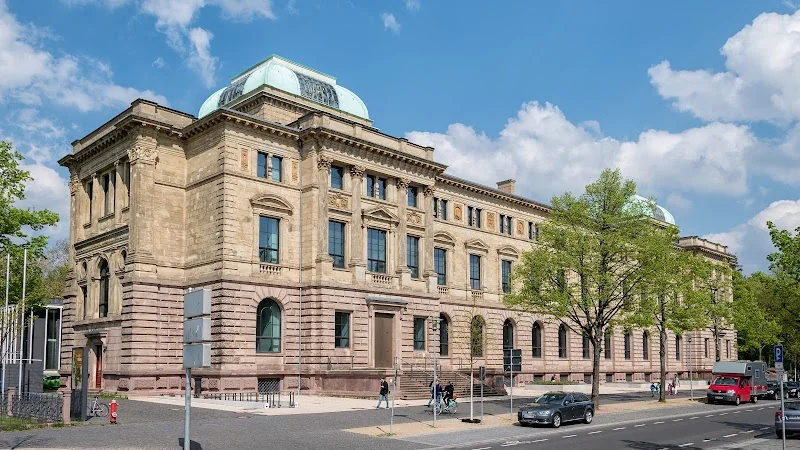
Museumstraße 1, Braunschweig
Museumstraße 1, 38100 Braunschweig, Germany
Herzog Anton Ulrich Museum | Opening Hours & Exhibitions
The Herzog Anton Ulrich Museum in Braunschweig is a heavyweight of European art history: founded in 1754, it is one of the oldest museums in Europe and today houses the fourth-largest collection of Old Masters paintings in Germany. In the representative building at Museumstraße 1, you can expect around 4,000 artworks spanning 3,000 years – from antiquity to the early modern period, complemented by a significant graphic collection. Visitors appreciate the clear layout, the calm atmosphere, and the opportunity to experience masterpieces up close – from Vermeer’s famous 'Girl with a Wine Glass' to Rembrandt’s impressive 'Family Portrait'. Thanks to its central location, the museum is easily accessible by tram and bus; several parking garages are within walking distance. Conveniently, it is open from Tuesday to Sunday from 11 a.m. to 6 p.m., and in the in-house café Anton’s, you can stop by before or after your visit.
Opening Hours, Tickets & Tours: Plan Your Visit
For a relaxed museum visit, it is worthwhile to have the key details ready in advance. The Herzog Anton Ulrich Museum is regularly open from Tuesday to Sunday from 11:00 a.m. to 6:00 p.m.; it is closed on Mondays. On certain holidays, different regulations apply, such as openings on Easter or German Unity Day and closures on Christmas and New Year's Eve. If you plan flexibly, the best times to visit are early afternoon or later in the day – visitor groups then spread pleasantly across the spacious exhibition rooms. Admission prices are clear and fair: adults pay €9, reduced rates are €7, and children and teenagers aged 6 to 17 pay €2. Please note that special exhibitions may have their own rates; the current conditions are listed on the museum's website and can be inquired at the ticket counter. Tip for culture explorers: Throughout the year, the museum participates in action days like International Museum Day; such dates often offer special tours or admission at special rates. For individual tours, group and school offers, the booking service is available for advice – by phone at +49 531 1225‑2424 or by email at buchung.haum@3landesmuseen.de. Whether a 60-minute overview, a thematic tour through the Old Masters' painting gallery, or a focus on sculpture, ivory, and applied arts: the program is diverse and adapted to ongoing exhibitions. Family-friendly activities include creative stations, holiday events, and formats like short 30-minute impulse tours. Barrier-free access via elevators facilitates the visit, a changing table and a barrier-free restroom are located in the basement; larger bags can be stored in lockers before entering the exhibition rooms. If you want to spend your break in the museum, you will find warm and cold drinks, snacks, and cakes at Café Anton’s – open Tuesday to Friday from 9 a.m., on weekends from 10 a.m., each until 6 p.m.
Highlights of the Collection: Vermeer, Rembrandt, and the Strength of the Old Masters
The international reputation of the Herzog Anton Ulrich Museum is based on the exceptional quality of its collections. Particularly the department of Old Masters makes the museum a magnet for art lovers. A highlight is Johannes Vermeer’s 'Girl with a Wine Glass' (around 1658/59). The painting is one of the few secured works by the Delft master, whose quiet, light-filled interiors became icons of 17th-century Dutch painting. The presence of a Vermeer in Braunschweig is thanks to the collector's eye at the court of the Welfs; works like this were purposefully acquired and presented in a modern gallery since the late 17th century. No less significant are the Dutch and Flemish positions surrounding Rembrandt, Rubens, and their contemporaries. Particularly striking is Rembrandt's 'Family Portrait' (around 1665–1668), whose psychological depth and finely modeled light captivate the viewer for a long time. Additional artists include Jan Steen, Adam Elsheimer, Gerard van Honthorst, and Abraham Mignon. The collection also extends into the Italian and German Renaissance and into the Baroque: paintings by Giorgione, Palma Vecchio, Veronese, Rosso Fiorentino, as well as works by Hans Holbein the Younger and Lucas Cranach the Elder – including 'Hercules at Omphale' – showcase the breadth of European themes and styles. The painting is complemented by sculptures in wood, stone, bronze, and wax, as well as one of the most extensive ivory collections in Germany. Also outstanding: the cabinet of prints with works from early graphic art to modern times and an extensive collection of coins and medals. The fact that this concentration of masterpieces can be seen in Braunschweig has historical reasons: Duke Anton Ulrich and his successors systematically expanded the gallery; today, the museum presents the history of painting 'from the Middle Ages to around 1800' with great density and quality. Thanks to clear hanging, good lighting, and compact, bilingual object information, the halls can be explored in depth – ideal if you want to target masterpieces or set thematic focuses.
Current Exhibitions and Special Presentations: from 'Women’s Power' to 'Rendezvous with the Lion'
In addition to the permanent collection, the museum sets clear accents with temporary exhibitions that contemporarily question historical themes. A notable example was the exhibition 'Women’s Power. The Beautiful Evil' (October 24, 2025, to February 22, 2026), which examined the long visual tradition of female power between attribution and reality. The range included biblical and mythological figures as well as courtly and historical personalities – with exemplary works, such as representations of the topos 'Hercules at Omphale' from the Cranach workshop. Accompanying this, the museum offered a digital magazine for the first time, which deepened content and provided interactive formats such as quizzes and bingo. For many visitors, this was a new, flexible way to engage with motifs and interpretations before, on-site, or after the visit. Another highlight in 2026 is the special presentation 'Rendezvous with the Lion' (from March 6, 2026): While the Dankwarderode Castle is being renovated, the medieval collection will temporarily move to Museumstraße. At the center is the original Braunschweig Castle Lion (around 1166) – the most significant free-standing bronze work of the Middle Ages north of the Alps and an identity-forming symbol of the city. In eight chapters, the exhibition unfolds a panorama of political, religious, and social contexts of the Welf period. Additionally, thematic presentations such as 'Silver of the Welfs', which connect courtly representation objects and treasure art with regional history, or graphic projects like the 'True Crime Cast', which illuminates historical 'crimes' in sheets and books from a contemporary perspective, are worth seeing. For current dates, it is advisable to check the museum's calendar; there you will also find information on action days of the 'Cultural Mile' in collaboration with partners such as the State Theatre, Museum of Photography, and City Museum. Whether family programs, short tours, or lectures – the mix of masterpieces, research insights, and lively formats makes the program appealing.
Directions & Parking: How to Easily Get to the Museum
The address is simple: Museumstraße 1, 38100 Braunschweig. Thanks to its central location at the Theater and Museum Park, the museum is comfortably accessible by public transport. Tram lines 4 and 5 stop directly at the 'Museumstraße' station; a few minutes' walk away is the 'Rathaus' station, which is additionally served by lines 1, 2, 3, 4, and 10. Various bus lines connect the city center, including lines 412 and 413 to 'Museumstraße' and 230, 411, 416, 422, and 423 to 'Staatstheater'. The distance from the main train station is just over a kilometer; you can cover the short distance by tram or walk in about 15 minutes. If you are arriving by car, you should know: there are no on-site parking spaces at the museum. However, several parking garages are available in the immediate vicinity. The Magni parking garage (Monday to Saturday approximately 7:00 a.m. to 10:00 p.m.), the Wilhelmstraße parking garage (daily approximately 6:00 a.m. to 11:30 p.m.), and the Schloss-Arkaden parking garage (Monday to Saturday approximately 7:00 a.m. to 9:30 p.m., Sunday 11:00 a.m. to 6:00 p.m.) have proven reliable. Additionally, there are paid parking spaces on the street; availability varies depending on the time of day and events in the area. For those with mobility impairments, it is best to plan your arrival via the 'Museumstraße' stop, as access to the museum is possible via elevators. Cyclists will find bike racks nearby. Tip: Follow the city’s parking guidance system to Schloss-Arkaden and switch to a short walk through the park in just a few minutes; this way, you can avoid peak traffic. During major events at the State Theatre, demand is high in the evening hours – arriving earlier or using public transport makes planning easier.
Café Anton’s & Services: Enjoy Relaxed Moments in the Museum
A museum visit also thrives on good breaks – for this, the Herzog Anton Ulrich Museum is well-equipped. Directly in the building is the museum bistro Café Anton’s (Museumstraße 1). Opening hours are Tuesday to Friday from 9:00 a.m. to 6:00 p.m., Saturday and Sunday from 10:00 a.m. to 6:00 p.m.; it is closed on Mondays. Whether breakfast before the tour, coffee and cake in the afternoon, or a hearty snack in between – the offerings are aligned with the museum's rhythm and make the place attractive for city strolls. Reservations and inquiries can be made at +49 531 1225‑2485. Those coming with children will find family-friendly infrastructure such as changing tables in the basement; strollers can easily access the floors via elevators. For groups, the combination of a tour and café stay is practical: after a 60- or 90-minute tour, you can comfortably discuss what you have seen at Anton’s. For schools and families, the museum education regularly offers creative formats, from drawing in the hall to thematic stations that are listed in event programs. The museum's contact area is also service-oriented: the team is reachable by phone and email, advising on tickets, offers, and accompanying programs. In cooperation with city cultural partners and the 'Cultural Mile', there are also seasonal actions that connect the museum visit with theater, music, or photography in the neighborhood. If you have time after your visit, you can continue your walk in the Theater Park – the location between the State Theatre and the museum invites a short detour into the green. And if you are looking for a souvenir: in the shop, you will find catalogs, postcards, and selected gift ideas related to the collection and current exhibitions.
Photography, Accessibility & Visitor Information: Well-Informed During Your Visit
To ensure your stay is pleasant and the art remains optimally protected, clear, visitor-friendly rules apply in the museum. Photography is generally allowed in the exhibition rooms for private purposes – however, without flash, tripods, and selfie sticks. Please note that publication on social media is legally not considered 'private' and may affect third-party rights. For scientific or commercial projects, prior written permission from the museum director must be obtained. For conservation reasons, larger bags, umbrellas, and bulky items are not permitted in the exhibition rooms; lockers and a cloakroom are available in the basement. Eating and drinking are not allowed in the exhibition rooms; for this, the café on the ground floor is recommended. The museum is accessible for people with mobility impairments via elevators, and a barrier-free restroom is located in the basement. Assistance and guide dogs are welcome; other animals are not allowed in the building. Please follow the instructions of the supervisory and ticket staff, especially if certain rooms are temporarily closed. Those who wish to draw or take notes may do so – please with suitable surfaces, without felt-tip pens, brushes, or scissors; passageways and escape routes must always be kept clear. Children under six years old may only visit the museum when accompanied by adults. During peak times, there may be short-term admission regulations. Our tip: Plan enough time – four floors with painting, sculpture, as well as graphic and applied arts offer plenty of discoveries. If you want to come specifically, orient yourself to the highlights: Vermeer and Rembrandt in the Dutch painting gallery, Cranach and Holbein among the Old Germans, Italian masters like Giorgione and Veronese, and French elegance with Rigaud or Boucher. This way, you are thematically well-prepared and can directly target your favorite halls.
Why a Visit is Worth It: Profile, History & Quality at a Glance
The Herzog Anton Ulrich Museum combines historical depth with current relevance – and does so with a precision that is usually only found in metropolises. Historically, it goes back to the baroque collecting activity of the Welfs: Duke Anton Ulrich already assembled a gallery of over 800 paintings around 1694, which was presented in a modern exhibition in Salzdahlum. This curatorial idea – first-rate works in clear succession, with visual relationships and lighting – continues to shape the museum today. In 2016, the building was reopened after several years of renovation; since then, the collection has been presented in fresh dramaturgy and with improved visitor areas. The profile is convincing in terms of density and breadth: The Old Masters range from the early Renaissance to Rococo with strong focuses in the Netherlands and Flanders, but old German and Italian painting is also prominently represented. Sculpture and applied arts showcase impressive numbers of ivory as well as glass, enamel, and porcelain – including holdings from Fürstenberg. The cabinet of prints opens the view into paper art, from Dürer to Goya to modern times; the numismatic collection encompasses tens of thousands of objects and allows social and economic historical insights. Such an ensemble explains why Braunschweig is regarded in art guides as a 'secret tip of rank': Where else can one encounter Vermeer, Rembrandt, Rubens, Giorgione, Veronese, and Cranach in such concentrated form? Additionally, the integration into the city: between the State Theatre, Museum Park, and Schloss-Arkaden, the museum is excellently reachable; public transport and parking garages are nearby. Clear visitor information, reliable opening hours (Tue–Sun 11 a.m. to 6 p.m.), and services from the shop to Café Anton’s ensure that the visit is planable, comfortable, and sustainable – whether as a brief detour to a masterpiece or as a half-day tour through the epochs.
Sources:
- 3Landesmuseen Braunschweig – Collection of Old Masters
- 3Landesmuseen Braunschweig – Visitor Info (Admission, Contact, Address)
- 3Landesmuseen Braunschweig – Café Anton’s (Opening Hours)
- City of Braunschweig – Herzog Anton Ulrich Museum (Profile, Opening Hours, Size)
- destination.one – Herzog Anton Ulrich Museum (Directions, Parking, Public Transport)
- Wikipedia – The Girl with the Wine Glass (Vermeer, Location HAUM)
- HAUM – House Rules (Photography and Visitor Regulations)
- HAUM – Press: Women’s Power. The Beautiful Evil (Data & Prices, 2025/2026)
- HAUM – Press: Rendezvous with the Lion (from March 6, 2026)
Show moreShow less
Herzog Anton Ulrich Museum | Opening Hours & Exhibitions
The Herzog Anton Ulrich Museum in Braunschweig is a heavyweight of European art history: founded in 1754, it is one of the oldest museums in Europe and today houses the fourth-largest collection of Old Masters paintings in Germany. In the representative building at Museumstraße 1, you can expect around 4,000 artworks spanning 3,000 years – from antiquity to the early modern period, complemented by a significant graphic collection. Visitors appreciate the clear layout, the calm atmosphere, and the opportunity to experience masterpieces up close – from Vermeer’s famous 'Girl with a Wine Glass' to Rembrandt’s impressive 'Family Portrait'. Thanks to its central location, the museum is easily accessible by tram and bus; several parking garages are within walking distance. Conveniently, it is open from Tuesday to Sunday from 11 a.m. to 6 p.m., and in the in-house café Anton’s, you can stop by before or after your visit.
Opening Hours, Tickets & Tours: Plan Your Visit
For a relaxed museum visit, it is worthwhile to have the key details ready in advance. The Herzog Anton Ulrich Museum is regularly open from Tuesday to Sunday from 11:00 a.m. to 6:00 p.m.; it is closed on Mondays. On certain holidays, different regulations apply, such as openings on Easter or German Unity Day and closures on Christmas and New Year's Eve. If you plan flexibly, the best times to visit are early afternoon or later in the day – visitor groups then spread pleasantly across the spacious exhibition rooms. Admission prices are clear and fair: adults pay €9, reduced rates are €7, and children and teenagers aged 6 to 17 pay €2. Please note that special exhibitions may have their own rates; the current conditions are listed on the museum's website and can be inquired at the ticket counter. Tip for culture explorers: Throughout the year, the museum participates in action days like International Museum Day; such dates often offer special tours or admission at special rates. For individual tours, group and school offers, the booking service is available for advice – by phone at +49 531 1225‑2424 or by email at buchung.haum@3landesmuseen.de. Whether a 60-minute overview, a thematic tour through the Old Masters' painting gallery, or a focus on sculpture, ivory, and applied arts: the program is diverse and adapted to ongoing exhibitions. Family-friendly activities include creative stations, holiday events, and formats like short 30-minute impulse tours. Barrier-free access via elevators facilitates the visit, a changing table and a barrier-free restroom are located in the basement; larger bags can be stored in lockers before entering the exhibition rooms. If you want to spend your break in the museum, you will find warm and cold drinks, snacks, and cakes at Café Anton’s – open Tuesday to Friday from 9 a.m., on weekends from 10 a.m., each until 6 p.m.
Highlights of the Collection: Vermeer, Rembrandt, and the Strength of the Old Masters
The international reputation of the Herzog Anton Ulrich Museum is based on the exceptional quality of its collections. Particularly the department of Old Masters makes the museum a magnet for art lovers. A highlight is Johannes Vermeer’s 'Girl with a Wine Glass' (around 1658/59). The painting is one of the few secured works by the Delft master, whose quiet, light-filled interiors became icons of 17th-century Dutch painting. The presence of a Vermeer in Braunschweig is thanks to the collector's eye at the court of the Welfs; works like this were purposefully acquired and presented in a modern gallery since the late 17th century. No less significant are the Dutch and Flemish positions surrounding Rembrandt, Rubens, and their contemporaries. Particularly striking is Rembrandt's 'Family Portrait' (around 1665–1668), whose psychological depth and finely modeled light captivate the viewer for a long time. Additional artists include Jan Steen, Adam Elsheimer, Gerard van Honthorst, and Abraham Mignon. The collection also extends into the Italian and German Renaissance and into the Baroque: paintings by Giorgione, Palma Vecchio, Veronese, Rosso Fiorentino, as well as works by Hans Holbein the Younger and Lucas Cranach the Elder – including 'Hercules at Omphale' – showcase the breadth of European themes and styles. The painting is complemented by sculptures in wood, stone, bronze, and wax, as well as one of the most extensive ivory collections in Germany. Also outstanding: the cabinet of prints with works from early graphic art to modern times and an extensive collection of coins and medals. The fact that this concentration of masterpieces can be seen in Braunschweig has historical reasons: Duke Anton Ulrich and his successors systematically expanded the gallery; today, the museum presents the history of painting 'from the Middle Ages to around 1800' with great density and quality. Thanks to clear hanging, good lighting, and compact, bilingual object information, the halls can be explored in depth – ideal if you want to target masterpieces or set thematic focuses.
Current Exhibitions and Special Presentations: from 'Women’s Power' to 'Rendezvous with the Lion'
In addition to the permanent collection, the museum sets clear accents with temporary exhibitions that contemporarily question historical themes. A notable example was the exhibition 'Women’s Power. The Beautiful Evil' (October 24, 2025, to February 22, 2026), which examined the long visual tradition of female power between attribution and reality. The range included biblical and mythological figures as well as courtly and historical personalities – with exemplary works, such as representations of the topos 'Hercules at Omphale' from the Cranach workshop. Accompanying this, the museum offered a digital magazine for the first time, which deepened content and provided interactive formats such as quizzes and bingo. For many visitors, this was a new, flexible way to engage with motifs and interpretations before, on-site, or after the visit. Another highlight in 2026 is the special presentation 'Rendezvous with the Lion' (from March 6, 2026): While the Dankwarderode Castle is being renovated, the medieval collection will temporarily move to Museumstraße. At the center is the original Braunschweig Castle Lion (around 1166) – the most significant free-standing bronze work of the Middle Ages north of the Alps and an identity-forming symbol of the city. In eight chapters, the exhibition unfolds a panorama of political, religious, and social contexts of the Welf period. Additionally, thematic presentations such as 'Silver of the Welfs', which connect courtly representation objects and treasure art with regional history, or graphic projects like the 'True Crime Cast', which illuminates historical 'crimes' in sheets and books from a contemporary perspective, are worth seeing. For current dates, it is advisable to check the museum's calendar; there you will also find information on action days of the 'Cultural Mile' in collaboration with partners such as the State Theatre, Museum of Photography, and City Museum. Whether family programs, short tours, or lectures – the mix of masterpieces, research insights, and lively formats makes the program appealing.
Directions & Parking: How to Easily Get to the Museum
The address is simple: Museumstraße 1, 38100 Braunschweig. Thanks to its central location at the Theater and Museum Park, the museum is comfortably accessible by public transport. Tram lines 4 and 5 stop directly at the 'Museumstraße' station; a few minutes' walk away is the 'Rathaus' station, which is additionally served by lines 1, 2, 3, 4, and 10. Various bus lines connect the city center, including lines 412 and 413 to 'Museumstraße' and 230, 411, 416, 422, and 423 to 'Staatstheater'. The distance from the main train station is just over a kilometer; you can cover the short distance by tram or walk in about 15 minutes. If you are arriving by car, you should know: there are no on-site parking spaces at the museum. However, several parking garages are available in the immediate vicinity. The Magni parking garage (Monday to Saturday approximately 7:00 a.m. to 10:00 p.m.), the Wilhelmstraße parking garage (daily approximately 6:00 a.m. to 11:30 p.m.), and the Schloss-Arkaden parking garage (Monday to Saturday approximately 7:00 a.m. to 9:30 p.m., Sunday 11:00 a.m. to 6:00 p.m.) have proven reliable. Additionally, there are paid parking spaces on the street; availability varies depending on the time of day and events in the area. For those with mobility impairments, it is best to plan your arrival via the 'Museumstraße' stop, as access to the museum is possible via elevators. Cyclists will find bike racks nearby. Tip: Follow the city’s parking guidance system to Schloss-Arkaden and switch to a short walk through the park in just a few minutes; this way, you can avoid peak traffic. During major events at the State Theatre, demand is high in the evening hours – arriving earlier or using public transport makes planning easier.
Café Anton’s & Services: Enjoy Relaxed Moments in the Museum
A museum visit also thrives on good breaks – for this, the Herzog Anton Ulrich Museum is well-equipped. Directly in the building is the museum bistro Café Anton’s (Museumstraße 1). Opening hours are Tuesday to Friday from 9:00 a.m. to 6:00 p.m., Saturday and Sunday from 10:00 a.m. to 6:00 p.m.; it is closed on Mondays. Whether breakfast before the tour, coffee and cake in the afternoon, or a hearty snack in between – the offerings are aligned with the museum's rhythm and make the place attractive for city strolls. Reservations and inquiries can be made at +49 531 1225‑2485. Those coming with children will find family-friendly infrastructure such as changing tables in the basement; strollers can easily access the floors via elevators. For groups, the combination of a tour and café stay is practical: after a 60- or 90-minute tour, you can comfortably discuss what you have seen at Anton’s. For schools and families, the museum education regularly offers creative formats, from drawing in the hall to thematic stations that are listed in event programs. The museum's contact area is also service-oriented: the team is reachable by phone and email, advising on tickets, offers, and accompanying programs. In cooperation with city cultural partners and the 'Cultural Mile', there are also seasonal actions that connect the museum visit with theater, music, or photography in the neighborhood. If you have time after your visit, you can continue your walk in the Theater Park – the location between the State Theatre and the museum invites a short detour into the green. And if you are looking for a souvenir: in the shop, you will find catalogs, postcards, and selected gift ideas related to the collection and current exhibitions.
Photography, Accessibility & Visitor Information: Well-Informed During Your Visit
To ensure your stay is pleasant and the art remains optimally protected, clear, visitor-friendly rules apply in the museum. Photography is generally allowed in the exhibition rooms for private purposes – however, without flash, tripods, and selfie sticks. Please note that publication on social media is legally not considered 'private' and may affect third-party rights. For scientific or commercial projects, prior written permission from the museum director must be obtained. For conservation reasons, larger bags, umbrellas, and bulky items are not permitted in the exhibition rooms; lockers and a cloakroom are available in the basement. Eating and drinking are not allowed in the exhibition rooms; for this, the café on the ground floor is recommended. The museum is accessible for people with mobility impairments via elevators, and a barrier-free restroom is located in the basement. Assistance and guide dogs are welcome; other animals are not allowed in the building. Please follow the instructions of the supervisory and ticket staff, especially if certain rooms are temporarily closed. Those who wish to draw or take notes may do so – please with suitable surfaces, without felt-tip pens, brushes, or scissors; passageways and escape routes must always be kept clear. Children under six years old may only visit the museum when accompanied by adults. During peak times, there may be short-term admission regulations. Our tip: Plan enough time – four floors with painting, sculpture, as well as graphic and applied arts offer plenty of discoveries. If you want to come specifically, orient yourself to the highlights: Vermeer and Rembrandt in the Dutch painting gallery, Cranach and Holbein among the Old Germans, Italian masters like Giorgione and Veronese, and French elegance with Rigaud or Boucher. This way, you are thematically well-prepared and can directly target your favorite halls.
Why a Visit is Worth It: Profile, History & Quality at a Glance
The Herzog Anton Ulrich Museum combines historical depth with current relevance – and does so with a precision that is usually only found in metropolises. Historically, it goes back to the baroque collecting activity of the Welfs: Duke Anton Ulrich already assembled a gallery of over 800 paintings around 1694, which was presented in a modern exhibition in Salzdahlum. This curatorial idea – first-rate works in clear succession, with visual relationships and lighting – continues to shape the museum today. In 2016, the building was reopened after several years of renovation; since then, the collection has been presented in fresh dramaturgy and with improved visitor areas. The profile is convincing in terms of density and breadth: The Old Masters range from the early Renaissance to Rococo with strong focuses in the Netherlands and Flanders, but old German and Italian painting is also prominently represented. Sculpture and applied arts showcase impressive numbers of ivory as well as glass, enamel, and porcelain – including holdings from Fürstenberg. The cabinet of prints opens the view into paper art, from Dürer to Goya to modern times; the numismatic collection encompasses tens of thousands of objects and allows social and economic historical insights. Such an ensemble explains why Braunschweig is regarded in art guides as a 'secret tip of rank': Where else can one encounter Vermeer, Rembrandt, Rubens, Giorgione, Veronese, and Cranach in such concentrated form? Additionally, the integration into the city: between the State Theatre, Museum Park, and Schloss-Arkaden, the museum is excellently reachable; public transport and parking garages are nearby. Clear visitor information, reliable opening hours (Tue–Sun 11 a.m. to 6 p.m.), and services from the shop to Café Anton’s ensure that the visit is planable, comfortable, and sustainable – whether as a brief detour to a masterpiece or as a half-day tour through the epochs.
Sources:
- 3Landesmuseen Braunschweig – Collection of Old Masters
- 3Landesmuseen Braunschweig – Visitor Info (Admission, Contact, Address)
- 3Landesmuseen Braunschweig – Café Anton’s (Opening Hours)
- City of Braunschweig – Herzog Anton Ulrich Museum (Profile, Opening Hours, Size)
- destination.one – Herzog Anton Ulrich Museum (Directions, Parking, Public Transport)
- Wikipedia – The Girl with the Wine Glass (Vermeer, Location HAUM)
- HAUM – House Rules (Photography and Visitor Regulations)
- HAUM – Press: Women’s Power. The Beautiful Evil (Data & Prices, 2025/2026)
- HAUM – Press: Rendezvous with the Lion (from March 6, 2026)
Herzog Anton Ulrich Museum | Opening Hours & Exhibitions
The Herzog Anton Ulrich Museum in Braunschweig is a heavyweight of European art history: founded in 1754, it is one of the oldest museums in Europe and today houses the fourth-largest collection of Old Masters paintings in Germany. In the representative building at Museumstraße 1, you can expect around 4,000 artworks spanning 3,000 years – from antiquity to the early modern period, complemented by a significant graphic collection. Visitors appreciate the clear layout, the calm atmosphere, and the opportunity to experience masterpieces up close – from Vermeer’s famous 'Girl with a Wine Glass' to Rembrandt’s impressive 'Family Portrait'. Thanks to its central location, the museum is easily accessible by tram and bus; several parking garages are within walking distance. Conveniently, it is open from Tuesday to Sunday from 11 a.m. to 6 p.m., and in the in-house café Anton’s, you can stop by before or after your visit.
Opening Hours, Tickets & Tours: Plan Your Visit
For a relaxed museum visit, it is worthwhile to have the key details ready in advance. The Herzog Anton Ulrich Museum is regularly open from Tuesday to Sunday from 11:00 a.m. to 6:00 p.m.; it is closed on Mondays. On certain holidays, different regulations apply, such as openings on Easter or German Unity Day and closures on Christmas and New Year's Eve. If you plan flexibly, the best times to visit are early afternoon or later in the day – visitor groups then spread pleasantly across the spacious exhibition rooms. Admission prices are clear and fair: adults pay €9, reduced rates are €7, and children and teenagers aged 6 to 17 pay €2. Please note that special exhibitions may have their own rates; the current conditions are listed on the museum's website and can be inquired at the ticket counter. Tip for culture explorers: Throughout the year, the museum participates in action days like International Museum Day; such dates often offer special tours or admission at special rates. For individual tours, group and school offers, the booking service is available for advice – by phone at +49 531 1225‑2424 or by email at buchung.haum@3landesmuseen.de. Whether a 60-minute overview, a thematic tour through the Old Masters' painting gallery, or a focus on sculpture, ivory, and applied arts: the program is diverse and adapted to ongoing exhibitions. Family-friendly activities include creative stations, holiday events, and formats like short 30-minute impulse tours. Barrier-free access via elevators facilitates the visit, a changing table and a barrier-free restroom are located in the basement; larger bags can be stored in lockers before entering the exhibition rooms. If you want to spend your break in the museum, you will find warm and cold drinks, snacks, and cakes at Café Anton’s – open Tuesday to Friday from 9 a.m., on weekends from 10 a.m., each until 6 p.m.
Highlights of the Collection: Vermeer, Rembrandt, and the Strength of the Old Masters
The international reputation of the Herzog Anton Ulrich Museum is based on the exceptional quality of its collections. Particularly the department of Old Masters makes the museum a magnet for art lovers. A highlight is Johannes Vermeer’s 'Girl with a Wine Glass' (around 1658/59). The painting is one of the few secured works by the Delft master, whose quiet, light-filled interiors became icons of 17th-century Dutch painting. The presence of a Vermeer in Braunschweig is thanks to the collector's eye at the court of the Welfs; works like this were purposefully acquired and presented in a modern gallery since the late 17th century. No less significant are the Dutch and Flemish positions surrounding Rembrandt, Rubens, and their contemporaries. Particularly striking is Rembrandt's 'Family Portrait' (around 1665–1668), whose psychological depth and finely modeled light captivate the viewer for a long time. Additional artists include Jan Steen, Adam Elsheimer, Gerard van Honthorst, and Abraham Mignon. The collection also extends into the Italian and German Renaissance and into the Baroque: paintings by Giorgione, Palma Vecchio, Veronese, Rosso Fiorentino, as well as works by Hans Holbein the Younger and Lucas Cranach the Elder – including 'Hercules at Omphale' – showcase the breadth of European themes and styles. The painting is complemented by sculptures in wood, stone, bronze, and wax, as well as one of the most extensive ivory collections in Germany. Also outstanding: the cabinet of prints with works from early graphic art to modern times and an extensive collection of coins and medals. The fact that this concentration of masterpieces can be seen in Braunschweig has historical reasons: Duke Anton Ulrich and his successors systematically expanded the gallery; today, the museum presents the history of painting 'from the Middle Ages to around 1800' with great density and quality. Thanks to clear hanging, good lighting, and compact, bilingual object information, the halls can be explored in depth – ideal if you want to target masterpieces or set thematic focuses.
Current Exhibitions and Special Presentations: from 'Women’s Power' to 'Rendezvous with the Lion'
In addition to the permanent collection, the museum sets clear accents with temporary exhibitions that contemporarily question historical themes. A notable example was the exhibition 'Women’s Power. The Beautiful Evil' (October 24, 2025, to February 22, 2026), which examined the long visual tradition of female power between attribution and reality. The range included biblical and mythological figures as well as courtly and historical personalities – with exemplary works, such as representations of the topos 'Hercules at Omphale' from the Cranach workshop. Accompanying this, the museum offered a digital magazine for the first time, which deepened content and provided interactive formats such as quizzes and bingo. For many visitors, this was a new, flexible way to engage with motifs and interpretations before, on-site, or after the visit. Another highlight in 2026 is the special presentation 'Rendezvous with the Lion' (from March 6, 2026): While the Dankwarderode Castle is being renovated, the medieval collection will temporarily move to Museumstraße. At the center is the original Braunschweig Castle Lion (around 1166) – the most significant free-standing bronze work of the Middle Ages north of the Alps and an identity-forming symbol of the city. In eight chapters, the exhibition unfolds a panorama of political, religious, and social contexts of the Welf period. Additionally, thematic presentations such as 'Silver of the Welfs', which connect courtly representation objects and treasure art with regional history, or graphic projects like the 'True Crime Cast', which illuminates historical 'crimes' in sheets and books from a contemporary perspective, are worth seeing. For current dates, it is advisable to check the museum's calendar; there you will also find information on action days of the 'Cultural Mile' in collaboration with partners such as the State Theatre, Museum of Photography, and City Museum. Whether family programs, short tours, or lectures – the mix of masterpieces, research insights, and lively formats makes the program appealing.
Directions & Parking: How to Easily Get to the Museum
The address is simple: Museumstraße 1, 38100 Braunschweig. Thanks to its central location at the Theater and Museum Park, the museum is comfortably accessible by public transport. Tram lines 4 and 5 stop directly at the 'Museumstraße' station; a few minutes' walk away is the 'Rathaus' station, which is additionally served by lines 1, 2, 3, 4, and 10. Various bus lines connect the city center, including lines 412 and 413 to 'Museumstraße' and 230, 411, 416, 422, and 423 to 'Staatstheater'. The distance from the main train station is just over a kilometer; you can cover the short distance by tram or walk in about 15 minutes. If you are arriving by car, you should know: there are no on-site parking spaces at the museum. However, several parking garages are available in the immediate vicinity. The Magni parking garage (Monday to Saturday approximately 7:00 a.m. to 10:00 p.m.), the Wilhelmstraße parking garage (daily approximately 6:00 a.m. to 11:30 p.m.), and the Schloss-Arkaden parking garage (Monday to Saturday approximately 7:00 a.m. to 9:30 p.m., Sunday 11:00 a.m. to 6:00 p.m.) have proven reliable. Additionally, there are paid parking spaces on the street; availability varies depending on the time of day and events in the area. For those with mobility impairments, it is best to plan your arrival via the 'Museumstraße' stop, as access to the museum is possible via elevators. Cyclists will find bike racks nearby. Tip: Follow the city’s parking guidance system to Schloss-Arkaden and switch to a short walk through the park in just a few minutes; this way, you can avoid peak traffic. During major events at the State Theatre, demand is high in the evening hours – arriving earlier or using public transport makes planning easier.
Café Anton’s & Services: Enjoy Relaxed Moments in the Museum
A museum visit also thrives on good breaks – for this, the Herzog Anton Ulrich Museum is well-equipped. Directly in the building is the museum bistro Café Anton’s (Museumstraße 1). Opening hours are Tuesday to Friday from 9:00 a.m. to 6:00 p.m., Saturday and Sunday from 10:00 a.m. to 6:00 p.m.; it is closed on Mondays. Whether breakfast before the tour, coffee and cake in the afternoon, or a hearty snack in between – the offerings are aligned with the museum's rhythm and make the place attractive for city strolls. Reservations and inquiries can be made at +49 531 1225‑2485. Those coming with children will find family-friendly infrastructure such as changing tables in the basement; strollers can easily access the floors via elevators. For groups, the combination of a tour and café stay is practical: after a 60- or 90-minute tour, you can comfortably discuss what you have seen at Anton’s. For schools and families, the museum education regularly offers creative formats, from drawing in the hall to thematic stations that are listed in event programs. The museum's contact area is also service-oriented: the team is reachable by phone and email, advising on tickets, offers, and accompanying programs. In cooperation with city cultural partners and the 'Cultural Mile', there are also seasonal actions that connect the museum visit with theater, music, or photography in the neighborhood. If you have time after your visit, you can continue your walk in the Theater Park – the location between the State Theatre and the museum invites a short detour into the green. And if you are looking for a souvenir: in the shop, you will find catalogs, postcards, and selected gift ideas related to the collection and current exhibitions.
Photography, Accessibility & Visitor Information: Well-Informed During Your Visit
To ensure your stay is pleasant and the art remains optimally protected, clear, visitor-friendly rules apply in the museum. Photography is generally allowed in the exhibition rooms for private purposes – however, without flash, tripods, and selfie sticks. Please note that publication on social media is legally not considered 'private' and may affect third-party rights. For scientific or commercial projects, prior written permission from the museum director must be obtained. For conservation reasons, larger bags, umbrellas, and bulky items are not permitted in the exhibition rooms; lockers and a cloakroom are available in the basement. Eating and drinking are not allowed in the exhibition rooms; for this, the café on the ground floor is recommended. The museum is accessible for people with mobility impairments via elevators, and a barrier-free restroom is located in the basement. Assistance and guide dogs are welcome; other animals are not allowed in the building. Please follow the instructions of the supervisory and ticket staff, especially if certain rooms are temporarily closed. Those who wish to draw or take notes may do so – please with suitable surfaces, without felt-tip pens, brushes, or scissors; passageways and escape routes must always be kept clear. Children under six years old may only visit the museum when accompanied by adults. During peak times, there may be short-term admission regulations. Our tip: Plan enough time – four floors with painting, sculpture, as well as graphic and applied arts offer plenty of discoveries. If you want to come specifically, orient yourself to the highlights: Vermeer and Rembrandt in the Dutch painting gallery, Cranach and Holbein among the Old Germans, Italian masters like Giorgione and Veronese, and French elegance with Rigaud or Boucher. This way, you are thematically well-prepared and can directly target your favorite halls.
Why a Visit is Worth It: Profile, History & Quality at a Glance
The Herzog Anton Ulrich Museum combines historical depth with current relevance – and does so with a precision that is usually only found in metropolises. Historically, it goes back to the baroque collecting activity of the Welfs: Duke Anton Ulrich already assembled a gallery of over 800 paintings around 1694, which was presented in a modern exhibition in Salzdahlum. This curatorial idea – first-rate works in clear succession, with visual relationships and lighting – continues to shape the museum today. In 2016, the building was reopened after several years of renovation; since then, the collection has been presented in fresh dramaturgy and with improved visitor areas. The profile is convincing in terms of density and breadth: The Old Masters range from the early Renaissance to Rococo with strong focuses in the Netherlands and Flanders, but old German and Italian painting is also prominently represented. Sculpture and applied arts showcase impressive numbers of ivory as well as glass, enamel, and porcelain – including holdings from Fürstenberg. The cabinet of prints opens the view into paper art, from Dürer to Goya to modern times; the numismatic collection encompasses tens of thousands of objects and allows social and economic historical insights. Such an ensemble explains why Braunschweig is regarded in art guides as a 'secret tip of rank': Where else can one encounter Vermeer, Rembrandt, Rubens, Giorgione, Veronese, and Cranach in such concentrated form? Additionally, the integration into the city: between the State Theatre, Museum Park, and Schloss-Arkaden, the museum is excellently reachable; public transport and parking garages are nearby. Clear visitor information, reliable opening hours (Tue–Sun 11 a.m. to 6 p.m.), and services from the shop to Café Anton’s ensure that the visit is planable, comfortable, and sustainable – whether as a brief detour to a masterpiece or as a half-day tour through the epochs.
Sources:
- 3Landesmuseen Braunschweig – Collection of Old Masters
- 3Landesmuseen Braunschweig – Visitor Info (Admission, Contact, Address)
- 3Landesmuseen Braunschweig – Café Anton’s (Opening Hours)
- City of Braunschweig – Herzog Anton Ulrich Museum (Profile, Opening Hours, Size)
- destination.one – Herzog Anton Ulrich Museum (Directions, Parking, Public Transport)
- Wikipedia – The Girl with the Wine Glass (Vermeer, Location HAUM)
- HAUM – House Rules (Photography and Visitor Regulations)
- HAUM – Press: Women’s Power. The Beautiful Evil (Data & Prices, 2025/2026)
- HAUM – Press: Rendezvous with the Lion (from March 6, 2026)
Upcoming Events
No events found
Frequently Asked Questions
Reviews
Stephanie Smith
18. February 2026
Really amazing single collection from a family, now a museum. There is a lot to look at so ensure that you have time. There are information cards for each item, but if you don't speak German you're going to need to give the Google translate camera option a work out. I did and had no issues at all. There's paintings on the lower level, while upstairs it's antique statues, coins, plates and international collections across Asia and America. Worth a look.
Sara daydream
30. September 2025
Huge museum, make sure to come early because we ended up staying for four hours! So many beautiful art to look at and enjoy.
Kly
19. October 2025
Great Museum, nice atmosphere, not too crowded, great staff and amazing shop!
Anastasiia Lüßmann-Sorokina
20. May 2022
Lovely collection of everything from everywhere. The museum by itself is in a very good condition, I mostly did like the sculptures, some of the paintings are quite interesting to look at. The overall presented collection is good, but not extremely amazing.
Nathan Eddy
3. July 2021
A really top notch Gemäldegalerie, Schwerpunkt baroque so if you like that you’re in luck, but overall a fabulous collection with some thrilling pieces by Strozzi, Spranger, Bassano, Vouet, Tintoretto, Veronese, Fiorentino, van Heemskerk... I could go on and on! Aside from the paintings the museum itself has had an immaculate renovation and really shines. Bonus: I had the museum essentially to myself for the first four hours it was open, a really sacred experience. Go to Braunschweig JUST to see this. Go tomorrow.