
Leonhardstraße 43, Braunschweig-Viewegs Garten-Bebelhof
Leonhardstraße 43, 38102 Braunschweig, Germany
The Christian Community in Braunschweig | Services & Photos
The Christian Community in Braunschweig is more than just a church location at Leonhardstraße 43. Those who come here encounter a community that describes itself as open and vibrant, making its events consciously accessible to visitors. At the same time, the St. Leonhard Chapel, one of the oldest preserved buildings in Braunschweig, is located here. The city of Braunschweig classifies the area as historically significant and points out that the chapel was built around 1200 and has been used as a house of worship by the Christian Community since 1946. This connection of spiritual life, city history, and architecture makes the place so extraordinary. For inquiries regarding photos, services, programs, and background information, this address is therefore a particularly strong destination, as historical substance and current community practice come together directly. ([christengemeinschaft-braunschweig.de](https://www.christengemeinschaft-braunschweig.de/))
The community also offers many points of connection in terms of content: The Christian Community was founded in 1922 with the help of Rudolf Steiner and sees itself as a contemporary Christian movement with seven renewed sacraments. In Braunschweig, this is reflected in services, lectures, concerts, discussion groups, family offerings, and other events. The official website refers to a photo gallery, the program, and contact options; this makes the location quickly understandable for interested parties. At the same time, the place is historically charged: The St. Leonhard area was originally established as a leper hospital, located far outside the city limits of the time, and has experienced various uses over centuries before becoming a community site. This dual perspective of present and past continues to shape the profile of the Christian Community in Braunschweig to this day. ([christengemeinschaft-braunschweig.de](https://www.christengemeinschaft-braunschweig.de/die-christengemeinschaft/))
Photos and First Impressions at Leonhardstraße
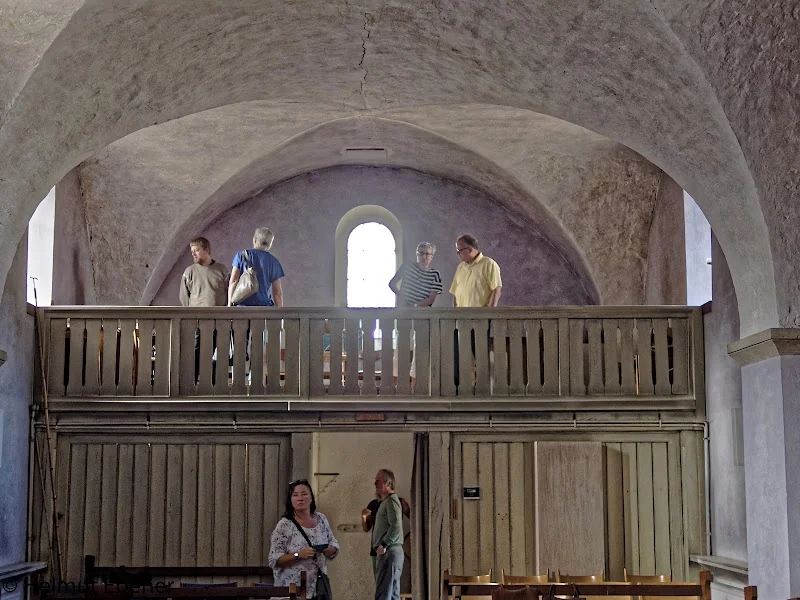
Those searching for photos of the Christian Community in Braunschweig will find a dedicated gallery on the official community website. This is important for users, as the first visual impression often determines whether a place is perceived as calm, festive, friendly, or historical. The gallery is directly integrated into the site structure and complements other areas such as Welcome, Services, Events, and Contact. The community thus presents itself not as a closed institution, but as a transparent, publicly accessible community life. In combination with the city's monument pages, a clear picture emerges: This is not just any meeting room, but a place with a strong identity, whose architectural and spiritual atmosphere is closely linked to the St. Leonhard Chapel. The chapel itself is described by the city as a single-nave, completely vaulted hall building with a recessed choir and semi-circular apse, thus as a structure that also leaves a very distinct visual impression. ([christengemeinschaft-braunschweig.de](https://www.christengemeinschaft-braunschweig.de/galerie/))
Especially for the search intent for photos, it is also relevant that the ensemble is not limited to the interior of the church. The city of Braunschweig emphasizes the extraordinary historical depth of the St. Leonhard area, which dates back to the 12th century and houses the oldest preserved building in the city after the cathedral. The surroundings, the natural stone facades, the historical character of the chapel, and the centuries-long history of use create a backdrop that becomes immediately understandable in images. The community itself speaks of being a vibrant place for Christian-religious life and a modern church. This creates the contrast that is visually so interesting: medieval substance, restored details, and a contemporary community with current public relations work. Therefore, those viewing images of the Christian Community in Braunschweig see not only architecture but also the connection of monument, faith, and present. ([braunschweig.de](https://www.braunschweig.de/leben/stadtplanung_bauen/stadtbild_denkmalpflege/veroeffentlichungen/objektbezogene-veroeffentlichungen/st_leonhard.php))
Services, Programs, and Events
At the Christian Community in Braunschweig, services and community life are clearly at the center. The overarching community website explicitly states that the current dates for services and other devotions are published. At the same time, the community describes its program not only liturgically but also culturally and socially: concerts, lectures, community festivals, and many other events take place there. Particularly interesting is that the community events are public and the activities extend far beyond a classic service. The Christian Community lists, among other things, lectures, working groups, conferences, concerts, exhibitions, religious education, children's festivals, holiday camps, and youth activities. This mix makes the location relevant for people with very different search intents, from family outings to spiritual interests. ([christengemeinschaft.de](https://christengemeinschaft.de/braunschweig/gottesdienste/))
The current calendar clearly shows how diverse the offerings are. The present program includes, among other things, human consecration services, Sunday services, confirmation classes, discussion groups, fairy tale hours for young and old, house and garden days, a choir concert, the Redentiner Easter play, lectures on the history of the Christian Community, and a joint festival offering for children, parents, and guests. This range shows that the community not only offers religious celebrations but also explicitly considers education, culture, and community. For SEO searches like program, events, or services, this is important because the term cannot be reduced to a single date. Braunschweig thus becomes a place where liturgical life, family offerings, and cultural formats complement each other. The official program is maintained online and may change depending on the period; therefore, the website is the most reliable starting point for current dates. ([christengemeinschaft-braunschweig.de](https://www.christengemeinschaft-braunschweig.de/kalender/))
St. Leonhard Chapel: History, Architecture, and Monument Protection
The history of the St. Leonhard Chapel is one of the strongest search drivers for the Christian Community in Braunschweig, as it extends far beyond the current community use. The city of Braunschweig describes the chapel as part of the former leper and plague hospital, built around 1200 and located far outside the city gates along the main road to Magdeburg. The chapel is the oldest preserved building in Braunschweig after the cathedral and has been damaged, repurposed, and restored multiple times over the centuries. The city's monument protection texts refer to a single-nave, two-bay, fully vaulted hall building with a recessed choir and semi-circular apse, which corresponds to the schema of Romanesque village churches. This is interesting not only for historians but also for visitors seeking a particularly authentic, calm, and dignified place. ([braunschweig.de](https://www.braunschweig.de/tourismus/ueber-braunschweig/sehenswuerdigkeiten/blik/kulturdenkmaeler/stleonhard.php))
The community's chronicle complements this picture with a very detailed narrative of the upheavals. It notes that the chapel was rented by the Johannis community in 1932, consecrated for youth work in 1933, heavily damaged during the war, and leased by the Christian Community in 1946. Also in 1946, the community received a right of way from Leonhardstraße; on the 2nd Advent Sunday in 1947, the chapel was consecrated anew. The chronicle also describes that the chapel was the first church in Braunschweig to be restored after the war. Further entries document renovations, the discovery of Baroque ceiling paintings, work on the roof, stairs, gallery, and apse, as well as the ongoing maintenance of the building. This mix of historical heritage and concrete community work explains why the St. Leonhard Chapel is perceived not only as a monument but also as a living part of present-day Braunschweig. ([christengemeinschaft-braunschweig.de](https://www.christengemeinschaft-braunschweig.de/chronik-der-st-leonhard-kapelle/))
The city's monument brochure also emphasizes the special status of the area. It describes St. Leonhard as a socially historical monument of unique significance for Braunschweig, which is urbanistically and culturally significant due to its long history and function as a leper institution. At the same time, it explains that the buildings of the former farmyard and the site itself form an ensemble that continues to make the character of the place comprehensible today. Particularly important is the continuity: From the medieval leper hospital, through the farmyard, monastery domain, and various repurposings, it eventually became a community site. Therefore, those visiting the place do not enter a mere reconstructed backdrop but a historical ensemble whose layers in architecture, location, and use are still readable. This is precisely what makes the Christian Community in Braunschweig so attractive for culturally and historically interested visitors. ([braunschweig.de](https://www.braunschweig.de/leben/stadtplanung_bauen/stadtbild_denkmalpflege/veroeffentlichungen/objektbezogene-veroeffentlichungen/Leonhard_Brosch_Internet.pdf))
Directions, Leonhardstraße, and City Hall
For directions, the official address is crucial: The community states Leonhardstraße 43, 38102 Braunschweig, and offers a route planner on its pages. The city of Braunschweig locates the chapel itself at Leonhardstraße 42, which shows that the church and community house are closely adjacent within the St. Leonhard ensemble. This is helpful for visitors because it allows one to understand the place not just as a single house number but as a historically grown facility. The location in the area of Leonhardplatz or City Hall makes orientation easier. Although the website does not provide a detailed parking description, it is clear: those arriving by car should consider the city center location and the traffic situation in the vicinity in their planning. For the first visit, the online route planner of the community is the most direct entry point. ([christengemeinschaft-braunschweig.de](https://www.christengemeinschaft-braunschweig.de/))
Public transport also places the location well. In the BSVG schedules and the route network plan, the area appears as Leonhard (City Hall) or Leonhardplatz (City Hall). This is particularly relevant for inquiries about directions, as many visitors want to know not only the exact address but especially the nearest stop. The network plan of the Braunschweig Transport Company marks Leonhardplatz as part of the inner-city public transport hub, and in the schedules, Leonhard (City Hall) appears as a stop. Thus, the location is not only historically remarkable but also practically accessible. Those coming for services, concerts, or lectures will find a location suitable for both walking from the city center and arriving by bus or tram. ([bsvg.net](https://www.bsvg.net/fileadmin/user_upload/downloads/Fahrplaene/Fahrplaene_2024/Baustellen_2024/Fpl_Bus_436_ab_03.03.2025.pdf?utm_source=openai))
The Christian Community: Sacraments, Community Life, and Special Atmosphere
The Christian Community itself sees itself as an independent Christian movement. The official website explains that it was founded in 1922 with the help of Rudolf Steiner and advocates for a contemporary Christianity. The spiritual foundation consists of the seven renewed sacraments: baptism, confirmation, human consecration service, confession, marriage, priestly ordination, and last rites. Equally important is the idea of freedom: the priests enjoy freedom of teaching, the community members freedom of belief, and while anthroposophy is seen by many as a help to understanding Christianity, it is not a prerequisite for the individual. This fundamental attitude also shapes the location in Braunschweig, as it is described not as a closed space but as a place of conscious decision and open access. ([christengemeinschaft-braunschweig.de](https://www.christengemeinschaft-braunschweig.de/die-christengemeinschaft/))
In Braunschweig, this attitude is very concretely reflected in the daily life of the community. The website emphasizes that the community wants to be a vibrant place for Christian-religious life and is open to all. At the same time, the various forms of community life are made visible: public events, services, concerts, lectures, and offerings for children, youth, and families. This is precisely what distinguishes the place from a purely museum-like attraction. Although the St. Leonhard Chapel is architecturally and historically impressive, it remains at its core a lived religious place. For visitors, this means a special atmosphere shaped by silence, ritual, history, and present. Therefore, those searching for Christian Braunschweig, Christian Community Braunschweig, or Christian Community Lower Saxony will find here not just a building but a whole form of community life with regional roots and public character. ([christengemeinschaft-braunschweig.de](https://www.christengemeinschaft-braunschweig.de/))
What Visitors Should Know Practically Today
Practically speaking, the Christian Community in Braunschweig is a location that bundles several search intents in one: photos, programs, services, history, directions, and contact. The official homepage already lists the most important paths, including a photo gallery, community newsletters, and programs. Additionally, the community regularly publishes its events online, providing a reliable basis for planning. This is particularly pleasant for people coming for the first time: one can get a sense of the atmosphere in advance, check current dates, and directly take over the address. Since the community is open to all, the place is suitable for both a targeted service visit and for those interested in architecture, city history, or spiritual life. ([christengemeinschaft-braunschweig.de](https://www.christengemeinschaft-braunschweig.de/))
The Christian Community in Braunschweig is particularly strong where historical heritage and modern community identity intertwine. The city of Braunschweig calls the chapel an extraordinary monument and refers to its role as the oldest preserved building in the city after the cathedral. The community, in turn, shows with its calendar, gallery, and contact information that it fills this historical place with current life. Therefore, those searching for St. Leonhard Braunschweig, St. Leonhard Chapel Braunschweig, or Christian Community Braunschweig program are essentially always looking for the same thing: a place that is more than just an address. This location delivers exactly that. It combines the calm, meditative effect of a Romanesque chapel with an open community life that brings together worship, culture, and encounters. Thus, the Christian Community in Braunschweig remains a remarkable destination for both religious visitors and those interested in cultural history. ([braunschweig.de](https://www.braunschweig.de/tourismus/ueber-braunschweig/sehenswuerdigkeiten/blik/kulturdenkmaeler/stleonhard.php))
Sources:
- Christian Community Braunschweig - Homepage
- Christian Community Braunschweig - Chronicle of St. Leonhard Chapel
- Christian Community Braunschweig - The Christian Community
- Christian Community Braunschweig - Gallery
- Christian Community Braunschweig - Program Spring 2026
- City Braunschweig - St. Leonhard
- City Braunschweig - History Up Close and Current
- BSVG - Route Network Plan Fare Zone 40
Show moreShow less
The Christian Community in Braunschweig | Services & Photos
The Christian Community in Braunschweig is more than just a church location at Leonhardstraße 43. Those who come here encounter a community that describes itself as open and vibrant, making its events consciously accessible to visitors. At the same time, the St. Leonhard Chapel, one of the oldest preserved buildings in Braunschweig, is located here. The city of Braunschweig classifies the area as historically significant and points out that the chapel was built around 1200 and has been used as a house of worship by the Christian Community since 1946. This connection of spiritual life, city history, and architecture makes the place so extraordinary. For inquiries regarding photos, services, programs, and background information, this address is therefore a particularly strong destination, as historical substance and current community practice come together directly. ([christengemeinschaft-braunschweig.de](https://www.christengemeinschaft-braunschweig.de/))
The community also offers many points of connection in terms of content: The Christian Community was founded in 1922 with the help of Rudolf Steiner and sees itself as a contemporary Christian movement with seven renewed sacraments. In Braunschweig, this is reflected in services, lectures, concerts, discussion groups, family offerings, and other events. The official website refers to a photo gallery, the program, and contact options; this makes the location quickly understandable for interested parties. At the same time, the place is historically charged: The St. Leonhard area was originally established as a leper hospital, located far outside the city limits of the time, and has experienced various uses over centuries before becoming a community site. This dual perspective of present and past continues to shape the profile of the Christian Community in Braunschweig to this day. ([christengemeinschaft-braunschweig.de](https://www.christengemeinschaft-braunschweig.de/die-christengemeinschaft/))
Photos and First Impressions at Leonhardstraße
Those searching for photos of the Christian Community in Braunschweig will find a dedicated gallery on the official community website. This is important for users, as the first visual impression often determines whether a place is perceived as calm, festive, friendly, or historical. The gallery is directly integrated into the site structure and complements other areas such as Welcome, Services, Events, and Contact. The community thus presents itself not as a closed institution, but as a transparent, publicly accessible community life. In combination with the city's monument pages, a clear picture emerges: This is not just any meeting room, but a place with a strong identity, whose architectural and spiritual atmosphere is closely linked to the St. Leonhard Chapel. The chapel itself is described by the city as a single-nave, completely vaulted hall building with a recessed choir and semi-circular apse, thus as a structure that also leaves a very distinct visual impression. ([christengemeinschaft-braunschweig.de](https://www.christengemeinschaft-braunschweig.de/galerie/))
Especially for the search intent for photos, it is also relevant that the ensemble is not limited to the interior of the church. The city of Braunschweig emphasizes the extraordinary historical depth of the St. Leonhard area, which dates back to the 12th century and houses the oldest preserved building in the city after the cathedral. The surroundings, the natural stone facades, the historical character of the chapel, and the centuries-long history of use create a backdrop that becomes immediately understandable in images. The community itself speaks of being a vibrant place for Christian-religious life and a modern church. This creates the contrast that is visually so interesting: medieval substance, restored details, and a contemporary community with current public relations work. Therefore, those viewing images of the Christian Community in Braunschweig see not only architecture but also the connection of monument, faith, and present. ([braunschweig.de](https://www.braunschweig.de/leben/stadtplanung_bauen/stadtbild_denkmalpflege/veroeffentlichungen/objektbezogene-veroeffentlichungen/st_leonhard.php))
Services, Programs, and Events
At the Christian Community in Braunschweig, services and community life are clearly at the center. The overarching community website explicitly states that the current dates for services and other devotions are published. At the same time, the community describes its program not only liturgically but also culturally and socially: concerts, lectures, community festivals, and many other events take place there. Particularly interesting is that the community events are public and the activities extend far beyond a classic service. The Christian Community lists, among other things, lectures, working groups, conferences, concerts, exhibitions, religious education, children's festivals, holiday camps, and youth activities. This mix makes the location relevant for people with very different search intents, from family outings to spiritual interests. ([christengemeinschaft.de](https://christengemeinschaft.de/braunschweig/gottesdienste/))
The current calendar clearly shows how diverse the offerings are. The present program includes, among other things, human consecration services, Sunday services, confirmation classes, discussion groups, fairy tale hours for young and old, house and garden days, a choir concert, the Redentiner Easter play, lectures on the history of the Christian Community, and a joint festival offering for children, parents, and guests. This range shows that the community not only offers religious celebrations but also explicitly considers education, culture, and community. For SEO searches like program, events, or services, this is important because the term cannot be reduced to a single date. Braunschweig thus becomes a place where liturgical life, family offerings, and cultural formats complement each other. The official program is maintained online and may change depending on the period; therefore, the website is the most reliable starting point for current dates. ([christengemeinschaft-braunschweig.de](https://www.christengemeinschaft-braunschweig.de/kalender/))
St. Leonhard Chapel: History, Architecture, and Monument Protection
The history of the St. Leonhard Chapel is one of the strongest search drivers for the Christian Community in Braunschweig, as it extends far beyond the current community use. The city of Braunschweig describes the chapel as part of the former leper and plague hospital, built around 1200 and located far outside the city gates along the main road to Magdeburg. The chapel is the oldest preserved building in Braunschweig after the cathedral and has been damaged, repurposed, and restored multiple times over the centuries. The city's monument protection texts refer to a single-nave, two-bay, fully vaulted hall building with a recessed choir and semi-circular apse, which corresponds to the schema of Romanesque village churches. This is interesting not only for historians but also for visitors seeking a particularly authentic, calm, and dignified place. ([braunschweig.de](https://www.braunschweig.de/tourismus/ueber-braunschweig/sehenswuerdigkeiten/blik/kulturdenkmaeler/stleonhard.php))
The community's chronicle complements this picture with a very detailed narrative of the upheavals. It notes that the chapel was rented by the Johannis community in 1932, consecrated for youth work in 1933, heavily damaged during the war, and leased by the Christian Community in 1946. Also in 1946, the community received a right of way from Leonhardstraße; on the 2nd Advent Sunday in 1947, the chapel was consecrated anew. The chronicle also describes that the chapel was the first church in Braunschweig to be restored after the war. Further entries document renovations, the discovery of Baroque ceiling paintings, work on the roof, stairs, gallery, and apse, as well as the ongoing maintenance of the building. This mix of historical heritage and concrete community work explains why the St. Leonhard Chapel is perceived not only as a monument but also as a living part of present-day Braunschweig. ([christengemeinschaft-braunschweig.de](https://www.christengemeinschaft-braunschweig.de/chronik-der-st-leonhard-kapelle/))
The city's monument brochure also emphasizes the special status of the area. It describes St. Leonhard as a socially historical monument of unique significance for Braunschweig, which is urbanistically and culturally significant due to its long history and function as a leper institution. At the same time, it explains that the buildings of the former farmyard and the site itself form an ensemble that continues to make the character of the place comprehensible today. Particularly important is the continuity: From the medieval leper hospital, through the farmyard, monastery domain, and various repurposings, it eventually became a community site. Therefore, those visiting the place do not enter a mere reconstructed backdrop but a historical ensemble whose layers in architecture, location, and use are still readable. This is precisely what makes the Christian Community in Braunschweig so attractive for culturally and historically interested visitors. ([braunschweig.de](https://www.braunschweig.de/leben/stadtplanung_bauen/stadtbild_denkmalpflege/veroeffentlichungen/objektbezogene-veroeffentlichungen/Leonhard_Brosch_Internet.pdf))
Directions, Leonhardstraße, and City Hall
For directions, the official address is crucial: The community states Leonhardstraße 43, 38102 Braunschweig, and offers a route planner on its pages. The city of Braunschweig locates the chapel itself at Leonhardstraße 42, which shows that the church and community house are closely adjacent within the St. Leonhard ensemble. This is helpful for visitors because it allows one to understand the place not just as a single house number but as a historically grown facility. The location in the area of Leonhardplatz or City Hall makes orientation easier. Although the website does not provide a detailed parking description, it is clear: those arriving by car should consider the city center location and the traffic situation in the vicinity in their planning. For the first visit, the online route planner of the community is the most direct entry point. ([christengemeinschaft-braunschweig.de](https://www.christengemeinschaft-braunschweig.de/))
Public transport also places the location well. In the BSVG schedules and the route network plan, the area appears as Leonhard (City Hall) or Leonhardplatz (City Hall). This is particularly relevant for inquiries about directions, as many visitors want to know not only the exact address but especially the nearest stop. The network plan of the Braunschweig Transport Company marks Leonhardplatz as part of the inner-city public transport hub, and in the schedules, Leonhard (City Hall) appears as a stop. Thus, the location is not only historically remarkable but also practically accessible. Those coming for services, concerts, or lectures will find a location suitable for both walking from the city center and arriving by bus or tram. ([bsvg.net](https://www.bsvg.net/fileadmin/user_upload/downloads/Fahrplaene/Fahrplaene_2024/Baustellen_2024/Fpl_Bus_436_ab_03.03.2025.pdf?utm_source=openai))
The Christian Community: Sacraments, Community Life, and Special Atmosphere
The Christian Community itself sees itself as an independent Christian movement. The official website explains that it was founded in 1922 with the help of Rudolf Steiner and advocates for a contemporary Christianity. The spiritual foundation consists of the seven renewed sacraments: baptism, confirmation, human consecration service, confession, marriage, priestly ordination, and last rites. Equally important is the idea of freedom: the priests enjoy freedom of teaching, the community members freedom of belief, and while anthroposophy is seen by many as a help to understanding Christianity, it is not a prerequisite for the individual. This fundamental attitude also shapes the location in Braunschweig, as it is described not as a closed space but as a place of conscious decision and open access. ([christengemeinschaft-braunschweig.de](https://www.christengemeinschaft-braunschweig.de/die-christengemeinschaft/))
In Braunschweig, this attitude is very concretely reflected in the daily life of the community. The website emphasizes that the community wants to be a vibrant place for Christian-religious life and is open to all. At the same time, the various forms of community life are made visible: public events, services, concerts, lectures, and offerings for children, youth, and families. This is precisely what distinguishes the place from a purely museum-like attraction. Although the St. Leonhard Chapel is architecturally and historically impressive, it remains at its core a lived religious place. For visitors, this means a special atmosphere shaped by silence, ritual, history, and present. Therefore, those searching for Christian Braunschweig, Christian Community Braunschweig, or Christian Community Lower Saxony will find here not just a building but a whole form of community life with regional roots and public character. ([christengemeinschaft-braunschweig.de](https://www.christengemeinschaft-braunschweig.de/))
What Visitors Should Know Practically Today
Practically speaking, the Christian Community in Braunschweig is a location that bundles several search intents in one: photos, programs, services, history, directions, and contact. The official homepage already lists the most important paths, including a photo gallery, community newsletters, and programs. Additionally, the community regularly publishes its events online, providing a reliable basis for planning. This is particularly pleasant for people coming for the first time: one can get a sense of the atmosphere in advance, check current dates, and directly take over the address. Since the community is open to all, the place is suitable for both a targeted service visit and for those interested in architecture, city history, or spiritual life. ([christengemeinschaft-braunschweig.de](https://www.christengemeinschaft-braunschweig.de/))
The Christian Community in Braunschweig is particularly strong where historical heritage and modern community identity intertwine. The city of Braunschweig calls the chapel an extraordinary monument and refers to its role as the oldest preserved building in the city after the cathedral. The community, in turn, shows with its calendar, gallery, and contact information that it fills this historical place with current life. Therefore, those searching for St. Leonhard Braunschweig, St. Leonhard Chapel Braunschweig, or Christian Community Braunschweig program are essentially always looking for the same thing: a place that is more than just an address. This location delivers exactly that. It combines the calm, meditative effect of a Romanesque chapel with an open community life that brings together worship, culture, and encounters. Thus, the Christian Community in Braunschweig remains a remarkable destination for both religious visitors and those interested in cultural history. ([braunschweig.de](https://www.braunschweig.de/tourismus/ueber-braunschweig/sehenswuerdigkeiten/blik/kulturdenkmaeler/stleonhard.php))
Sources:
- Christian Community Braunschweig - Homepage
- Christian Community Braunschweig - Chronicle of St. Leonhard Chapel
- Christian Community Braunschweig - The Christian Community
- Christian Community Braunschweig - Gallery
- Christian Community Braunschweig - Program Spring 2026
- City Braunschweig - St. Leonhard
- City Braunschweig - History Up Close and Current
- BSVG - Route Network Plan Fare Zone 40
The Christian Community in Braunschweig | Services & Photos
The Christian Community in Braunschweig is more than just a church location at Leonhardstraße 43. Those who come here encounter a community that describes itself as open and vibrant, making its events consciously accessible to visitors. At the same time, the St. Leonhard Chapel, one of the oldest preserved buildings in Braunschweig, is located here. The city of Braunschweig classifies the area as historically significant and points out that the chapel was built around 1200 and has been used as a house of worship by the Christian Community since 1946. This connection of spiritual life, city history, and architecture makes the place so extraordinary. For inquiries regarding photos, services, programs, and background information, this address is therefore a particularly strong destination, as historical substance and current community practice come together directly. ([christengemeinschaft-braunschweig.de](https://www.christengemeinschaft-braunschweig.de/))
The community also offers many points of connection in terms of content: The Christian Community was founded in 1922 with the help of Rudolf Steiner and sees itself as a contemporary Christian movement with seven renewed sacraments. In Braunschweig, this is reflected in services, lectures, concerts, discussion groups, family offerings, and other events. The official website refers to a photo gallery, the program, and contact options; this makes the location quickly understandable for interested parties. At the same time, the place is historically charged: The St. Leonhard area was originally established as a leper hospital, located far outside the city limits of the time, and has experienced various uses over centuries before becoming a community site. This dual perspective of present and past continues to shape the profile of the Christian Community in Braunschweig to this day. ([christengemeinschaft-braunschweig.de](https://www.christengemeinschaft-braunschweig.de/die-christengemeinschaft/))
Photos and First Impressions at Leonhardstraße
Those searching for photos of the Christian Community in Braunschweig will find a dedicated gallery on the official community website. This is important for users, as the first visual impression often determines whether a place is perceived as calm, festive, friendly, or historical. The gallery is directly integrated into the site structure and complements other areas such as Welcome, Services, Events, and Contact. The community thus presents itself not as a closed institution, but as a transparent, publicly accessible community life. In combination with the city's monument pages, a clear picture emerges: This is not just any meeting room, but a place with a strong identity, whose architectural and spiritual atmosphere is closely linked to the St. Leonhard Chapel. The chapel itself is described by the city as a single-nave, completely vaulted hall building with a recessed choir and semi-circular apse, thus as a structure that also leaves a very distinct visual impression. ([christengemeinschaft-braunschweig.de](https://www.christengemeinschaft-braunschweig.de/galerie/))
Especially for the search intent for photos, it is also relevant that the ensemble is not limited to the interior of the church. The city of Braunschweig emphasizes the extraordinary historical depth of the St. Leonhard area, which dates back to the 12th century and houses the oldest preserved building in the city after the cathedral. The surroundings, the natural stone facades, the historical character of the chapel, and the centuries-long history of use create a backdrop that becomes immediately understandable in images. The community itself speaks of being a vibrant place for Christian-religious life and a modern church. This creates the contrast that is visually so interesting: medieval substance, restored details, and a contemporary community with current public relations work. Therefore, those viewing images of the Christian Community in Braunschweig see not only architecture but also the connection of monument, faith, and present. ([braunschweig.de](https://www.braunschweig.de/leben/stadtplanung_bauen/stadtbild_denkmalpflege/veroeffentlichungen/objektbezogene-veroeffentlichungen/st_leonhard.php))
Services, Programs, and Events
At the Christian Community in Braunschweig, services and community life are clearly at the center. The overarching community website explicitly states that the current dates for services and other devotions are published. At the same time, the community describes its program not only liturgically but also culturally and socially: concerts, lectures, community festivals, and many other events take place there. Particularly interesting is that the community events are public and the activities extend far beyond a classic service. The Christian Community lists, among other things, lectures, working groups, conferences, concerts, exhibitions, religious education, children's festivals, holiday camps, and youth activities. This mix makes the location relevant for people with very different search intents, from family outings to spiritual interests. ([christengemeinschaft.de](https://christengemeinschaft.de/braunschweig/gottesdienste/))
The current calendar clearly shows how diverse the offerings are. The present program includes, among other things, human consecration services, Sunday services, confirmation classes, discussion groups, fairy tale hours for young and old, house and garden days, a choir concert, the Redentiner Easter play, lectures on the history of the Christian Community, and a joint festival offering for children, parents, and guests. This range shows that the community not only offers religious celebrations but also explicitly considers education, culture, and community. For SEO searches like program, events, or services, this is important because the term cannot be reduced to a single date. Braunschweig thus becomes a place where liturgical life, family offerings, and cultural formats complement each other. The official program is maintained online and may change depending on the period; therefore, the website is the most reliable starting point for current dates. ([christengemeinschaft-braunschweig.de](https://www.christengemeinschaft-braunschweig.de/kalender/))
St. Leonhard Chapel: History, Architecture, and Monument Protection
The history of the St. Leonhard Chapel is one of the strongest search drivers for the Christian Community in Braunschweig, as it extends far beyond the current community use. The city of Braunschweig describes the chapel as part of the former leper and plague hospital, built around 1200 and located far outside the city gates along the main road to Magdeburg. The chapel is the oldest preserved building in Braunschweig after the cathedral and has been damaged, repurposed, and restored multiple times over the centuries. The city's monument protection texts refer to a single-nave, two-bay, fully vaulted hall building with a recessed choir and semi-circular apse, which corresponds to the schema of Romanesque village churches. This is interesting not only for historians but also for visitors seeking a particularly authentic, calm, and dignified place. ([braunschweig.de](https://www.braunschweig.de/tourismus/ueber-braunschweig/sehenswuerdigkeiten/blik/kulturdenkmaeler/stleonhard.php))
The community's chronicle complements this picture with a very detailed narrative of the upheavals. It notes that the chapel was rented by the Johannis community in 1932, consecrated for youth work in 1933, heavily damaged during the war, and leased by the Christian Community in 1946. Also in 1946, the community received a right of way from Leonhardstraße; on the 2nd Advent Sunday in 1947, the chapel was consecrated anew. The chronicle also describes that the chapel was the first church in Braunschweig to be restored after the war. Further entries document renovations, the discovery of Baroque ceiling paintings, work on the roof, stairs, gallery, and apse, as well as the ongoing maintenance of the building. This mix of historical heritage and concrete community work explains why the St. Leonhard Chapel is perceived not only as a monument but also as a living part of present-day Braunschweig. ([christengemeinschaft-braunschweig.de](https://www.christengemeinschaft-braunschweig.de/chronik-der-st-leonhard-kapelle/))
The city's monument brochure also emphasizes the special status of the area. It describes St. Leonhard as a socially historical monument of unique significance for Braunschweig, which is urbanistically and culturally significant due to its long history and function as a leper institution. At the same time, it explains that the buildings of the former farmyard and the site itself form an ensemble that continues to make the character of the place comprehensible today. Particularly important is the continuity: From the medieval leper hospital, through the farmyard, monastery domain, and various repurposings, it eventually became a community site. Therefore, those visiting the place do not enter a mere reconstructed backdrop but a historical ensemble whose layers in architecture, location, and use are still readable. This is precisely what makes the Christian Community in Braunschweig so attractive for culturally and historically interested visitors. ([braunschweig.de](https://www.braunschweig.de/leben/stadtplanung_bauen/stadtbild_denkmalpflege/veroeffentlichungen/objektbezogene-veroeffentlichungen/Leonhard_Brosch_Internet.pdf))
Directions, Leonhardstraße, and City Hall
For directions, the official address is crucial: The community states Leonhardstraße 43, 38102 Braunschweig, and offers a route planner on its pages. The city of Braunschweig locates the chapel itself at Leonhardstraße 42, which shows that the church and community house are closely adjacent within the St. Leonhard ensemble. This is helpful for visitors because it allows one to understand the place not just as a single house number but as a historically grown facility. The location in the area of Leonhardplatz or City Hall makes orientation easier. Although the website does not provide a detailed parking description, it is clear: those arriving by car should consider the city center location and the traffic situation in the vicinity in their planning. For the first visit, the online route planner of the community is the most direct entry point. ([christengemeinschaft-braunschweig.de](https://www.christengemeinschaft-braunschweig.de/))
Public transport also places the location well. In the BSVG schedules and the route network plan, the area appears as Leonhard (City Hall) or Leonhardplatz (City Hall). This is particularly relevant for inquiries about directions, as many visitors want to know not only the exact address but especially the nearest stop. The network plan of the Braunschweig Transport Company marks Leonhardplatz as part of the inner-city public transport hub, and in the schedules, Leonhard (City Hall) appears as a stop. Thus, the location is not only historically remarkable but also practically accessible. Those coming for services, concerts, or lectures will find a location suitable for both walking from the city center and arriving by bus or tram. ([bsvg.net](https://www.bsvg.net/fileadmin/user_upload/downloads/Fahrplaene/Fahrplaene_2024/Baustellen_2024/Fpl_Bus_436_ab_03.03.2025.pdf?utm_source=openai))
The Christian Community: Sacraments, Community Life, and Special Atmosphere
The Christian Community itself sees itself as an independent Christian movement. The official website explains that it was founded in 1922 with the help of Rudolf Steiner and advocates for a contemporary Christianity. The spiritual foundation consists of the seven renewed sacraments: baptism, confirmation, human consecration service, confession, marriage, priestly ordination, and last rites. Equally important is the idea of freedom: the priests enjoy freedom of teaching, the community members freedom of belief, and while anthroposophy is seen by many as a help to understanding Christianity, it is not a prerequisite for the individual. This fundamental attitude also shapes the location in Braunschweig, as it is described not as a closed space but as a place of conscious decision and open access. ([christengemeinschaft-braunschweig.de](https://www.christengemeinschaft-braunschweig.de/die-christengemeinschaft/))
In Braunschweig, this attitude is very concretely reflected in the daily life of the community. The website emphasizes that the community wants to be a vibrant place for Christian-religious life and is open to all. At the same time, the various forms of community life are made visible: public events, services, concerts, lectures, and offerings for children, youth, and families. This is precisely what distinguishes the place from a purely museum-like attraction. Although the St. Leonhard Chapel is architecturally and historically impressive, it remains at its core a lived religious place. For visitors, this means a special atmosphere shaped by silence, ritual, history, and present. Therefore, those searching for Christian Braunschweig, Christian Community Braunschweig, or Christian Community Lower Saxony will find here not just a building but a whole form of community life with regional roots and public character. ([christengemeinschaft-braunschweig.de](https://www.christengemeinschaft-braunschweig.de/))
What Visitors Should Know Practically Today
Practically speaking, the Christian Community in Braunschweig is a location that bundles several search intents in one: photos, programs, services, history, directions, and contact. The official homepage already lists the most important paths, including a photo gallery, community newsletters, and programs. Additionally, the community regularly publishes its events online, providing a reliable basis for planning. This is particularly pleasant for people coming for the first time: one can get a sense of the atmosphere in advance, check current dates, and directly take over the address. Since the community is open to all, the place is suitable for both a targeted service visit and for those interested in architecture, city history, or spiritual life. ([christengemeinschaft-braunschweig.de](https://www.christengemeinschaft-braunschweig.de/))
The Christian Community in Braunschweig is particularly strong where historical heritage and modern community identity intertwine. The city of Braunschweig calls the chapel an extraordinary monument and refers to its role as the oldest preserved building in the city after the cathedral. The community, in turn, shows with its calendar, gallery, and contact information that it fills this historical place with current life. Therefore, those searching for St. Leonhard Braunschweig, St. Leonhard Chapel Braunschweig, or Christian Community Braunschweig program are essentially always looking for the same thing: a place that is more than just an address. This location delivers exactly that. It combines the calm, meditative effect of a Romanesque chapel with an open community life that brings together worship, culture, and encounters. Thus, the Christian Community in Braunschweig remains a remarkable destination for both religious visitors and those interested in cultural history. ([braunschweig.de](https://www.braunschweig.de/tourismus/ueber-braunschweig/sehenswuerdigkeiten/blik/kulturdenkmaeler/stleonhard.php))
Sources:
- Christian Community Braunschweig - Homepage
- Christian Community Braunschweig - Chronicle of St. Leonhard Chapel
- Christian Community Braunschweig - The Christian Community
- Christian Community Braunschweig - Gallery
- Christian Community Braunschweig - Program Spring 2026
- City Braunschweig - St. Leonhard
- City Braunschweig - History Up Close and Current
- BSVG - Route Network Plan Fare Zone 40
Upcoming Events
No events found
Frequently Asked Questions
Reviews
Verena Maibaum
10. May 2024
My daughter (9 years old) and I regularly used this place to spend time together. I read, she did her homework, and we chatted quietly. We really enjoyed our time there. Today, however, we were asked to leave with the explanation that it wasn't a public park. "If we allow this, we'll soon have nowhere left for ourselves," they said. I don't understand how a Christian community can argue like this.
Till Jobstvogt
12. August 2024
My daughter went to a holiday camp. No cell phones or similar devices allowed. She had a great time and wants to go again next year. It's wonderful that such holiday camps still exist.
Dieter Hornemann
9. August 2020
The old Romanesque St. Leonard's Chapel, with its large, beautifully maintained grounds, is the home of the Anthroposophical Christian Community in Braunschweig. During the service, we experienced an unusual, meditative silence that was very moving.
B.B. H
28. December 2022
Probably one of the most beautiful churches in Braunschweig—a feast for the eyes! Open all day—well worth a visit!
Marlon
12. September 2024
A great place. One that everyone has a connection to.