
- Exhibitions & Museums
- Church & Community
- Literature & Readings
- Relaxed
- Inside
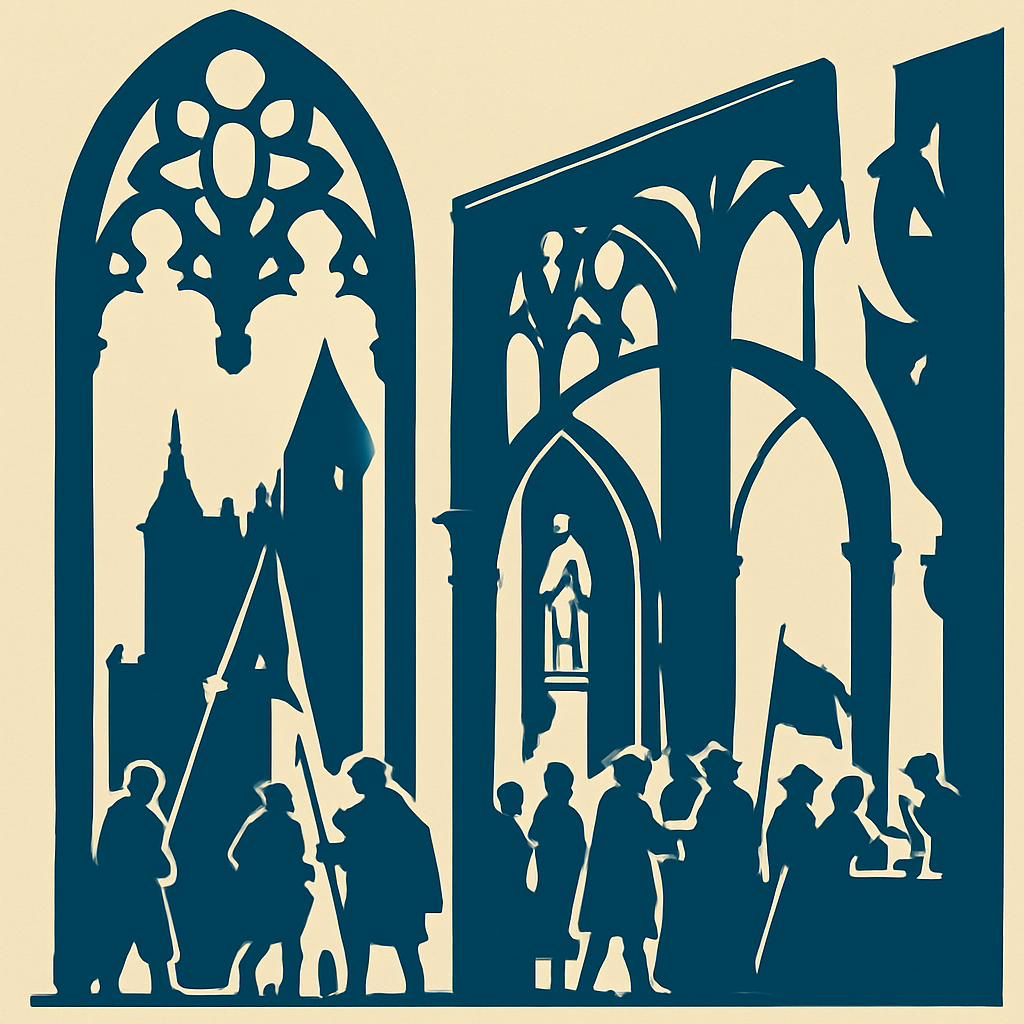
Bugenhagen's Church Order in the Old Town Hall: Experience Reformation in Braunschweig
- Date and Time
- 22. November 2026, 15:00
- Location
- Braunschweig38 Braunschweig, Germany
- Price
- Free
About this Event
When the Reformation Took Shape in Braunschweig
The City Museum Braunschweig dedicates the exhibit of the month November to Johannes Bugenhagen's Church Order of 1528. Eva Grimpen's lecture in the Small Dornse of the Old Town Hall highlights a crucial moment in the city's history: the attempt to translate the ideas of the Reformation into a practical ecclesiastical and social order.
A Church Order between Faith, Politics, and Urban Society
After Martin Luther's posting of his theses in 1517, Reformation ideas spread rapidly in Braunschweig. Monks, preachers, merchants, and craftsmen supported the new doctrine and demanded ecclesiastical changes. At the same time, Catholic clergy, orders, and ecclesiastical institutions defended their traditional rights. In the spring of 1528, the city council had to mediate between the reformist will of the populace and the political risks of the imperial Edict of Worms.
Johannes Bugenhagen and the Reform of Daily Life
With the appointment of the Wittenberg city pastor Johannes Bugenhagen, Braunschweig found a shaping figure of the North German Reformation. Bugenhagen, also known as Dr. Pomeranus and the Reformer of the North, drafted a Low German Church Order within six months, which met with broad approval in the council. His daily sermons made the reformational ideas understandable and accessible to larger parts of the city population.
More than a Service Order
The Braunschweig Church Order regulated not only the course of services, baptisms, and weddings. It also defined the duties and income of the preachers, the education and supervision of the clergy, social welfare, and the school system. Thus, the exhibit demonstrates how closely religion, education, social responsibility, and political organization were interconnected in the 16th century.
The Old Town Hall as a Historical Resonance Space
The event takes place in the Old Town Hall, a place directly associated with the memory of the Braunschweig Reformation. The focus is on the balcony of the Old Town Hall, which is presented as the exhibit of the month. The historical architecture, concentrated examination of the work, and art-historical classification provide an impressive artistic experience between city history, Reformation history, and cultural education.
From Braunschweig to Northern Europe
The impact of Bugenhagen's work extended far beyond Braunschweig. Following the Braunschweig model, church orders were created for Hamburg, Lübeck, Hildesheim, and the Kingdom of Denmark. The event illustrates how a specific urban reform became a model of supra-regional significance.
Conclusion: Experience Reformation History Up Close
Visitors can expect a well-founded introduction to an important testimony of Reformation history and to the political, social, and religious tensions of the year 1528. The combination of lecture, historical architecture, and original context creates an intense aesthetic experience. Those who want to understand how ideas of faith transformed the daily life, education, and social order of a city should not miss this free event in the Old Town Hall.
Official Channels of Johannes Bugenhagen and the City Museum Braunschweig:
- Instagram: no official profile found
- Facebook: no official profile found
- YouTube: no official profile found
- Website: no official profile found
Sources:
Frequently Asked Questions
Ähnliche Veranstaltungen
 Kostenlos
18. Feb. 2026 18:3018. Februar 2026 18:30
Academy Lectures in the Castle 2026
Literatur
 9,00 €
6. März 20266. März 2026
Rendezvous with the Lion. Premier pieces from Castle Dankwarderode visiting
Ausstellungen
 9,00 €
6. März 20266. März 2026
Rendezvous with the Lion. Highlights from Dankwarderode Castle on Display
Ausstellungen
 9,00 €
6. März 20266. März 2026
Rendezvous with the Lion. Highlight pieces from Burg Dankwarderode as guests
Ausstellungen
 9,00 €
6. März 2026 11:006. März 2026 11:00
Rendezvous with the Lion. Masterpieces from the Dankwarderode Castle as Guests
Ausstellungen
 9,00 €
6. März 2026 11:006. März 2026 11:00
Rendezvous with the Lion
Ausstellungen
 5,00 €
27. März 2026 11:0027. März 2026 11:00
Innovative – Sustainable Product Design. Cabinet Exhibition at the Municipal Museum
Ausstellungen
 5,00 €
27. März 2026 11:0027. März 2026 11:00
Innovative – Sustainable Product Design
Ausstellungen
 5,00 €
28. März 2026 11:0028. März 2026 11:00
Innovative – sustainable product design. Cabinet exhibition at the Municipal Museum
Ausstellungen
 5,00 €
28. März 2026 11:0028. März 2026 11:00
Innovative – Sustainable Product Design. Cabinet Exhibition at the Municipal Museum
Ausstellungen