
Wilhelm Raabe
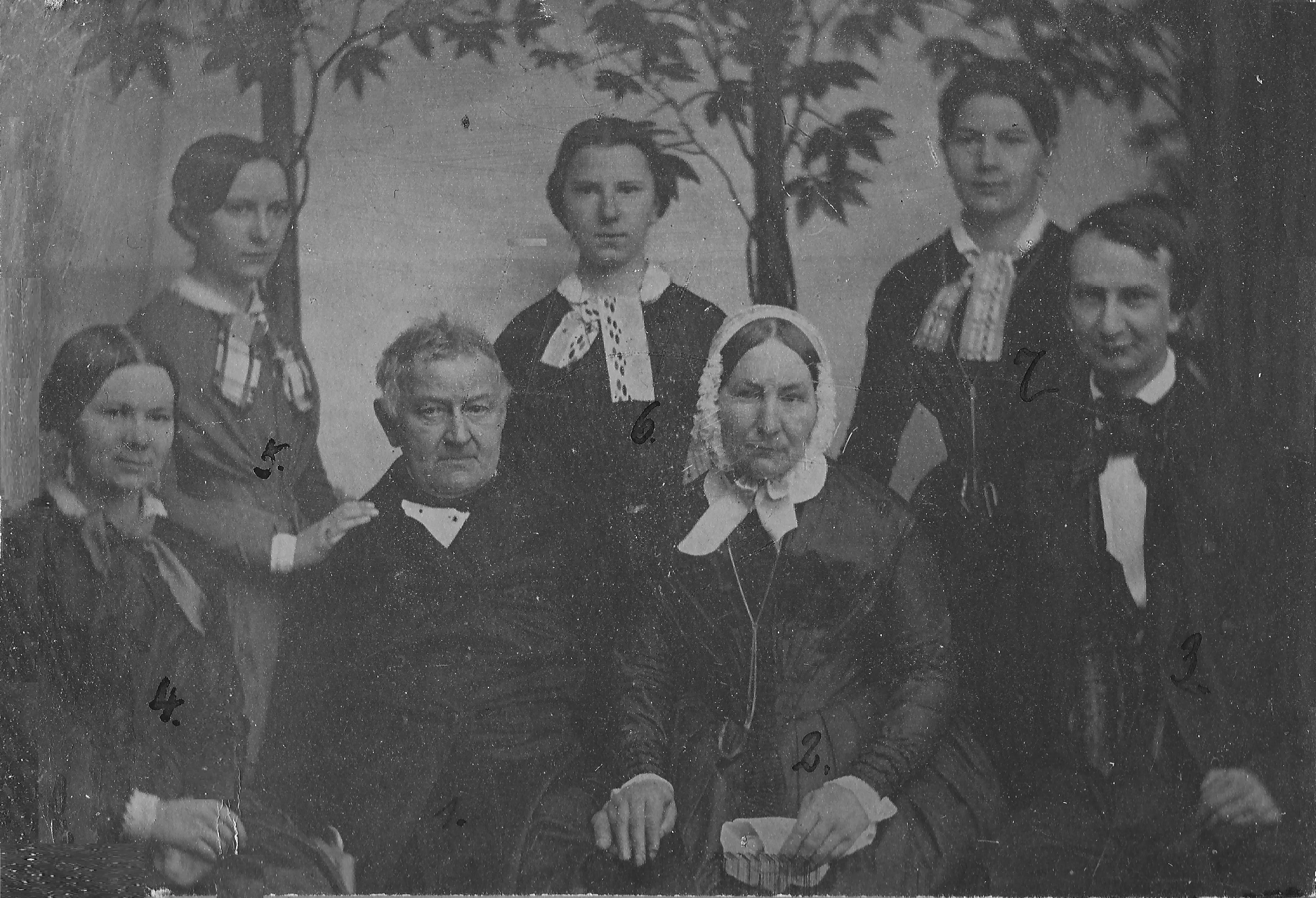
Image from Wikipedia
Image from Wikipedia
Wilhelm Raabe – Master of Poetic Realism and Sensitive Chronicler of the 19th Century
A Literary Exceptional Artist Between Irony, Social Critique, and Narrative Craftsmanship
Wilhelm Raabe is one of the most influential narrators in 19th-century German literature. As a representative of poetic realism, he combined closeness to everyday life with linguistic precision, historical perspective with subtle irony, and social observation with a distinctive narrative style. His life journeys from Eschershausen to Wolfenbüttel, Stuttgart, Berlin, and finally Braunschweig reflect an author who developed a body of work of exceptional density from experience, observation, and formal discipline.
With around 70 novels, stories, and novellas, Raabe created an oeuvre that remains a central reference point in realism studies today. His texts showcase a unique blend of humor, cultural criticism, and psychological accuracy. This very connection makes him as exciting for literature enthusiasts as for readers who seek in a work not only plot but also a diagnosis of the times, stylistic awareness, and human depth.
Early Years: Origin, Education, and the Path to Writing
Wilhelm Karl Raabe was born on September 8, 1831, in Eschershausen and spent his youth during a time of profound political and social upheaval. Completing a formal education was not part of his life path; he left his booksellers' apprenticeship in Magdeburg unfinished. Nevertheless, this mixture of educational gaps, reading experiences, and personal quests shaped an author whose perspective on society and milieu remained unusually keen and independent.
In 1854, Raabe moved to Berlin and began his studies as a guest auditor. This phase marked the transition from a young seeker to a literarily ambitious narrator. His early years already reveal the tension that would later characterize his work: proximity to bourgeois everyday life, but also distance from bourgeois self-assurance. From this attitude emerged a narrative style that never merely tells a story but always signifies, comments on, and relativizes.
The Breakthrough as a Freelance Author
Raabe's literary breakthrough occurred with the publication of Die Chronik der Sperlingsgasse in 1856/1857. After this success, he was able to make a living as a professional author in a short time. The German National Library describes this step as an astonishingly rapid ascent for a writer who could support himself from the income of his publications. Thus began a career based not on spectacular scandals but rather on persistence, work discipline, and growing recognition.
In Wolfenbüttel, Raabe secured his life as a freelance writer between 1856 and 1862, building publisher contacts and moving within intellectual circles. This networking was crucial for a 19th-century author: it connected literary production with the public sphere, reviews, and the reader market. Raabe utilized these constellations without simply submitting to them, developing early a writing style that distanced itself from mere entertainment as well as from grand moral didactics.
Literary Development: Narrating with Irony, Depth, and Formal Sophistication
Raabe's prose is known for its complexity. The Raabe House in Braunschweig highlights that even his debut work skillfully interweaves various narrative techniques: letters, memories, flashbacks, and records from past and future. This formal openness remained characteristic of his work. He experimented with multiple narrators, unreliable perspectives, and changing tones, granting his texts a modernity that extends far beyond the realism era.
His narrative art is not an escape into idyllic harmony but often accompanied by an ironic cultural critique. It is precisely this quality that defines his poetic realism: Raabe observes closely but does not simplify. He portrays characters, milieus, and historical situations with empathy, without stripping them of their contradictions. Thus, novels and novellas emerge that do not simply affirm bourgeois lifestyles but gently, yet firmly question them.
Works and Thematic Range
Some of Raabe's most well-known texts, alongside Chronik der Sperlingsgasse, include Abu Telfan oder Die Heimkehr vom Mondgebirge, Die schwarze Galeere, Pfisters Mühle, and Stopfkuchen. These works illustrate the range of his creative output: historical themes, satirical exaggeration, psychological observation, and societal analysis. Especially in Abu Telfan, his sensitivity to the absurdities of German bourgeois life prominently shines through, while other texts are more shaped by retrospection, memory, and cultural critique.
Raabe's work is also marked by a profound observation of societal modernization. Literary critical assessments emphasize that his texts reflect the upheavals of the 19th century: industrialization, social differentiation, media changes, and new forms of publication. This makes Raabe an author who not only tells stories but also reveals the conditions of storytelling itself. Therefore, his prose is also an important document of literary self-reflection.
Style, Language, and Narrative Signature
Raabe's style thrives on subtle shifts. He employs irony, gentle humor, and precise depictions of milieus without sacrificing the emotional depth of his characters. His language remains controlled, often playful, occasionally convoluted, but always aimed at impact. This balance of distance and immediacy gives his texts a lasting readability, making them highly appealing to both scholars of German studies and literary enthusiasts today.
It is the interplay between form and content that distinguishes Raabe from many contemporaries. He does not employ narrative techniques for their own sake but as a means of insight. In his best texts, the structure of the narrative already suggests an interpretation of the world. Thus, the literary form itself becomes a vehicle for social critique, memory, and historical reflection.
Reception, Canonization, and Cultural Influence
Today, Wilhelm Raabe is considered a canonical author of bourgeois or poetic realism. Literary critics note that his significance was long underestimated before he was increasingly recognized as an independent classic since the second half of the 20th century. Raabe scholarship, the edition of his works, and the literary prize named after him demonstrate how enduring his influence on German literary history has remained.
The city of Braunschweig also honors Raabe as one of the most significant storytellers of his time. He lived there for nearly 40 years and remained until his death on November 15, 1910. His literary legacy extends far beyond the region: Raabe represents a form of realism that does not merely depict but explores the inner complexity of society, language, and perception. This makes him an author of lasting relevance.
Later Years and Lasting Significance
Raabe's later life was characterized by continuity and retreat, but by no means by insignificance. In Braunschweig, he found a place where he could work and refine his oeuvre over decades. His later texts often show a particular maturity in dealing with memory, loss, and historical distance. This is where their enduring fascination lies: they do not speak loudly but with great precision.
His biography and work depict a writer who has profoundly shaped German prose. Raabe combined observational skills, formal experimentalism, and cultural sensitivity to create literature that is still rich in discoveries today. Those who engage with him meet not only a classic but also an author whose texts early and insightfully illuminate the tensions of modernity.
Conclusion: Why Wilhelm Raabe continues to Fascinate Today
Wilhelm Raabe is captivating because he understood poetic realism not as a rigid style model but as a living form of thought. His stories and novels open up the view of society, memory, and the irony of everyday life. For this reason, they remain appealing to literature lovers, researchers, and rediscoverers alike. Anyone who wants to experience German-language prose in its finest, most critical, and most human form should read Raabe and undoubtedly rediscover his works.
Official Channels of Wilhelm Raabe:
- Instagram: No official profile found
- Facebook: No official profile found
- YouTube: No official profile found
- Spotify: No official profile found
- TikTok: No official profile found
Sources:
Upcoming Events
The Wilhelm Raabe Museum
The Wilhelm Raabe Museum
The Wilhelm Raabe Museum
The Wilhelm Raabe Museum
The Wilhelm Raabe Museum
The Wilhelm Raabe Museum
The Wilhelm Raabe Museum
The Wilhelm Raabe Museum
The Wilhelm Raabe Museum