
Wes Craven
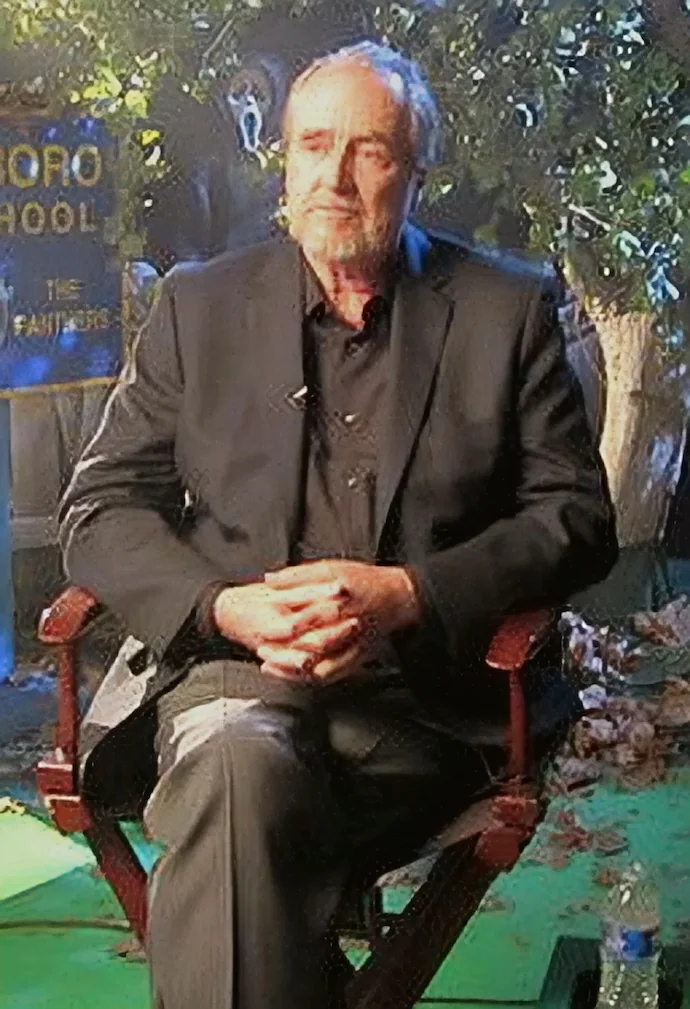
Image from Wikipedia
Image from Wikipedia
Wes Craven: The Architect of Modern Horror and Master of Genre Rebellion
A Filmmaker Who Transformed Nightmares into Pop Culture
Wesley Earl Craven, born on August 2, 1939, in Cleveland, Ohio, and died on August 30, 2015, in Los Angeles, California, is one of the most influential directors in American horror cinema. His name is synonymous with radical genre renewal, shock, intelligence, and a cinema that never allowed its audience to sit comfortably. Craven intertwined societal anxiety, youthful fear, and formal boldness into a style that reinvented horror multiple times. ([de.wikipedia.org](https://de.wikipedia.org/wiki/Wes_Craven?utm_source=openai))
Even the beginning of his career marked a break with conventions: With The Last House on the Left, Craven wrote, directed, and edited a film in 1972 that translated horror into unexpectedly raw, unvarnished images. The outsider became an auteur-director with an instantly recognizable signature, whose career oscillated between provocation, box office success, and theoretical reflection on the genre. This very tension made him a distinctive figure of American cinema. ([wescraven.com](https://www.wescraven.com/about/))
Biographical Roots: From the Midwest to Images of Fear
Craven grew up in a strictly religious environment and initially studied humanities before working at Johns Hopkins University and later in academic jobs. Before his film career, he worked as a teacher; this intellectual background was always perceptible in his cinema, which never relied solely on effects but on interpretation, subtext, and cultural friction. His early life circumstances supplied the raw material for a visual language where insecurity, morality, and social pressure always resonated. ([filmstarts.de](https://www.filmstarts.de/personen/4830/biografie/?utm_source=openai))
The reason Craven was later regarded as the master of horror was not purely due to shock value, but his ability to not only serve the genre but to question it. He became a filmmaker who pushed boundaries: between exploitation and auteur cinema, between entertainment and commentary, between youthful dream worlds and brutal reality. This dual perspective accompanied his entire artistic development. ([wescraven.com](https://www.wescraven.com/about/))
The Breakthrough: When Horror Suddenly Speaks Socially
With The Last House on the Left, Craven established a uncompromising tone that distinguished him early on as an unusual voice. However, the real breakthrough came in 1984 with A Nightmare on Elm Street, a film that redefined teen horror cinema and created one of the longest-lasting figures in pop culture, Freddy Krueger. The official website describes this film as a turning point that reinvented youth horror. ([wescraven.com](https://www.wescraven.com/about/))
During this time, Craven demonstrated a keen sense for actors and talents. In the context of A Nightmare on Elm Street, he discovered Johnny Depp, gave Sharon Stone her first prominent role in Deadly Blessing, and provided Bruce Willis with an important early role in an episode of Twilight Zone. This ability to recognize new faces reinforced his reputation as a director with an instinctive eye for presence and potential. ([wescraven.com](https://www.wescraven.com/about/))
The Scream Era: Postmodern Horror with Razor-Sharp Self-Reflection
With Scream, Craven reached a new peak of success in 1996. The film revitalized the genre, connecting slasher mechanics with meta-commentary and making it clear that Craven not only loved horror but understood it analytically. According to his official website, Scream won the MTV Best Movie Award in 1996 and grossed over 100 million dollars in the USA; Scream 2 also reached this mark. ([wescraven.com](https://www.wescraven.com/about/))
In this phase, Craven was less a mere director than a cultural curator of terror. With Wes Craven’s New Nightmare, he deconstructed his own creation a decade after the original, presenting self-reflexive horror to the genre. The film was nominated for the Independent Spirit Award for Best Feature and demonstrated how adept Craven was at working with the rules he had once helped define. ([wescraven.com](https://www.wescraven.com/about/))
Other Important Works: Between Mainstream, Risk, and Artistic Venture
Craven's filmography does not show a linear style but rather a sequence of bold experiments. Notable titles include The Hills Have Eyes, Deadly Blessing, The Serpent and the Rainbow, Shocker, The People Under the Stairs, Vampire in Brooklyn, Red Eye, and My Soul to Take. It is particularly noteworthy that Craven frequently shifted between pure genre films and ventures into other tones. ([wescraven.com](https://www.wescraven.com/about/))
With Music of the Heart, Craven ventured away from horror in 1999 to direct a dramatic work that earned Meryl Streep an Oscar nomination. This diversion confirmed that Craven mastered more than just shock and darkness: he could convey emotion, discipline, and humanistic warmth in precise cinematic form. It is precisely this range that makes his career so authoritative and enduringly relevant. ([wescraven.com](https://www.wescraven.com/about/))
Directing Style and Signature: Fear, Intellect, and Pop Culture
Wes Craven worked with a signature that combined raw immediacy and structural cleverness. His films focus on the transformation of everyday spaces into threats, on young protagonists, on dreams, houses, suburban ideals, and safe places that suddenly become hostile. Craven turned the ordinary into a danger zone and made that his trademark. ([wescraven.com](https://www.wescraven.com/about/))
At the same time, he had a pronounced sense of rhythmic staging, suspense, and character development. His works thrive on the interplay between narrative economy and shock moments, between ironic distance and true emotional impact. This explains why his films are not only firmly anchored in the horror genre but also in the cultural history of the late 20th century. ([rogerebert.com](https://www.rogerebert.com/features/wes-craven-1939-2015?utm_source=openai))
Cultural Influence: The Director Who Reinvented Horror Cinema
Craven is often described as one of the key figures in modern slasher films. His influence extends far beyond individual box office successes: Freddy Krueger became a pop icon, Scream a reference point for meta-horror, and his early works influenced generations of horror directors, screenwriters, and producers. His cinema brought the genre into dialogue with media consciousness, youth culture, and societal fear. ([de.wikipedia.org](https://de.wikipedia.org/wiki/Wes_Craven?utm_source=openai))
The response from the industry also speaks to his significance. After his death, major media outlets honored him as a horror pioneer and a defining director who repeatedly raised the bar. The Guardian obituary emphasized that Craven not only reproduced horror but continuously renewed it; the official website underscores this thought by noting creative and commercial milestones spanning several decades. ([theguardian.com](https://www.theguardian.com/film/2015/aug/31/wes-craven?utm_source=openai))
Current Projects and Releases: A Closed Body of Work with Lasting Impact
As Wes Craven passed away in 2015, there are no current projects, new releases, or ongoing tours planned for 2024 or 2025. However, his work continues to live on through reception, re-releases, home video editions, genre analyses, and the enduring presence of his characters and film concepts. The official website also features archival material and later projects from his final decade as an active filmmaker. ([theguardian.com](https://www.theguardian.com/film/2015/aug/31/wes-craven?utm_source=openai))
This very closure makes his oeuvre so attractive for film lovers: one can read his development from early provocations to self-reflective later works like a precisely mapped genre history. Craven remains a director whose works do not age but generate new contexts. ([wescraven.com](https://www.wescraven.com/about/))
Conclusion: Why Wes Craven Remains Compelling Today
Wes Craven remains fascinating because he never treated horror as mere surface. He understood the genre as a cultural laboratory where societal fears, pop cultural codes, and cinematic innovations meet. Those who watch his films experience not just thrills but a sharp engagement with cinema itself. ([wescraven.com](https://www.wescraven.com/about/))
His oeuvre is among the rare filmographies that are instantly recognizable while also allowing for new interpretations. Those who can no longer experience Craven live should still view his films with the same intensity as a stage event: loud, precise, disturbing, and full of energy. It is in this that his unwavering radiance lies. ([theguardian.com](https://www.theguardian.com/film/2015/aug/31/wes-craven?utm_source=openai))
Official Channels of Wes Craven:
- Instagram: No official profile found
- Facebook: No official profile found
- YouTube: No official profile found
- Spotify: No official profile found
- TikTok: No official profile found