
Thomas Ostwald
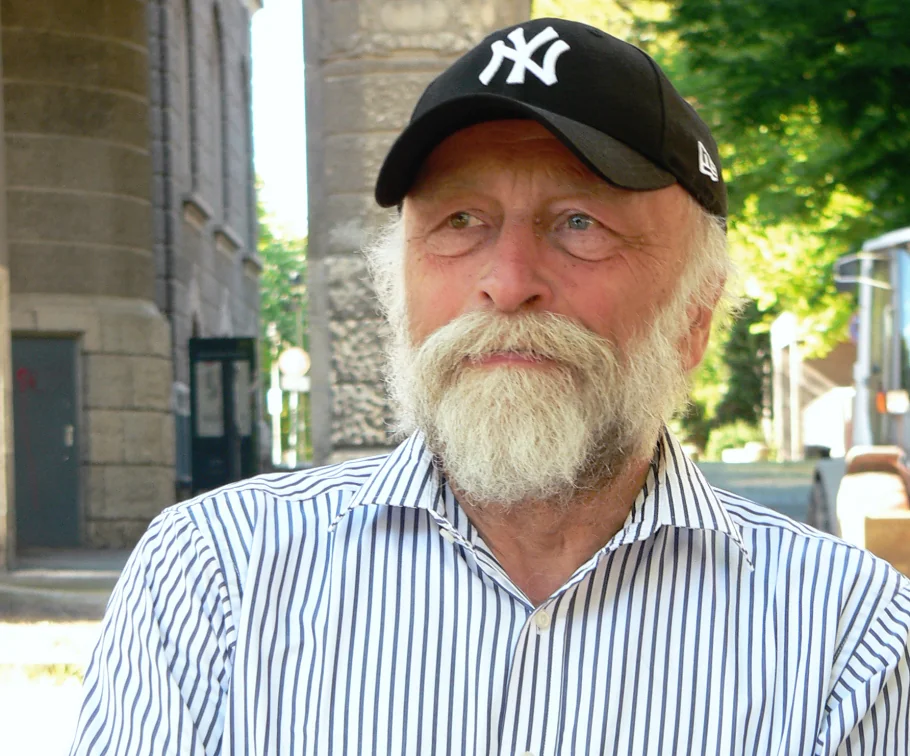
Image from Wikipedia
Image from Wikipedia
Thomas Ostwald: Braunschweig Literary Scholar, Author, and Publisher with a Strong Regional Signature
An Author Between Literary Research, Publishing Work, and Vibrant Braunschweig Culture
Thomas Ostwald, born on January 26, 1949, in Braunschweig, is one of those German intellectuals whose work cannot be reduced to a single medium. He is a literary scholar, author, and publisher; under the pseudonym Tomos Forrest, he also published his own books and established a second journalistic identity in the process. His work is closely linked to Braunschweig and ranges from literary research to publishing projects, as well as historically shaped stage forms and local history. (de.wikipedia.org)
Biography: Rooted in Braunschweig, Shaped by Literature and Public Life
Ostwald's biographical center is clearly in Braunschweig, where he was not only born but also became visible as a cultural mediator. Sources describe him as the author of numerous books and as the long-time director of the Gerstäcker Museum, which he managed for more than 30 years until its closure. This combination of scholarly work, museum practice, and regional mediation defines his profile as a literary scholar with a strong public mandate. (de.wikipedia.org)
His role as a cultural actor in the Braunschweig city landscape is particularly evident. Ostwald is also a city guide and has made a name for himself with topics related to Henry the Lion, preparing historical materials for a broad audience. The combination of research, storytelling, and staging gives his work a theatrical quality that goes beyond classical author biographies. (der-loewe.info)
Literary Development: From Non-Fiction to Narrative Regional History
A core focus of Ostwald's work is on American pioneer history, considering the role of Germans in America. Additionally, his books have been classified in bibliographic and publishing contexts as historical novels, crime fiction, and non-fiction; numerous publications have appeared under the name Tomos Forrest. This demonstrates a remarkable span between scholarly curiosity, popular storytelling, and brand-conscious authorship. (de.wikipedia.org)
Ostwald also left a significant mark in the field of editions and associations. He founded the "Magazine for American Studies," later continued by Dietmar Kuegler, and contributed to a lasting presence in the scene with standard works like the "Great Handbook of Indians," the "Great Handbook of Trappers," and the "Great Handbook of Pioneers." These books particularly highlight his preference for historical themes, systematic presentation, and vivid communication. (de.wikipedia.org)
Henry the Lion as Stage Material: Historical Narration in Urban Space
Ostwald became particularly popular through his stage adaptations of the Henry the Lion saga. From 2014 to 2019, he performed his written version in Braunschweig with about 50 amateur actors; this included indoor and outdoor variants in the Magniviertel, which were regularly staged with a festival character. The performances remarkably interconnected community engagement, city identity, and historical dramaturgy. (de.wikipedia.org)
Reports about these productions emphasize their identity-forming effect for the city and its residents. Ostwald himself described the material as local history for the whole family; at the same time, he used public performances as a means to bring Braunschweig's history vividly into everyday life. It is precisely this quality of his work that moves between literary adaptation, cultural education, and local performance. (der-loewe.info)
Authorship under Pseudonym: Tomos Forrest and the Breadth of the Oeuvre
The pseudonym Tomos Forrest refers to a second layer of his literary work. The German Digital Library explicitly lists Tomos Forrest as the real person Thomas Ostwald, and book trade sources describe the pseudonym as a hallmark of an author who has published historical novels, crime fiction, and non-fiction. For readers, this creates an authorial image with two perspectives: the scholarly Thomas Ostwald and the narrating Tomos Forrest. (deutsche-digitale-bibliothek.de)
This dual role strengthens his authority as a cultural mediator. Anyone who reads Ostwald encounters not only a literary scholar but also a practitioner of storytelling, who brings materials from history and the region into an accessible form. It is precisely this mixture of expertise and narrative energy that makes his texts relatable to a wide audience. (der-loewe.info)
Critical Reception and Cultural Influence
The available sources paint the picture of an author whose impact is primarily regional-cultural, rather than anchored in the mainstream of pop or music press. Relevant recognitions come from Braunschweig cultural media, urban contexts, and literary or publishing reference works. This reflects a sustained resonance in the home region and within historical literary transmission. (der-loewe.info)
His cultural influence lies in making history visible. Whether as a museum director, city guide, editor, or stage author: Ostwald has always worked to ensure that historical topics are not left abstract, but made tangible in everyday life. This attitude gives his work a special closeness to the people in the area and explains why his name remains associated with literature, memory, and urban identity in Braunschweig. (der-loewe.info)
Current Classification: What Distinguishes Thomas Ostwald Today
Recent indications in the sources primarily confirm the sustainable presence of his work in the region and in the book market. New entries regarding Tomos Forrest show that the pseudonym continues to be used as an author name and is listed in trade, while Ostwald’s older and mid-range projects still serve as reference points for Braunschweig's cultural history. His profile remains vibrant, even though the focus is clearly on the literary-historical realm. (buecher.de)
Discography? None – but a Distinctive Work Profile
There is no musical discography in the classical sense for Thomas Ostwald. Available research does not classify him as a musician, singer, or composer, but rather as a literary scholar, author, and publisher with a strong focus on historical materials. Therefore, those looking for artistic signatures will not find them in albums or singles, but in books, museum work, and stage adaptations. (de.wikipedia.org)
It is precisely this form of cultural production that gives his overall work definition. Ostwald represents an understanding of authorship that brings together knowledge, storytelling, and public mediation. This makes him exciting for readers who understand literature not just as text but as a living cultural practice. (der-loewe.info)
Conclusion: A Cultural Worker with Attitude, Voice, and Regional Impact
Thomas Ostwald impresses with versatility, local grounding, and the rare will to translate history into concrete experiences. His work combines research, publishing practice, book production, and theatrical mediation into a profile that makes Braunschweig culturally visible. Anyone interested in literary history, regional memory, and narrative formats will find here a personality with substance and recognizability. (der-loewe.info)
Ostwald remains particularly intriguing because he not only writes but also brings culture to life. His biography shows how scientific interest, journalistic energy, and local commitment can create an independent body of work. A visit to his historical topics, books, or theater projects is worthwhile for anyone who wants to experience Braunschweig culture in a lively way. (der-loewe.info)
Official Channels of Thomas Ostwald:
- Instagram: no official profile found
- Facebook: no official profile found
- YouTube: no official profile found
- Spotify: no official profile found
- TikTok: no official profile found
Sources:
- Wikipedia – Thomas Ostwald
- German Digital Library – Tomos Forrest
- Der Löwe – Ostwald Reads at the Castle Museum
- Der Löwe – How Henry Rescued His Matilda
- Der Löwe – Heinrich Festival in Preparation
- City of Braunschweig – Ghosts, Robbers, and Henry the Lion
- bücher.de – Tomos Forrest
- Lehmanns – Harald, King of the Vikings
- regionalHeute.de – Henry the Lion Festival: Players Wanted
- Vier Viertel Kult – Issue Autumn 2023
Upcoming Events
Murder Stories and More on the Oker
Culture in the Pavilion
Murder Stories and More on the Oker
Murder Stories and More on the Oker
Murder Stories and More on the Oker
Your Highness, Your Chocolate is Ready!
Murder Stories and More on the Oker
Murder Stories and More on the Oker