
Sigmund Aschrott
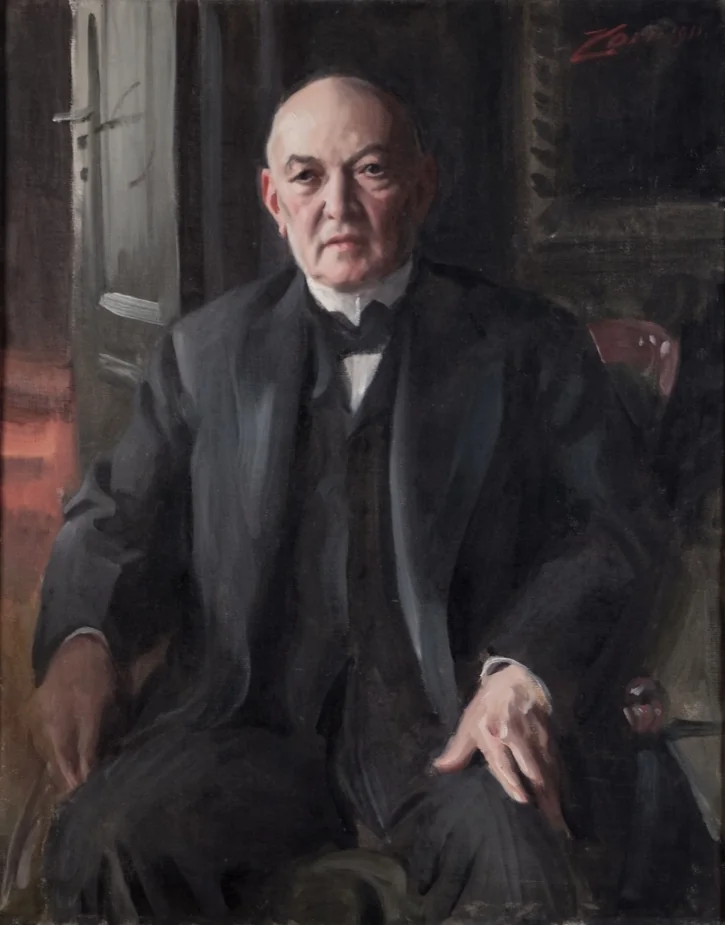
Image from Wikipedia
Image from Wikipedia
Sigmund Aschrott: The Visionary Behind the Vorderer Westen of Kassel
A Formative Urban Developer Whose Impact Remains Visible Today
Sigmund Aschrott was not a musician but a German-Jewish merchant, industrialist, banker, and real estate entrepreneur who significantly shaped the urban development of Kassel. Born on June 14, 1826, in Hochheim am Main, he moved to Kassel with his parents in 1838 and became one of the most influential figures in the city's urban renaissance of the 19th century. His name is particularly closely associated with the Vorderer Westen, whose appearance and architectural structure are attributed to his initiative. ([kassel.de](https://www.kassel.de/einrichtungen/stadtmuseum/besuch/aschrott-jubilaeum.php))
Biography: From Merchant's Son to Kassel Urban Developer
Aschrott's life exemplifies the entrepreneur generation that merged economic dynamism with urban vision. The city of Kassel describes him as a merchant, publisher, and urban planner who laid the groundwork for an expansive urban development in the Vorderer Westen. His influence, which extended beyond mere real estate transactions, is manifested in the lasting marks of his planning in neighborhoods, parks, and representative buildings. ([kassel.de](https://www.kassel.de/einrichtungen/stadtmuseum/besuch/aschrott-jubilaeum.php))
By the end of the century, Aschrott left Kassel and moved to Berlin, where he was appointed as a Secret Commercial Councilor in 1907. Despite this relocation, his connection to the city remained strong: on his 85th birthday, he returned to Kassel and donated the Florapark to the city with the stipulation that a city hall be built there for the 1,000-year anniversary celebration. This gesture reflects his self-understanding that linked entrepreneurial success with urban responsibility. ([kassel.de](https://www.kassel.de/einrichtungen/stadtmuseum/besuch/aschrott-jubilaeum.php))
Career and Urban Idea: Planning at One's Own Risk
The German Foundation for Monument Protection classifies Aschrott as a German-Jewish industrialist and merchant who planned and developed the Vorderer Westen at his own risk. This is where the historical significance of his career lies: he was not just an investor but also the designer of an entire neighborhood. The project combined economic calculations with a clear vision of civic living culture, generous street spaces, and a high-quality architectural environment. ([denkmalschutz.de](https://www.denkmalschutz.de/pressemitteilung/sigmund-aschrott-gruender-des-vorderen-westens.html))
The modern Vorderer Westen evolved from what was then the Hohenzollernviertel and is still perceived today as one of Kassel's most characteristic Gründerzeit neighborhoods. Various urban and regional sources emphasize that both the neighborhood and the city hall can be traced back to Aschrott. This makes his role as a catalyst for an entire urban landscape visible, not just as the owner of individual parcels. ([de.wikipedia.org](https://de.wikipedia.org/wiki/Vorderer_Westen))
The Vorderer Westen as a Cultural Legacy
The Aschrottpark, now a green space in the Vorderer Westen, was created in the late 19th century as part of his urban planning concept. According to the city of Kassel, Aschrott had the site redesigned from 1885 by the landscape architects Gebrüder Siesmayr into a public landscape park; the park extends to the western end of the neighborhood. The design of the space shows that Aschrott thought not just in terms of streets and houses, but in cohesive urban spaces, sightlines, and quality of stay. ([kassel.de](https://www.kassel.de/buerger/kunst_und_kultur/parks_und_gaerten/aschrottpark.php))
The Kassel city hall also stems from his initiative. The city notes that Aschrott provided the plot of land for free and stipulated that a cultural center be created for the citizens there. Completed between 1911 and 1914, the hall quickly became a prominent place for culture and public life; to this day, it remains significant as a venue for the symphony concerts of the Staatsorchester Kassel. ([de.wikipedia.org](https://de.wikipedia.org/wiki/Stadthalle_Kassel))
Discography: No Music Releases, but an Architectural Oeuvre
There is no classical discography for Sigmund Aschrott, as he did not have a musical career. Instead of albums, singles, or chart placements, he left behind a tangible legacy of neighborhood development, parks, urban structures, and cultural construction projects. Thus, his legacy can be interpreted for an artist's page in a metaphorical sense as an "architectural and urban discography": a repertoire of places that still bear his stamp today. ([kassel.de](https://www.kassel.de/buerger/kunst_und_kultur/parks_und_gaerten/aschrottpark.php))
This built legacy possesses high documentary value. The German Foundation for Monument Protection emphasizes that the vast majority of his architectural traces are classified as cultural monuments and remain visible. This is precisely where his enduring authority in Kassel's urban history derives from: Aschrott is not just part of the past but a present that can still be experienced today. ([denkmalschutz.de](https://www.denkmalschutz.de/pressemitteilung/sigmund-aschrott-gruender-des-vorderen-westens.html))
Style and Influence: Gründerzeit, Generosity, and Urban Foresight
Aschrott's style is evident in the combination of economic intelligence and urban vision. Sources describe the Vorderer Westen as an upscale residential neighborhood with richly decorated Gründerzeit buildings, towers, and bays, the urban development of which is attributed to his initiative. This blend of representation, order, and generosity continues to shape the atmosphere of the district today. ([denkmalschutz.de](https://www.denkmalschutz.de/pressemitteilung/sigmund-aschrott-gruender-des-vorderen-westens.html))
His influence extends beyond mere architecture. The Vorderer Westen developed into a favored residential area and gained a sustainable social and cultural framework through Aschrott's planning. The fact that the city of Kassel explicitly acknowledges him as a formative figure for the appearance of the neighborhood underscores his status as an urban designer of exceptional reach. ([kassel.de](https://www.kassel.de/einrichtungen/stadtmuseum/besuch/aschrott-jubilaeum.php))
Cultural Significance and Critical Assessment
The memory of Aschrott is also accompanied by ambivalent evaluations. The Monument Protection Foundation cites the historical perception between "far-sighted and brilliant urban designer" and "real estate speculator"; his immense significance for Kassel's economic and urban development remains undisputed. This tension makes his biography culturally and historically interesting, as it highlights the dynamics of the 19th century between investment, city growth, and social interpretation. ([denkmalschutz.de](https://www.denkmalschutz.de/pressemitteilung/sigmund-aschrott-gruender-des-vorderen-westens.html))
That the Vorderer Westen was a favored residential area for the Jewish population until 1933 adds an important cultural-historical dimension to Aschrott's legacy. His work thus stands not only for architecture and development but also for a piece of Jewish urban history in Kassel. Remembering him is therefore also a remembrance of the diversity of urban life that he helped shape. ([vorderer-westen.net](https://www.vorderer-westen.net/geschichte/juedisches-leben?utm_source=openai))
Conclusion: A Name That Defines Kassel to This Day
Sigmund Aschrott remains fascinating because his work does not rest in an archive but continues to live on in the urban landscape. Those who visit the Vorderer Westen, the Aschrottpark, or the city hall encounter a historically effective vision of urbanity, representation, and public space. This is where his enduring fascination lies: he created not just parcels of land, but a neighborhood with identity, character, and cultural radiance. ([kassel.de](https://www.kassel.de/buerger/kunst_und_kultur/parks_und_gaerten/aschrottpark.php))
There is no live experience in the musical sense associated with Aschrott, but a walk through his Kassel somewhat replaces the stage: every facade, every avenue, and every section of the park tells of an ambitious urban planning idea. Anyone wishing to understand the history of the Vorderer Westen should experience this place with open eyes. For Aschrott's legacy is not merely history but a lived city. ([kassel.de](https://www.kassel.de/einrichtungen/stadtmuseum/besuch/aschrott-jubilaeum.php))
Official Channels of Sigmund Aschrott:
- Instagram: No official profile found
- Facebook: No official profile found
- YouTube: No official profile found
- Spotify: No official profile found
- TikTok: No official profile found