
Marc Chagall
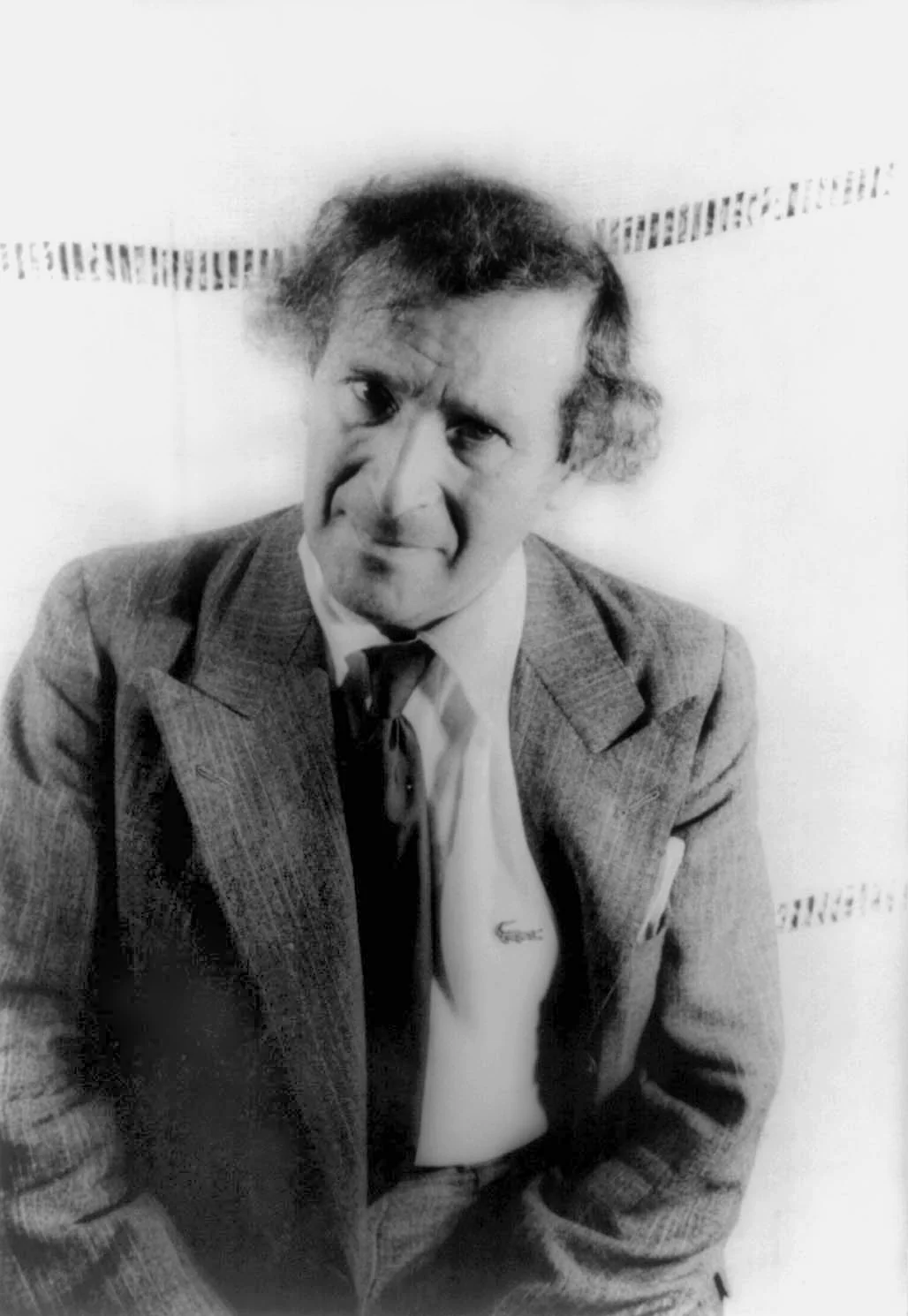
Image from Wikipedia
Image from Wikipedia
Marc Chagall: The Painter-Poet Between Vitebsk, the Bible, and the Avant-Garde
An artist who transformed color, memory, and dreams into a distinctive visual language
Marc Chagall, born on July 6, 1887, in Peskowatik near Vitebsk and died on March 28, 1985, in Saint-Paul-de-Vence, is considered one of the most influential artists of the 20th century. The Russian-French Jewish painter developed a visual world where family memories, homeland, biblical themes, and circus motifs merge into poetic symbol spaces. His art represents a unique combination of expressionism, imagination, and autobiographical condensation. ([de.wikipedia.org](https://de.wikipedia.org/wiki/Marc_Chagall))
Childhood in Vitebsk: The Origin of a Poetic Visual World
Chagall's artistic language is deeply rooted in his origins. He grew up as the oldest of nine children in a poor Orthodox Jewish working family in a city whose everyday world, religious influences, and multicultural atmosphere later became a driving force in his art. He learned Russian at an early age, took singing and violin lessons, and began to draw. This early mix of music, language, and visual perception shaped his later thinking in images, which lived from rhythm and atmosphere. ([de.wikipedia.org](https://de.wikipedia.org/wiki/Marc_Chagall))
His first significant teacher was Jehuda Pen in Vitebsk. Chagall then went to Saint Petersburg, where he studied at the Academy of Fine Arts and later with Léon Bakst. Bakst's proximity to modern painting opened his eyes to a free, subjective handling of form and color. This phase of education did not result in academic routine but in an independent style that never merely depicted reality but transformed it into memory and imagination. ([de.wikipedia.org](https://de.wikipedia.org/wiki/Marc_Chagall))
The Journey to Paris and the International Breakthrough
Paris became the decisive workshop of modernity for Chagall. After staying in the French art metropolis, he worked in an environment that familiarized him with the currents of the avant-garde without fully incorporating him into it. His first solo exhibition in Berlin in 1914 at Der Sturm made him visible in expressionist circles and marked an early international breakthrough. Even then, it was noticeable that his painting did not conform to style programs but developed its own visual logic. ([britannica.com](https://www.britannica.com/biography/Marc-Chagall))
The First World War prevented his return to Paris and initially kept him in Russia. In Vitebsk, he created series that dealt with the city, family, and the reality of life during wartime. These years strengthened Chagall's bond with autobiographical motifs. At the same time, it became evident that his art did not react to external events like a reporter but transformed experiences into symbolic metaphors. ([marcchagall.com](https://www.marcchagall.com/en/biography))
Revolution, Vitebsk Art School, and Conflict with the Avant-Garde
After the October Revolution, Chagall took on an active role in cultural life in Vitebsk. He was appointed "Commissioner for the Fine Arts" and founded the Vitebsk Art School in 1919. There, he attempted to combine art promotion, teaching, and artistic renewal. That he could bring in names like Kazimir Malevich and El Lissitzky into the faculty shows his authority within the Russian avant-garde. At the same time, this institutional ambition made the later tensions visible. ([de.wikipedia.org](https://de.wikipedia.org/wiki/Marc_Chagall))
The conflict with Malevich became a turning point. While Malevich advocated for the idea of "pure painting," Chagall remained committed to a poetic, narrative, and deeply personal art. The break led him to resign from the leadership of the art academy in 1920 and leave Vitebsk. For his artistic development, this did not signify a defeat but a liberation: henceforth, he could work even more consistently on the visual language of memory and transformation. ([de.wikipedia.org](https://de.wikipedia.org/wiki/Marc_Chagall))
Bibles, Books, and Monumental Works: Chagall as Master of Storytelling
A central strand of his work is his engagement with biblical motifs. From 1931 on, Chagall worked for many years on illustrations for the Bible; for this, he traveled to Palestine to study the landscapes and spiritual resonances of these themes on-site. The Bible for him did not become a strictly religious document but a reservoir of images for humanity, guilt, hope, and transcendence. This is precisely where the enduring modernity of his art lies. ([de.wikipedia.org](https://de.wikipedia.org/wiki/Marc_Chagall))
As an illustrator, Chagall also had a significant impact. Collaborations with publishers like Tériade and Ambroise Vollard resulted in book projects that today belong to the canon of art book history. His works on fables, Gogol, and biblical themes expanded the field between painting, graphics, and literature. Chagall combined technical precision with a visual poetry that elevates each illustration beyond its narrative purpose. ([marcchagall.com](https://www.marcchagall.com/fr/biographie))
Theater, Opera, and Music: When Painting Becomes the Stage
Chagall's work for stage and music is particularly impressive. As early as the 1940s, he created sets and costumes for the ballet Aleko; the production premiered in 1942 in Mexico. Later, he designed the settings for Daphnis et Chloé at the Paris Opera and the famous visual worlds for The Magic Flute at the Metropolitan Opera in New York. Here, painting, music theater, and spatial art merged into a total work of art. ([marcchagall.com](https://www.marcchagall.com/en/biography))
These projects showcase a unique form of stage presence, even though Chagall was not a musician himself: he thought in scenes, color tones, and dramatic transitions. For the Palais Garnier Opera, he even designed a ceiling painting honoring 14 composers, including Debussy, Ravel, Mussorgsky, Tchaikovsky, and Mozart. By doing so, he connected visual art with the canon of music history and made clear how closely his work is intertwined with musical dramaturgy, rhythm, and staging. ([marcchagall.com](https://www.marcchagall.com/en/biography))
Style and Visual Language: Floating, Glowing, Remembering
Chagall's style can hardly be confined to a single school. While he is often associated with expressionism, his art goes beyond that. Characteristic are floating figures, couples in love, animals, instruments, houses, and people in seemingly impossible constellations. These motifs do not create mere dream logic but a visual memory in which home, love, and spirituality intertwine. ([de.wikipedia.org](https://de.wikipedia.org/wiki/Marc_Chagall))
Especially characteristic is his color dramaturgy. Chagall worked with intense, often luminous colors that convey emotion and symbolism simultaneously. His compositions possess a strong inner movement: figures rise, turn, float, or appear in lyrical exaltation. It is this balance of formal freedom and thematic recognizability that makes him one of the most original artists of modernity. ([snl.no](https://snl.no/Marc_Chagall?utm_source=openai))
Later Years, Awards, and Cultural Legacy
In his later years, Chagall expanded his work to mosaics, stained glass, and monumental wall works. The design of the stained glass windows for the Hadassah Medical Center synagogue in Jerusalem and the windows for the Cathedral of Metz are of particular significance. He demonstrated that his visual world maintained its power even in architectural and sacred spaces. His art did not become smaller but more public. ([marcchagall.com](https://www.marcchagall.com/en/biography))
Among the awards he received is the Erasmus Prize, which Chagall was awarded in 1960. His work has been exhibited internationally and celebrated in major retrospectives. Museums, opera houses, and collections in Europe, Israel, the USA, and Japan have made him a global reference figure. His cultural influence extends far beyond painting, as he brought together memory, exile, Jewish experience, and European modernity in a distinctive artistic grammar. ([marcchagall.com](https://www.marcchagall.com/en/biography))
Conclusion: Why Marc Chagall Continues to Fascinate Today
Marc Chagall remains fascinating because his art is both personal and universal. It tells of origin and loss, of love and faith, of music, theater, and a world that transforms into floating metaphors in the image. Those who look at Chagall do not experience merely a style but a whole poetic order of reality. His works belong to those rare artistic cosmoses that have permanently changed our view of the 20th century. ([de.wikipedia.org](https://de.wikipedia.org/wiki/Marc_Chagall))
In particular, the interplay of painting, stage, and music reveals Chagall's full greatness. His images invite viewers to look slowly, discover details, and enter the emotional space between dreams and memories. Experiencing his works live, whether in museums, retrospectives, or spaces with stained glass windows and stage sets, one encounters an artist who has made a form of life out of color. Chagall is not just a classic of modernity but a lasting invitation to poetic perception. ([marcchagall.com](https://www.marcchagall.com/en/biography))
Official Channels of Marc Chagall:
- Instagram: No official profile found
- Facebook: No official profile found
- YouTube: No official profile found
- Spotify: No official profile found
- TikTok: No official profile found
Sources:
Upcoming Events
Braunschweig Museum Night 2026 at the House on Löwenwall of the Municipal Museum