
Klaus Fischer (Fußballspieler)
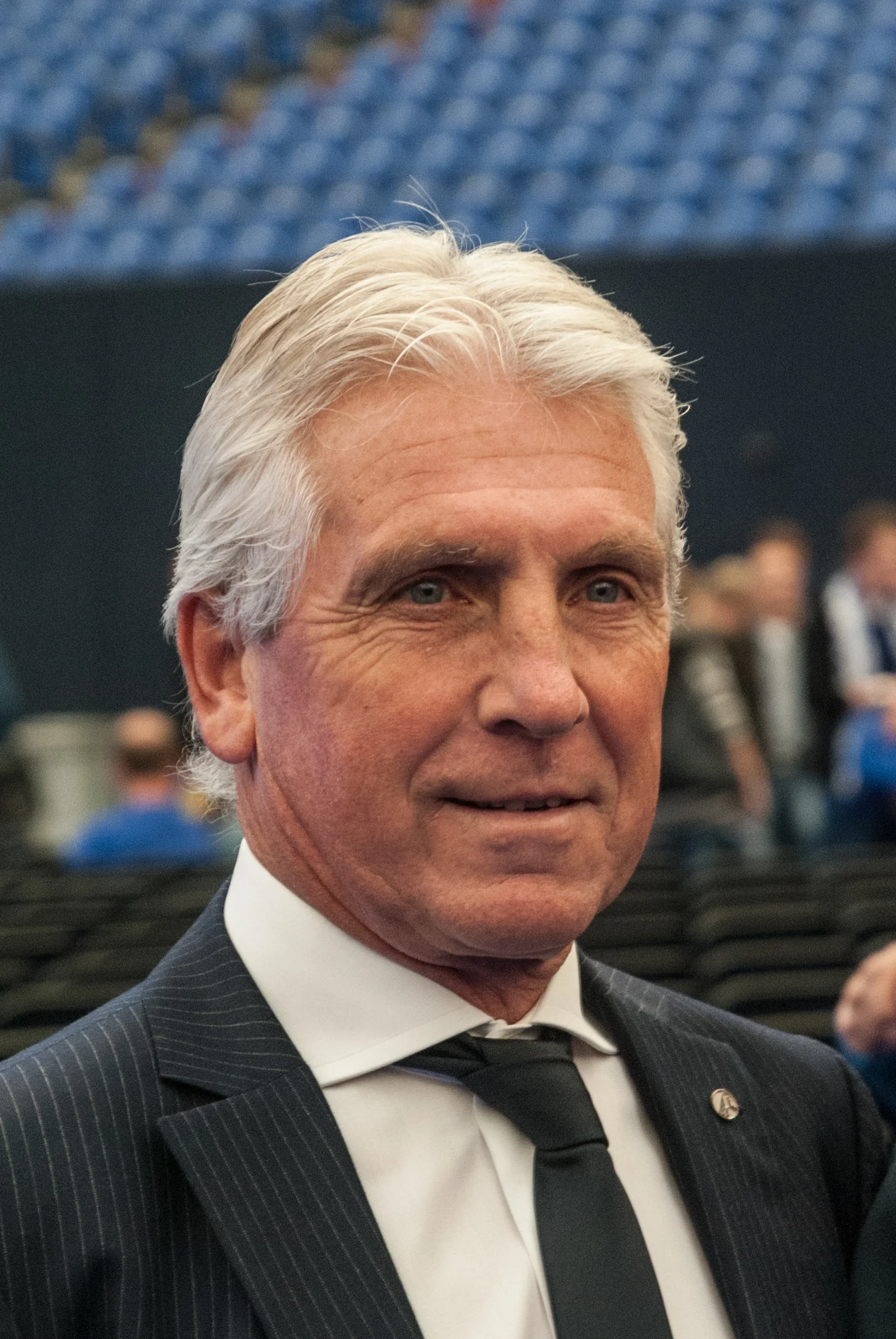
Image from Wikipedia
Image from Wikipedia
Klaus Fischer – The Great Career of a Bundesliga Striker and Scorpion Kick Idol
A Football Legend Between Bayern, Schalke, and the Eternal Bundesliga History
Klaus Fischer is one of the defining names in German football. Born on December 27, 1949, in Lindberg-Kreuzstraßl, he evolved from a talented forward from the Bavarian Forest to one of the most famous strikers in the Bundesliga. His international appeal is attributed not only to his goal-scoring record but, above all, to the acrobatic technique with which he made football history: the scorpion kick. ([dfb.de](https://www.dfb.de/news/mister-fallrueckzieher-klaus-fischer-wird-75?utm_source=openai))
Fischer experienced his heyday at FC Schalke 04, where he became a club icon with runner-up finishes, the DFB-Pokal victory in 1972, and an extraordinary scoring record. He also played for 1. FC Köln and VfL Bochum later in his career, but the name Klaus Fischer is especially associated with royal blue goals, spectacular finishes, and a unique sense of positioning in the penalty area. His career symbolizes assertiveness, instinct, and the rare ability to shape significant matches with a single action. ([schalke04.de](https://schalke04.de/verein/tradition/schalke-legenden/ehrenspielfuehrer/?utm_source=openai))
Biography and Early Years: From the Bavarian Forest to the Big Football World
Klaus Fischer grew up in a region that is seldom regarded as a top address in German professional football. Precisely because of this, his journey to the Bundesliga still resembles a classic rags-to-riches story: emerging from local football practice, armed with talent, determination, and remarkable physical presence. The early episodes of his life quickly set him on the path to competitive sports, where he honed his abilities as a forward step by step. ([dfb.de](https://www.dfb.de/news/mister-fallrueckzieher-klaus-fischer-wird-75?utm_source=openai))
From an early age, it became apparent that Fischer brought more than just goal-scoring potential. He combined robustness with technique and developed a style of play that consistently created moments of surprise in the penalty area. This combination made him valuable to coaches and difficult for defenders to predict. In an era when strikers were often defined by their physicality, Fischer additionally brought creativity and spectacular finishing ideas. ([schalke04.de](https://schalke04.de/verein/tradition/schalke-legenden/ehrenspielfuehrer/?utm_source=openai))
The Breakthrough at Schalke 04: Goals, Titles, and Royal Blue Identity
FC Schalke 04 became the epicenter of Fischer's legend. Between 1970 and 1981, he played 286 Bundesliga matches for the Gelsenkirchen club and scored 182 goals; he won the DFB-Pokal in 1972 and became runner-up in 1972 and 1977. In Schalke's tradition, he is thus not only a successful forward but a symbol for an entire generation of football. ([schalke04.de](https://schalke04.de/verein/tradition/schalke-legenden/ehrenspielfuehrer/?utm_source=openai))
His 1975/76 season was particularly impressive, as he scored 29 Bundesliga goals and emerged as one of the league's top scorers, becoming the top scorer that season. Schalke still describes him as synonymous with royal blue Bundesliga goals, and therein lies the uniqueness of this career: Fischer was not just a good striker but a player who has permanently shaped the memory of a club. His goals combined effectiveness with theatricality, and often a moment of concentration was enough to turn a game around. ([schalke04.de](https://schalke04.de/verein/tradition/schalke-legenden/ehrenspielfuehrer/?utm_source=openai))
The Scorpion Kick as a Trademark: Technique, Courage, and Football Aesthetics
Klaus Fischer is inseparably linked to the scorpion kick. This technique was not a random occurrence for him, but a recognizable stylistic device that combined power, timing, and body tension. Especially in an era without today's video analytics, this type of finish appeared to be a mixture of instinct and pure daring. ([schalke04.de](https://schalke04.de/verein/tradition/schalke-museum/sonderausstellungen/75-geburtstag-von-klaus-fischer/?utm_source=openai))
Fischer became internationally known for goals that have been included in the canon of German football icons. His scorpion kick against Switzerland at the 1977 World Cup is still remembered as the "Goal of the Century" or one of the great goals in international match history. Such scenes explain why his name resonates far beyond mere statistics: Fischer represents football as an art form in the penalty area. ([bundesliga.com](https://www.bundesliga.com/en/bundesliga/news/all-top-scorers-bundesliga-muller-lewandowski-dzeko-nkunku-klinsmann-heynckes-fullkrug-24227?utm_source=openai))
National Team and World Championships: Great Skills, Challenging Circumstances
For Germany, Klaus Fischer played 45 international matches and scored 32 goals, also participating in two World Cups. His role at the 1982 World Cup remains particularly significant, as Germany reached the final, and Fischer was part of a team that has etched itself deeply into German football memory. His international career also illustrates how closely tied sporting fame can be to political and structural circumstances in football. ([schalke04.de](https://schalke04.de/verein/tradition/schalke-legenden/ehrenspielfuehrer/?utm_source=openai))
Fischer's career with the national team was not without flaws. The Bundesliga scandal of 1971 led to a suspension that notably impacted his international development, before he became a key figure in the German attack once more. It is precisely this blend of setbacks and comebacks that makes his biography so intriguing: Fischer did not remain in the role of a pure goal scorer but became a figure with historical depth. ([schalke04.de](https://schalke04.de/verein/tradition/schalke-legenden/ehrenspielfuehrer/?utm_source=openai))
Stations after Schalke: Köln, Bochum, and the Continuation of a Career
After his formative years at Schalke, Fischer also played for 1. FC Köln and VfL Bochum. These stations added more chapters to his career in West German professional football and showed that his game also worked outside of the royal blue. Nevertheless, Schalke remained the place where performance, identity, and public perception converged the most. ([schalke04.de](https://schalke04.de/verein/tradition/schalke-legenden/ehrenspielfuehrer/?utm_source=openai))
His later career phase was characterized by experience, routine, and a still respectable presence in the penalty area. However, a severe leg break in March 1980 initiated a sporting decline that ultimately also influenced his path to retirement. Such cuts are a reality of great player biographies: they make sporting achievement no less significant but rather more human and relatable. ([schalke04.de](https://schalke04.de/verein/tradition/schalke-legenden/ehrenspielfuehrer/?utm_source=openai))
Playing Style, Impact, and Cultural Influence
Klaus Fischer's style combined classic center-forward qualities with spectacular improvisation. He was an executor who showed presence in the penalty area but also possessed a technique that set him apart from many contemporaries. In football history, he thus represents the transition from efficient attacking football to an aesthetics in which individual scenes become legends. ([schalke04.de](https://schalke04.de/verein/tradition/schalke-legenden/ehrenspielfuehrer/?utm_source=openai))
His cultural influence extends far beyond the Bundesliga. The name Fischer immediately evokes associations of spectacular goals, Ruhr area romance, and the grand narrative of German football in the 1970s among football fans. Official club and association websites continue to honor him with special exhibitions, legend formats, and historical retrospectives, which clearly underline his enduring importance. ([schalke04.de](https://schalke04.de/verein/tradition/schalke-museum/sonderausstellungen/75-geburtstag-von-klaus-fischer/?utm_source=openai))
Critical Assessment and Legacy
Fischer's career shows how closely linked sporting greatness and biographical breaks can be. The scandal of 1971, the suspension, and later return to the national team are as much a part of his profile as the goals that made him a record holder. This ambivalence makes him interesting for football historians: he was not just a hero but also a player whose journey reveals the darker sides of professional sports. ([schalke04.de](https://schalke04.de/verein/tradition/schalke-legenden/ehrenspielfuehrer/?utm_source=openai))
In the end, Klaus Fischer remains one of the great figures in German football. His goal record, his spectacular scorpion kicks, and his connection to Schalke 04 secure him a permanent place in Bundesliga history. Anyone who understands football not just as a results-driven sport but as culture, memory, and body art encounters one of the most fascinating careers in German post-war football in Klaus Fischer. ([schalke04.de](https://schalke04.de/verein/tradition/schalke-legenden/ehrenspielfuehrer/?utm_source=openai))
Conclusion: Why Klaus Fischer Continues to Fascinate Today
Klaus Fischer fascinates because he condensed football into motion, technique, and emotion. His career connects goals, titles, setbacks, and legendary moments into an image that continues to resonate decades later. Particularly his scorpion kicks, his Schalke identity, and his national importance make him a name that comes up in every discussion about great German strikers. ([schalke04.de](https://schalke04.de/verein/tradition/schalke-legenden/ehrenspielfuehrer/?utm_source=openai))
Anyone looking to understand the history of German football cannot ignore Klaus Fischer. His matches stood for suspense, his goals for style, and his biography for that rare blend of performance and legend-making that few achieve. His career has long since become a living football museum. ([schalke04.de](https://schalke04.de/verein/tradition/schalke-museum/sonderausstellungen/75-geburtstag-von-klaus-fischer/?utm_source=openai))
Official Channels of Klaus Fischer:
- Instagram: no official profile found
- Facebook: no official profile found
- YouTube: no official profile found
- Spotify: no official profile found
- TikTok: no official profile found
Sources:
- Wikipedia – Klaus Fischer (Football Player)
- FC Schalke 04 – The Honorary Hall of FC Schalke 04
- DFB – Mister Scorpion Kick: Klaus Fischer Turns 75
- FC Schalke 04 – A Toast to the Schalke Wing God
- FC Schalke 04 – Legends XI of the Ruhr Area
- FC Schalke 04 – 75th Birthday of Klaus Fischer
- Bundesliga.com – The Top Scorers from Over 60 Years of the Bundesliga
- Transfermarkt – Klaus Fischer Profile
Upcoming Events
Talking ARTHeads on July 16, 2026 with Klaus Fischer