
Esther Dischereit
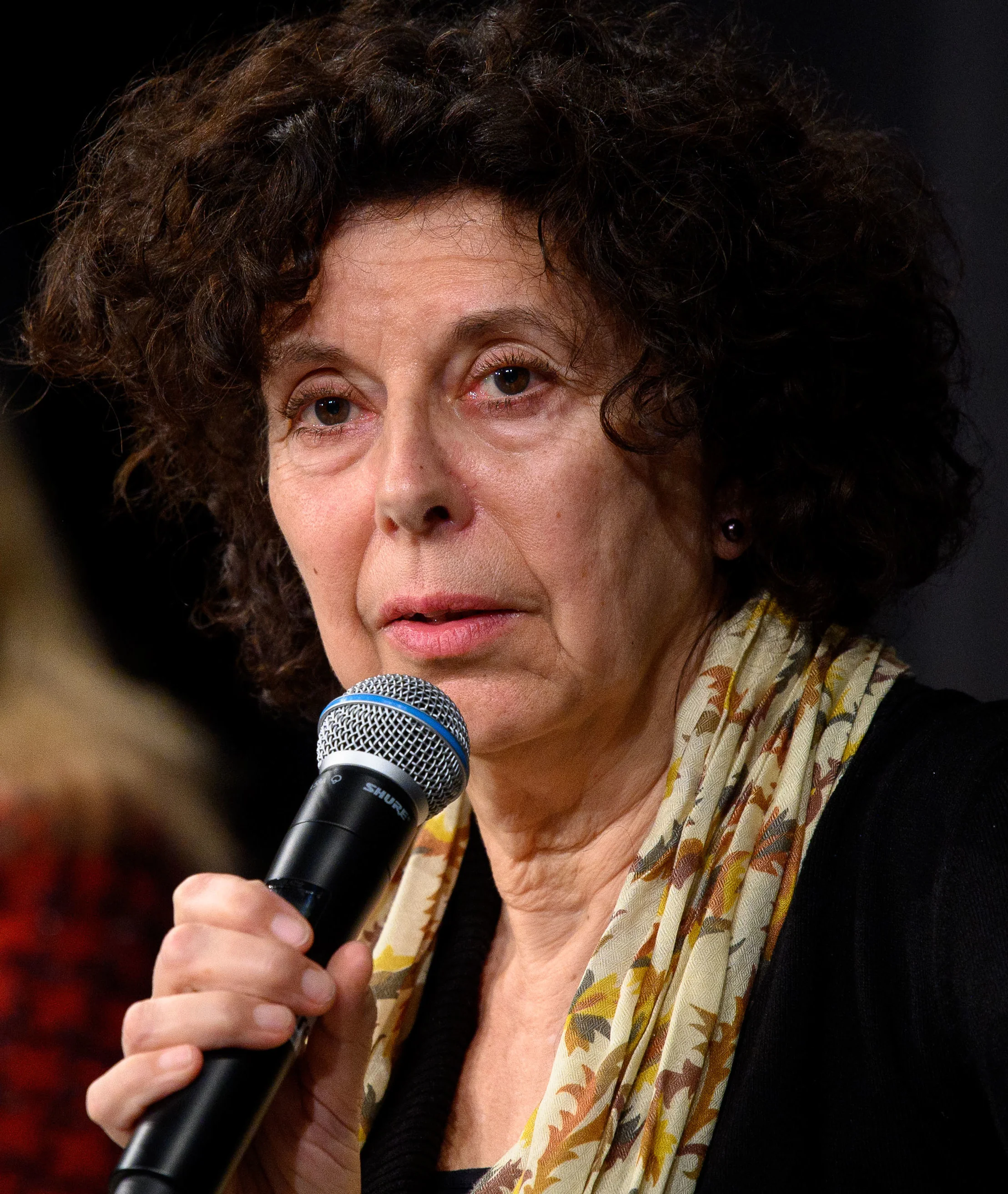
Image from Wikipedia
Image from Wikipedia
Esther Dischereit – A Pivotal Voice of Contemporary German-Jewish Literature
Literary Power, Memory, and Political Clarity
Esther Dischereit, born in 1952 in Heppenheim, is one of the most prominent contemporary German-Jewish authors. Her work combines poetry, prose, essays, radio plays, theater, and multimedia forms into a distinctive literary language that focuses on memory, violence, identity, and social responsibility. As a freelance writer in Berlin, she has developed a significant cultural role since the 1980s and is regarded as a central voice of the post-Shoah generation. ([estherdischereit.de](https://www.estherdischereit.de/))
From Metal Industry Work to Literary Publicity
Before becoming known as an author, Esther Dischereit worked in the metal industry and as a typesetter. It was not until 1985 that she entered the public eye as a writer and journalist, a transition that lent her writing a particular grounding and linguistic precision. Her biography points to a path that does not lead out of the academic ivory tower, but instead springs from practical work, observation, and political experience into literature. This background directly influences the immediacy and intensity of her texts. ([estherdischereit.de](https://www.estherdischereit.de/))
The Breakthrough with “Joëmis Tisch” and the Position as a Jewish-German Author
With Joëmis Tisch: Eine jüdische Geschichte and Übungen, jüdisch zu sein, Dischereit became one of the most important literary voices among the descendants of Holocaust survivors in Germany. Her work revolves around themes of assimilation, memory, and the question of how Jewish life in Germany can be told, protected, and renegotiated after the Shoah. Literatureport has described her since the publication of Joëmis Tisch as perhaps the most important German-Jewish author of the post-Shoah generation. This classification highlights how strongly her name is linked to a literary and historical position. ([estherdischereit.de](https://www.estherdischereit.de/))
Poetry, Prose, Essays, and Audio Works as Artistic Fields
Dischereit’s work is intentionally diverse. She writes poems, novels, essays, plays, and pieces for radio and stage; additionally, she produces multimedia works and sound signs. This breadth showcases an artistic development that cannot be confined to a single genre, but understands language as a fluid, political, and musically sensitive material. Within this openness lies a central appeal of her literary career: the texts engage with rhythm, repetition, and condensation akin to compositions that make memory audible. ([goethe.de](https://www.goethe.de/ins/hu/de/kul/sup/wfk/edi.html))
Works with Sound, Stage, and Space
A special aspect of her production includes the sound signs and intermedial projects. Since 2008, installed sound signs created with Viennese composer Dieter Kaufmann have been heard in Eichengrün-Platz in Dülmen, consisting of fragments from Jewish and non-Jewish lives in the area. This work connects literary memory with acoustic presence and demonstrates Dischereit’s closeness to formats that extend beyond the classical book. The project Blumen für Otello was also known as an audio work and book, intensifying her engagement with violence, grief, and societal blindness. ([estherdischereit.de](https://www.estherdischereit.de/))
Political Literature with High Social Relevance
Dischereit’s writing is inseparably linked to political analysis. She literarily accompanied the NSU trial and dedicated a book to the victims of the Halle attack, while addressing questions of anti-Semitism, racism, and institutional failure in her essays and poems. Deutschlandfunk Kultur described her in 2024 as a writer who focuses on “selective empathy"; this characterization fits an author whose texts oppose comfortable repression. Her literature does not emerge as commentary from the sidelines but as an intervention in societal memory. ([deutschlandfunkkultur.de](https://www.deutschlandfunkkultur.de/schriftstellerin-esther-dischereit-schreiben-gegen-selektive-empathie-dlf-kultur-cbb62582-100.html))
Teaching, Recognition, and International Resonance
As a lecturer and guest professor, Dischereit has also expanded her intellectual authority. From 2012 to 2017, she taught as a professor at the University of Applied Arts in Vienna; in 2019, she held the DAAD Chair in Contemporary Poetics at New York University; in 2021, she also taught at Washington University in St. Louis and Indiana University. Her accolades include the Erich Fried Prize in 2009 and the currently highlighted Grand Prize of the German Literature Fund, awarded to her by the jury. These stations reveal an author whose work receives high recognition both in the German-speaking world and internationally. ([estherdischereit.de](https://www.estherdischereit.de/))
Current Projects and Publications 2024/2025
In recent years, Dischereit’s work remains productive and contemporary. On her official page, the poetry collection Rauhreifiger Mund oder andere Nachrichten and the project Der Morgen an dem der Zeitungsträger are scheduled for 2024; also listed are the exhibition Wer war Fritz Kittel?, the poetry film project Bergpfirsich / Flat Peach, and the discussion format Andere Hoffnungsschimmer? focusing on feminist perspectives on terror and war in Israel and Palestine. Additionally, Deutschlandfunk Kultur reported in 2024 on her exhibition about her mother’s survival during the Nazi era. The current productivity underscores that Dischereit’s work is not merely a historical reflection but is contemporary literature in the strongest sense. ([estherdischereit.de](https://www.estherdischereit.de/))
Style, Language, and Literary Signature
Dischereit’s style is characterized by conciseness, rhythmic placement, and a sharp eye for social reality. Her texts refuse smooth narratives, instead relying on ruptures, memory fragments, and a language that intertwines grief, anger, and precision. Critical reception consistently emphasizes that her work does not treat female-Jewish identity in Germany as a marginal subject but as a central area of insight in contemporary literature. This combination of poetic power and intellectual authority makes her books distinctive. ([suhrkamp.de](https://www.suhrkamp.de/rights/person/esther-dischereit-p-945?utm_source=openai))
Cultural Influence and Classification
Esther Dischereit has had a lasting impact on German-Jewish literature after 1945. Her texts are read in academic contexts, anthologies, and cultural journalistic formats as essential contributions to memory culture and the debate about Jewish life in Germany. Her influence spans literature and theater to radio play and installational and curatorial projects. Those who engage with her work encounter not a distanced observer but an author who understands language as a form of resistance and testimony. ([posenlibrary.com](https://www.posenlibrary.com/author/esther-dischereit?utm_source=openai))
Conclusion: Why Esther Dischereit Fascinates
Esther Dischereit is intriguing because she does not only write literature but lives it as a moral and aesthetic stance. Her works connect memory, present, and art form into a language that resonates long after and makes societal blind spots visible. Anyone interested in German-Jewish literature, political poetry, and insightful contemporary art should certainly read Esther Dischereit and closely follow her projects. Live, in readings, discussions, and exhibitions, this author unfolds a presence that makes literature directly tangible. ([estherdischereit.de](https://www.estherdischereit.de/))
Official Channels of Esther Dischereit:
- Instagram: No official profile found
- Facebook: No official profile found
- YouTube: No official profile found
- Spotify: No official profile found
- TikTok: No official profile found