
Charles Darwin
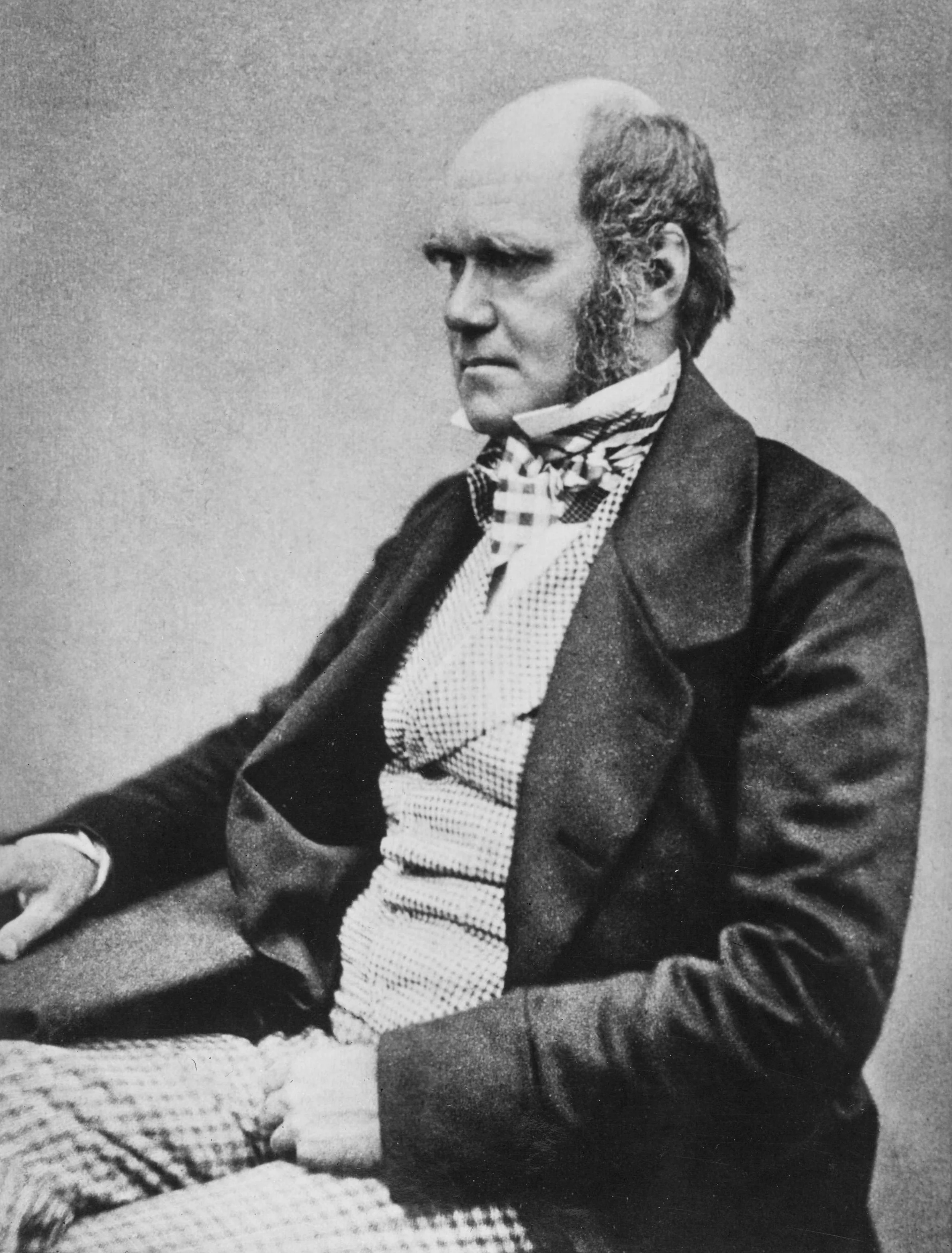
Image from Wikipedia
Image from Wikipedia
Charles Darwin: The Thinker Who Redefined Modern Biology
A Life of Observation, Expedition, and Scientific Revolution
Charles Robert Darwin was not a musician but a British naturalist whose thinking permanently altered the history of science. Born on February 12, 1809, in Shrewsbury and died on April 19, 1882, at Down House, he is considered one of the most influential scholars of modern times. His theory of evolution by natural selection became the foundation of modern evolutionary biology and shaped the worldview of entire generations far beyond zoology. ([britannica.com](https://www.britannica.com/biography/Charles-Darwin?utm_source=openai))
Darwin's journey to scientific authority did not begin at a desk, but at sea. The almost five-year voyage aboard the HMS Beagle, which began in late 1831, became the defining experience of his life: he collected plants, animals, fossils, and observations that later became the building blocks of his theory. Already here, the pattern of his career emerges: precise observation, patient evidence collection, and the ability to shape individual facts into a large, robust idea. ([britannica.com](https://www.britannica.com/biography/Charles-Darwin?utm_source=openai))
From Shrewsbury to Science: Early Years and Intellectual Shaping
Darwin's early years were marked by education, nature observation, and a growing curiosity about the order of living things. At Christ's College, Cambridge, he was inspired by teachers and naturalists who directed him toward geology, botany, and systematic natural history. The result was not a straight career path, but a scientific development comprised of a passion for collecting, intellectual discipline, and open questioning. ([christs.cam.ac.uk](https://www.christs.cam.ac.uk/darwins-early-life-cakes-buns-and-chemicals?utm_source=openai))
Even early on, Darwin worked on questions that would later form the core of his work. In 1838, he formulated the theory of adaptation to the environment through variation and natural selection and began collecting evidence for it over decades. This approach—first observing, then organizing, then publishing—makes him a researcher of exceptional methodological consistency. ([en.wikipedia.org](https://en.wikipedia.org/wiki/Charles_Darwin?utm_source=openai))
The Beagle Voyage as a Career Turning Point
The voyage with the Beagle was far more than a research stay; it was Darwin's artistically expressed "album" of nature. The expedition took him around the world and allowed him to directly compare geological, zoological, and botanical differences. From these impressions, a view of nature emerged in which species appear not as static but as dynamic. ([britannica.com](https://www.britannica.com/biography/Charles-Darwin?utm_source=openai))
Upon his return, Darwin quickly made a name for himself as an observer and science writer. His travel narrative published in 1839 brought him to a broader audience for the first time, while geological works on the formation of coral reefs and additional writings solidified his recognition in academic circles. By the mid-1850s, studies on barnacles also earned him a reputation as a respected zoologist and taxonomist. ([en.wikipedia.org](https://en.wikipedia.org/wiki/Charles_Darwin?utm_source=openai))
On the Origin of Species: The Major Work and Its Impact
In 1858, the simultaneous publication of evolutionary ideas by Darwin and Alfred Russel Wallace occurred; a year later, Darwin's major work On the Origin of Species was released. This book first formulated evolution in a strictly scientific language and became a turning point in modern biology. The Natural History Museum describes the work as one of the most important books in biology because it precisely articulated the theory of evolution by natural selection with profound influence. ([britannica.com](https://www.britannica.com/biography/Charles-Darwin?utm_source=openai))
Darwin's achievement lay not only in the idea itself but in the persuasive power of his argumentation. He worked for over 20 years on evidence, revised shorter versions of his theory, and only then published the grand work. This blend of intellectual patience, empirical rigor, and public impact makes his scientific style unique to this day. ([britannica.com](https://www.britannica.com/biography/Charles-Darwin?utm_source=openai))
Sexual Selection, Human History, and Later Research
In 1871, Darwin expanded his thinking in The Descent of Man, and Selection in Relation to Sex by addressing sexual selection. With this, he explained not only biological diversity but also the development of humans within a coherent theoretical framework. The idea that selection mechanisms in nature also shape human behavior and development solidified his standing as a thinker of remarkable breadth. ([en.wikipedia.org](https://en.wikipedia.org/wiki/Charles_Darwin?utm_source=openai))
In his last decade, Darwin focused more on botany, studying climbing plants, orchids, and carnivorous plants. These works also show the breadth of his scientific career if one understands the notion of artistic development metaphorically: not as a stage career, but as an ever-growing oeuvre that opens new perspectives. His research was never monolithic; it merged detailed studies with grand theory. ([en.wikipedia.org](https://en.wikipedia.org/wiki/Charles_Darwin?utm_source=openai))
Discography? Writings, Monographs, and Scientific Works
For Charles Darwin, the list of writings replaces any discography. His most significant titles include the travel narrative of 1839, On the Origin of Species from 1859, and The Descent of Man from 1871. In addition, numerous monographs on coral reefs, geology, barnacles, plants, and other topics sharpen his profile as a polymath. ([britannica.com](https://www.britannica.com/biography/Charles-Darwin?utm_source=openai))
The Natural History Museum points out that Darwin's collection boasts enormous breadth, encompassing 1,628 works in various languages. At the same time, over 15,000 transcribed letters document the scientific thought process behind his publications. For the history of reception, this is crucial: Darwin's work did not arise from a single "hit," but from a long-term, multifaceted catalog of observations, texts, and debates. ([nhm.ac.uk](https://www.nhm.ac.uk/our-science/services/library/collections/darwin.html?utm_source=openai))
Critical Reception and Cultural Influence
Darwin's theory triggered a profound change in science and culture. After the publication of On the Origin of Species, evolution increasingly became the guiding model of biological research, and Darwin's influence soon extended into literature, politics, and philosophy. Britannica notes that his non-religious biology also appealed to a burgeoning class of professional scientists, and that evolutionary ideas permeated many areas of thought after his death. ([britannica.com](https://www.britannica.com/biography/Charles-Darwin?utm_source=openai))
The scientific aftermath is equally significant. The Natural History Museum emphasizes that Darwin's work established modern evolutionary biology and opened new questions in taxonomy, population biology, and genetics. In 2025, his extensive archival collection was also recognized as UNESCO Documentary Heritage, a further indication of how strongly his work is still regarded as a cultural and scientific treasure today. ([nhm.ac.uk](https://www.nhm.ac.uk/press-office/press-releases/charles-darwin-archive-recognised-by-unesco.html?utm_source=openai))
His name today symbolizes a paradigm shift: the insight that diversity arises from change and that species evolve over long periods. It is precisely this that underlies his enduring authority. Darwin is not just a historical figure but a thinker whose models continue to form the backbone of biological research. ([en.wikipedia.org](https://en.wikipedia.org/wiki/Charles_Darwin?utm_source=openai))
Current Projects and Publications in Today's Context
For Charles Darwin himself, there are naturally no new albums, singles, or tours. His "current projects" involve the ongoing exploration of his archive, the scholarly edition of his letters and books, as well as exhibitions and digital collections that continually make his work accessible. The Natural History Museum and other institutions keep Darwin's research relevant through collection maintenance, archival work, and educational offerings. ([nhm.ac.uk](https://www.nhm.ac.uk/our-science/services/library/collections/darwin.html?utm_source=openai))
This ongoing relevance became particularly visible in 2024 and 2025 through new archival and documentation initiatives. The recognition of his letters and books as UNESCO Documentary Heritage underscores that Darwin is not only a historical figure but also a continuing field of research. His scientific presence has thus remained current, despite the passage of time since his lifetime. ([nhm.ac.uk](https://www.nhm.ac.uk/discover/news/2025/april/darwins-letters-and-books-unesco-documentary-heritage.html?utm_source=openai))
Conclusion: Why Charles Darwin Remains Fascinating Today
Charles Darwin remains fascinating because he not only described nature but also provided it with a new order of thought. His career connects expedition, detailed study, and theoretical boldness into a work of extraordinary depth. Those who read Darwin today encounter a researcher who methodically reordered the biological relationships of the earth with patience and intellectual breadth. ([britannica.com](https://www.britannica.com/biography/Charles-Darwin?utm_source=openai))
It is precisely this blend of precision, historical impact, and intellectual tension that makes him one of the most significant figures in the history of science. There are naturally no live experiences of Darwin anymore, but to experience his ideas "live" means to read his texts, letters, and exhibitions with open eyes. Anyone wanting to understand how modern biology came about cannot overlook Charles Darwin. ([nhm.ac.uk](https://www.nhm.ac.uk/discover/news/2025/april/darwins-letters-and-books-unesco-documentary-heritage.html?utm_source=openai))
Official Channels of Charles Darwin:
- Instagram: no official profile found
- Facebook: no official profile found
- YouTube: no official profile found
- Spotify: no official profile found
- TikTok: no official profile found