Hiking & Walking in Braunschweig: Parks & Lakes
Hiking & Walking Events in Braunschweig (from June 2026): How to Find the Next Dates – and What to Expect
You don't just want to "walk somewhere" in Braunschweig, but take part in a guided walk, a nature excursion, or a themed city walk? For the coming months, regularly announced formats are available in and around Braunschweig – from bird song tours in protected areas to architecture and park walks.
This guide explains where you can reliably find upcoming dates, which event types are particularly common in Braunschweig, and how to prepare sensibly without having to rely on unconfirmed individual dates.
1) Where to find upcoming hiking & walking dates in Braunschweig
For future dates, official or established calendars are the most reliable source. The following contact points typically publish events, guided tours, excursions or tour programs with date, meeting point, and (if necessary) registration.
- City of Braunschweig (official information pages): Information on city trails, routes, and often also on guided formats in cooperation with institutions.
- Tourism/city marketing & local event portals: Announced city tours, themed walks, and seasonal offers (e.g. "parks", "water", "architecture").
- Nature conservation associations (e.g. NABU, BUND): Natural history tours, bird and bat excursions, biotope maintenance actions or water walks, often with a limited number of participants.
- Nature park and regional offers (e.g. Naturpark Elm-Lappwald): Guided hikes and themed tours in the surrounding area, well suited as day trips from Braunschweig.
- Church/overregional pilgrimage networks: Pilgrimage hikes or stage walks announced for the coming months (with information on route, pace, return journey).
Practical tip for the coming months: Search the calendars specifically for terms like "hike", "walk", "excursion", "nature tour", "bird song", "city walk" or "cultural trail". If you need accessible offers, also filter for "accessible", "wheelchair accessible" or "family friendly" (if available) and read the notes on the path surface.
2) Which event types to expect in the coming months
In Braunschweig and the surrounding area, these formats appear particularly frequently in programs for the coming season. The exact design varies depending on the organizer, target group, and season.
2.1 Nature excursions (birds, waters, insects, evening atmosphere)
Nature walks are usually about observation rather than distance: slow pace, many stops, binoculars or identification apps, sometimes also at dusk. Such tours are particularly popular in the coming months because nature experiences change greatly with the seasons.
- Suitable for: Curious people, families with nature-interested children, beginners in bird watching.
- Typical procedure: short introduction, joint route, observation points, final question round.
- Important: In sensitive areas, clear rules often apply (stay on paths, keep distance, dogs on a leash).
2.2 Guided city walks with green spaces
These dates usually combine city history, architecture, and parks/Oker riverbanks. Especially for upcoming weekends or for visitors, such tours are attractive because they provide orientation and link "highlights".
- Suitable for: Visitors, newcomers, anyone who wants to see familiar places in a new way.
- Typical focus: Urban spaces, squares, waterways, parks; often with anecdotes and context.
2.3 Themed trails & architecture routes (as guided dates or group walks)
Officially described themed trails (e.g. on architecture or urban development) are sometimes offered as guided tours in the coming season or are suitable for group walks where a guide explains at selected points.
- Suitable for: Culture enthusiasts, photography fans, anyone who wants to walk "with content".
- Strengths: clear dramaturgy, meaningful stops, good combination with cafés/public transport.
2.4 Surrounding area hikes as day trips (forest, views, more elevation gain)
In the coming months, guided hikes are often offered in the area around Braunschweig, focusing more on distance and natural surroundings. Destinations are often in forested areas or nature park regions and are ideal for those planning "real hiking".
- Suitable for: Hikers with basic fitness, groups looking for a day trip.
- What you should plan for: Arrival and departure, weather changes, breaks, and sufficient provisions.
2.5 Pilgrimage & mindfulness walks
Announced pilgrimage or mindfulness formats often focus on the process of being on the way: slow pace, impulses, silent sections, possibly a joint conclusion. Such dates are often planned seasonally and in stages for the coming months.
- Suitable for: People who want to walk consciously slowly; often possible even without a religious background (depending on the offer).
- Important: Pay attention to information on length, breaks, and return options.
3) Typical starting points & "stages" for future tours (without fixed dates)
Many future walks and guided tours use recurring, easily accessible locations. This overview does not name specific dates, but shows where meeting points are frequently located in Braunschweig and the surrounding area based on experience.
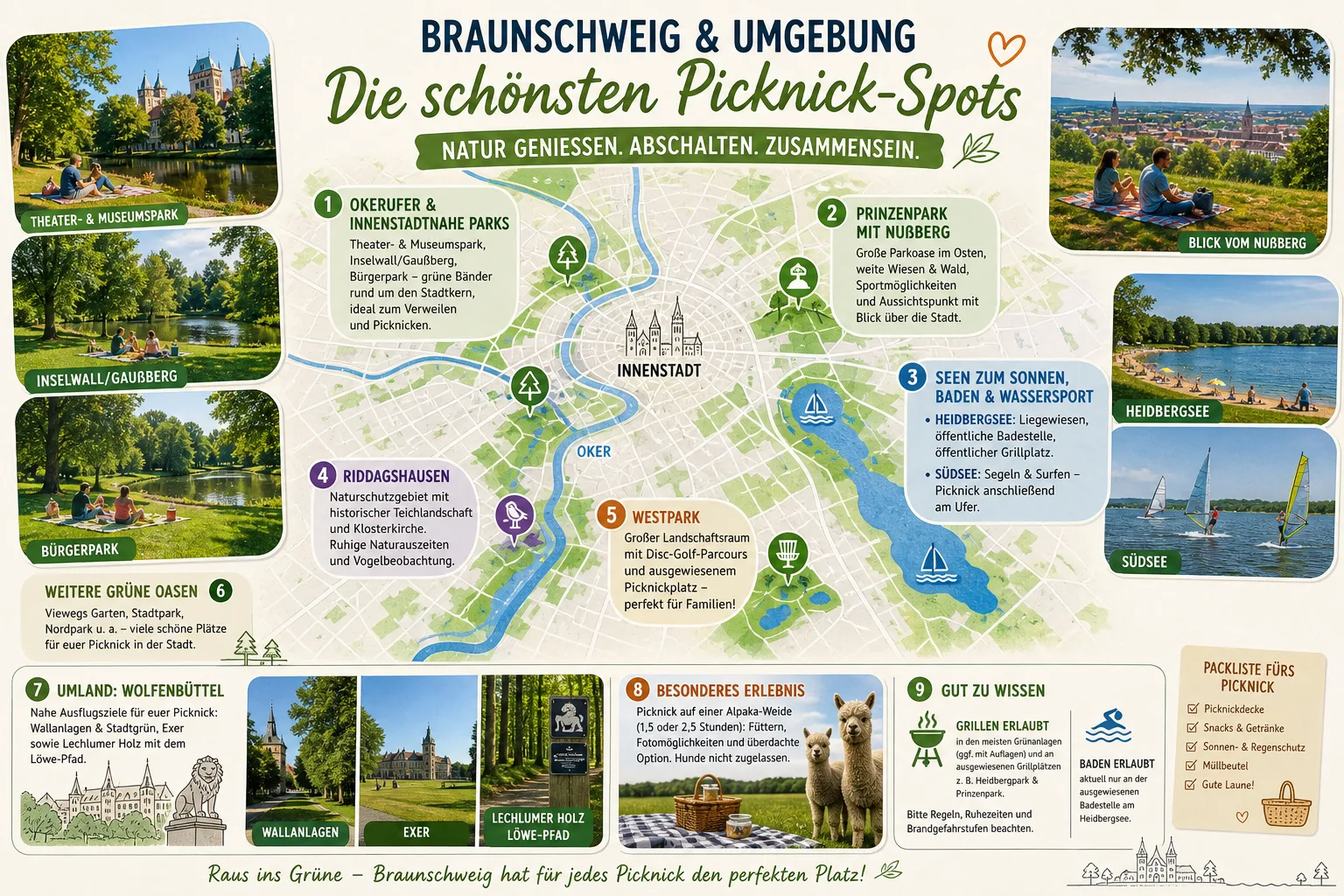
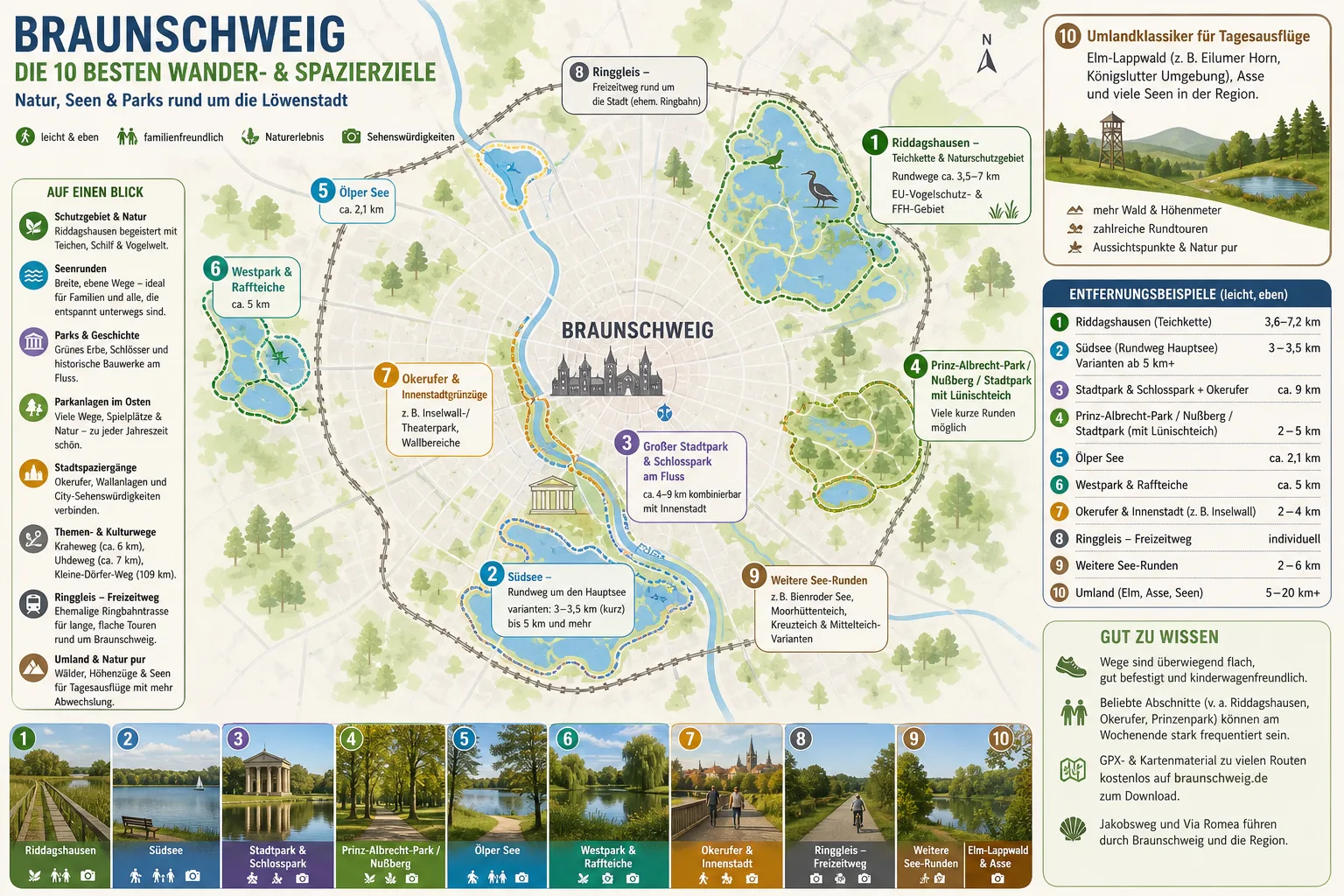
3.1 Oker riverbanks & parks near the city center
For upcoming city walks with green spaces, Oker sections and central parks are particularly practical: short distances, close to public transport, and many shortcuts if someone wants to leave early.
3.2 Water near the city: lake and pond circuits
For upcoming, low-threshold group walks, lake or pond circuits are suitable because they offer clear orientation ("once around") and usually have few inclines. Such places are often chosen for family or beginner formats.
3.3 Protected and observation areas for nature tours
For future planned excursions, areas are often used where species can be easily observed. Stricter rules usually apply there (stay on paths, keep distance, seasonal retreat zones), which are usually explicitly mentioned in announcements.
3.4 Surrounding area: nature park and forest regions
For upcoming day hikes, forested regions in the surrounding area are often chosen because longer loops or stages can be easily realized there. Programs from nature park or regional providers are a good first research source for this.
4) Planning: Registration, equipment, accessibility, weather
4.1 Registration & group size
For many upcoming announced dates, registration is required (limited places, nature conservation requirements, or ticketing). Read the event description in full, especially regarding meeting point, duration, pace, and cancellation options.
4.2 Equipment for upcoming dates
- Shoes: Comfortable, non-slip shoes are often sufficient for city walks; sturdy hiking boots are advisable for tours in the surrounding area.
- Weather: Pack rain/wind protection and an extra layer – especially for longer or evening formats.
- Water & snack: Recommended even for short walks, especially on warm days.
- Observation: Binoculars (optional), note-taking app or camera – if the tour is nature or photography focused.
4.3 Families, strollers, mobility
If you want to participate in the future with a stroller, wheelchair, or limited mobility, look for terms like "accessible", "paved paths", "no steps" as well as information on the path surface and possible bottlenecks. If information is missing, it is advisable to ask the organizer in advance.
4.4 Weather risk & safety
For future outdoor dates: Plan for possible changes. Serious providers communicate whether events are canceled or postponed in case of severe weather. Also pay attention to information on tick and sun protection, especially for nature events with long periods of standing.
5) Nature & consideration rules for future excursions
Many upcoming walks and hikes take place in sensitive green or protected areas. To ensure that tours remain possible in the long term, these basic rules are central:
- Stay on paths where specified (protection of breeding and retreat areas).
- Keep distance from animals and observation points; no feeding.
- Be quiet, especially on bird and dusk excursions.
- Keep dogs on a leash as required and dispose of waste.
- Take your trash with you (including "biodegradable" leftovers).
Note: This article is a guide for upcoming events and does not replace on-site instructions. For guided tours, always follow the instructions of the tour leader and local signage.