Insider Tips in Braunschweig: Discover Hidden Places
Insider Tips in Braunschweig: Your Next Discovery Tours (Starting Now)
If you want to experience Braunschweig in a new way over the coming days and weeks, it’s worth making a plan that deliberately combines quiet places, unusual perspectives, and contrasting cityscapes. This guide is intended as a collection of concrete future mini-events: after-work rounds, weekend tours, and seasonal excursions that you can start planning right away.
Note for planning: Opening hours, access situations, and possible construction sites can change at short notice. Check the official city websites or those of the respective locations before your visit and use current on-site information.
Event Idea 1: Oker Loop to Unwind
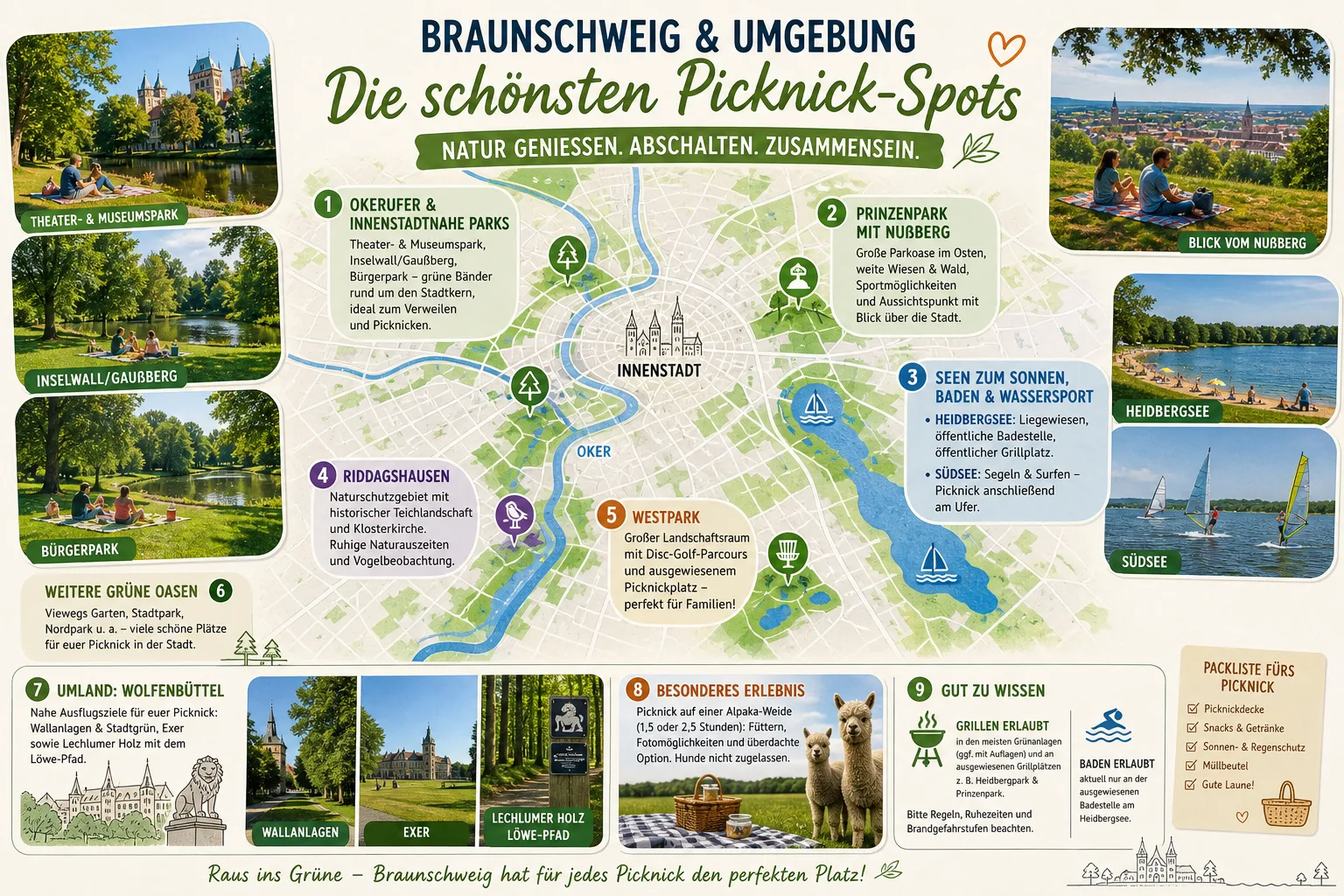
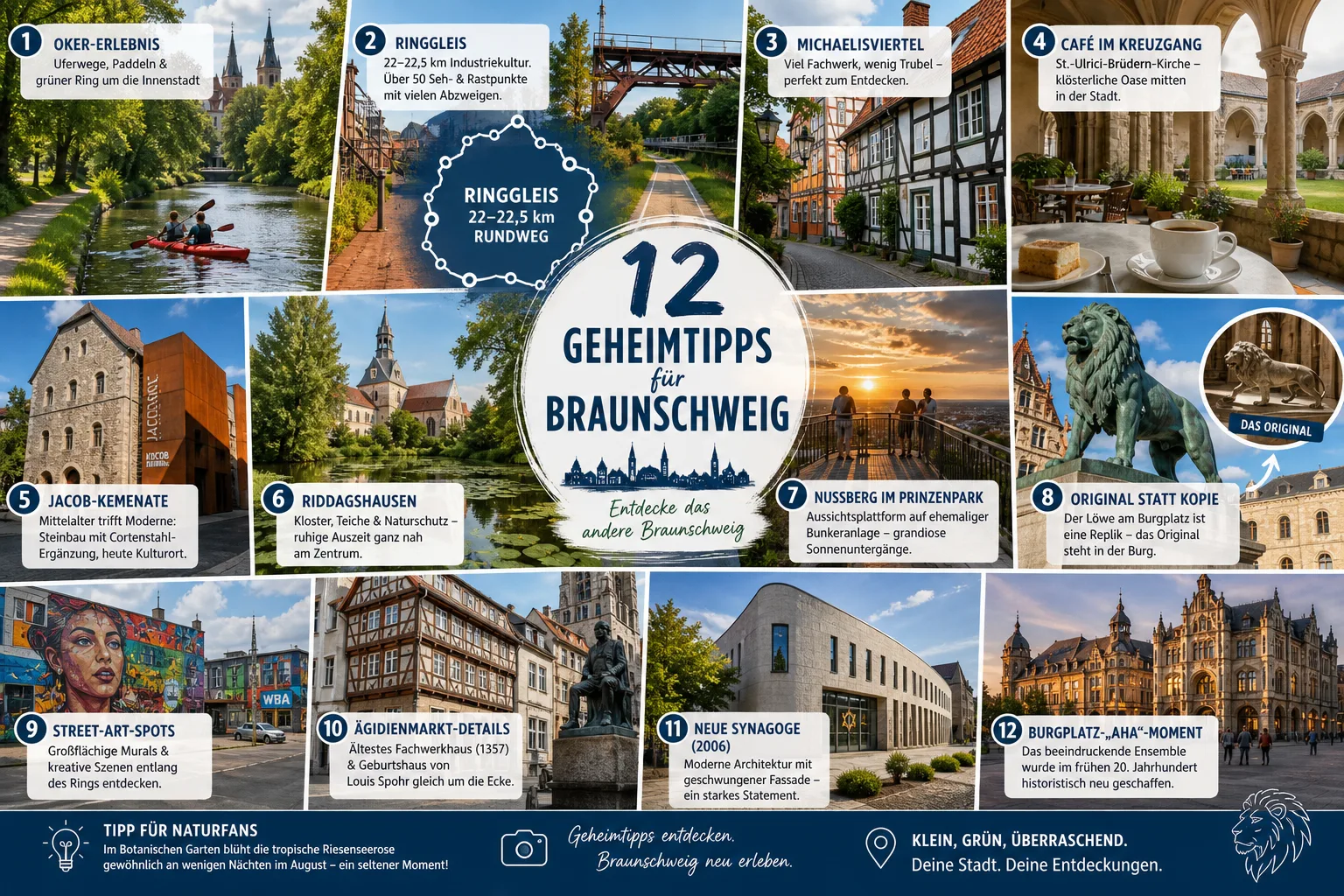
Plan a Oker loop as a conscious micro-event for your next free hour: phone on silent, slow down, eyes on the water. You’ll experience a route that’s ideal for after work because it’s quickly accessible and can be shortened at any time.
This is what your next routine looks like
- Start: Choose an easily accessible entry point on the Oker riverbank (e.g., near the city center).
- Ritual: Walk the first 10 minutes without a goal, just along the water.
- Contrast moment: Switch to the other riverbank (via one of the bridges) and observe how the perspective and soundscape change.
- Finale: End the loop with a short sitting break on the riverbank (5–10 minutes) before returning to everyday life.
Especially practical for the coming weeks: This loop works in sunshine as well as cloudy weather—and can be planned as a running, walking, or cycling event.
Event Idea 2: Ringgleis Loop with Spontaneous Stops
Set yourself a simple goal for your next weekend: a section of the Ringgleis, but without a fixed schedule. The idea is a self-curated event: you follow the route, stop wherever something catches your eye, and turn “being on the move” into a little discovery tour.
Your next Ringgleis plan (flexible, stress-free)
- Choose an entry point near you (you don’t have to start “from the beginning”).
- Set three stops: a photo stop, a drink/snack stop, a “just looking” stop.
- Add a detour: As soon as you see an interesting side street, green space, or bridge, go in for 5 minutes—and then back.
Three options for your upcoming detours
- Green option: Plan a park or hill detour as a viewpoint moment.
- Culture option: Look out for places where exhibitions, small markets, or neighborhood activities might take place in the future (check notices/program boards on site).
- Industry option: Take time for architectural details on bridges, former track areas, and crossings—as a mini photo event.
Important for your planning: If you plan the tour as a cycling event, bring lights and plan a return option (public transport) in case of a change in the weather.
Event Idea 3: Old Town Treasure Hunt in the Michaelis Quarter
For your next lunch break or early evening, a “Half-timbered & Details” treasure hunt in the Michaelis Quarter is a good choice. This isn’t classic sightseeing, but a conscious observation event: you walk slowly, look up, and collect details instead of kilometers.
Your future challenge (30–60 minutes)
- Find 5 facade details (e.g., beams, window shapes, front doors, inscriptions, small figures).
- Find 3 quiet corners where you want to stand for a minute without doing anything.
- Take 1 perspective photo (angled upwards, not “straight ahead”).
If you repeat this mini-tour several times over the coming months, it will be different each time: depending on the light, weather, and what you need at the moment (peace, movement, inspiration).
Event Idea 4: Islands of Silence in the City (Cloister, Kemenate, Synagogue)
Plan a route with three deliberately quiet stops for your next city center visit. The goal is a contrast event: within short distances, you switch from “city noise” to “architectural silence” and back.
Station 1 (planned): Break in the cloister atmosphere
If a café is open in the cloister area, this becomes your future “10-minute retreat”: sit down, have a drink, and observe the effect of stone, walkway, and courtyard as a filter for calm. Check current opening hours on site or via official channels in advance.
Station 2 (planned): Architecture stop at the Jacob-Kemenate
You use the Kemenate as an “old meets new” spot: walk around the outside, choose two lines of sight (one on historic substance, one on modern additions), and capture the contrast as a photo or note. If an event is announced, your visit in the coming weeks can be combined with a program item.
Station 3 (planned): Short, respectful look at the synagogue
Plan a silent stop where you consciously take in the facade and the urban space. If tours or public formats are announced, this can become a future program item. Pay attention to accessibility information and treat the place with respect.
Event Idea 5: Nature and Monastery Timeout in Riddagshausen
For your next free morning or afternoon slot, a deceleration event in Riddagshausen is a good idea: natural paths, bodies of water, and a quiet atmosphere as a counterpoint to the city. Plan the tour so that you include time to sit—not just to walk.
Your future routine (simple, nature-friendly)
- Arrival: Plan to arrive by bike or public transport so you can start without looking for parking.
- Loop around the ponds: Walk deliberately slowly and stop at two spots to observe the water surfaces.
- Consideration: Stay on paths, take your trash with you, and respect protected and quiet zones.
- Optional: If the monastery complex is accessible, include a short, silent indoor moment.
Good idea for upcoming seasons: Repeat the tour in autumn or winter as a “silent version”—then the same place becomes a completely different experience.
Event Idea 6: Urban Contrast Trip (Street Art & Change of Perspective)
If you want to give your next walk an energetic twist, plan a street art search event along underpasses, major road axes, or areas around ring-adjacent paths. The goal is not to “see everything,” but to deliberately find two to four works and experience the city as a walking gallery.
This is how you turn the search into a real event
- Set a theme: Colors (only blue/red), motifs (faces/animals), or technique (stencil/mural).
- Document consciously: Take exactly one photo per work and write a short observation about it (e.g., “How does this image change the street?”).
- Change of perspective: On the way back, take a parallel street to feel the contrast between main and side areas.
Note for the coming months: Street art can change quickly. That’s exactly what makes your future trip so appealing: every round has the chance to be new.
How to Plan Your Next Braunschweig Insider Tip Tours
1) Choose your “event length”
- 30–45 minutes: Oker short loop or Michaelis Quarter detail search
- 60–120 minutes: Ringgleis section + detour
- Half day: Riddagshausen + quiet breaks
2) Plan for safety & comfort
- Weather: Have a rain option (e.g., shorter loop, café stop).
- On the go: Water, small plaster set, light on the bike, charged battery.
- Nature: Be quiet in protected areas, stay on paths, don’t feed animals.
3) Turn “sometime” into an appointment
If you want, set yourself a concrete slot for the coming week (e.g., “Wednesday 18:30: Oker loop”). This way, the insider tip becomes a real, future event in your calendar.
Note
This article is for leisure and route planning for future excursions. It does not replace official notices, safety information, or local regulations. Observe signage, access requirements, and current information from the city and responsible authorities.